

Best Airtight Coffee Canisters for Freshness
Table of Contents
- Why Coffee Freshness Depends on Your Storage Container
- How to Store Coffee Beans for Maximum Freshness
- Vacuum Seal vs Airtight Coffee Canisters: What's the Real Difference
- How Long Does Coffee Stay Fresh in an Airtight Container
- Key Features to Look for in the Best Airtight Coffee Canisters
-
Top Airtight Coffee Canisters for Preserving Flavor
- Fellow Atmos: Premium Vacuum Sealing
- Airscape Kilo: Bulk Storage with Air Displacement
- Coffee Gator: Affordable with CO2 Valve
- OXO Good Grips POP: Convenience and Light Protection
- Veken: Feature-Rich Stainless Steel Option
- Friis Coffee Vault: Multi-Layer Freshness Defense
- Airscape Lite: Clear Storage with Active Air Removal
- Prepara Evak: Intuitive Twin-Valve System
- How We Evaluated Airtight Coffee Canisters
- Conclusion
Last Updated: August 27, 2026
Why Coffee Freshness Depends on Your Storage Container
The moment coffee beans are roasted, they begin to deteriorate. Within two weeks of roasting, whole beans lose significant flavor complexity and aroma if exposed to air, light, and moisture (peer-reviewed research). Poor storage erases the advantages of carefully sourced, expertly roasted coffee within days.
At USM Coffee, we roast every batch to order to maximize freshness at the moment it reaches you. But that freshness depends entirely on how you store it after arrival. An airtight coffee canister blocks the four enemies of coffee freshness: oxygen, light, heat, and moisture. Understanding why these factors matter helps you choose a canister that actually protects your investment.
How to Store Coffee Beans for Maximum Freshness
The best storage approach combines the right container with the right environment.
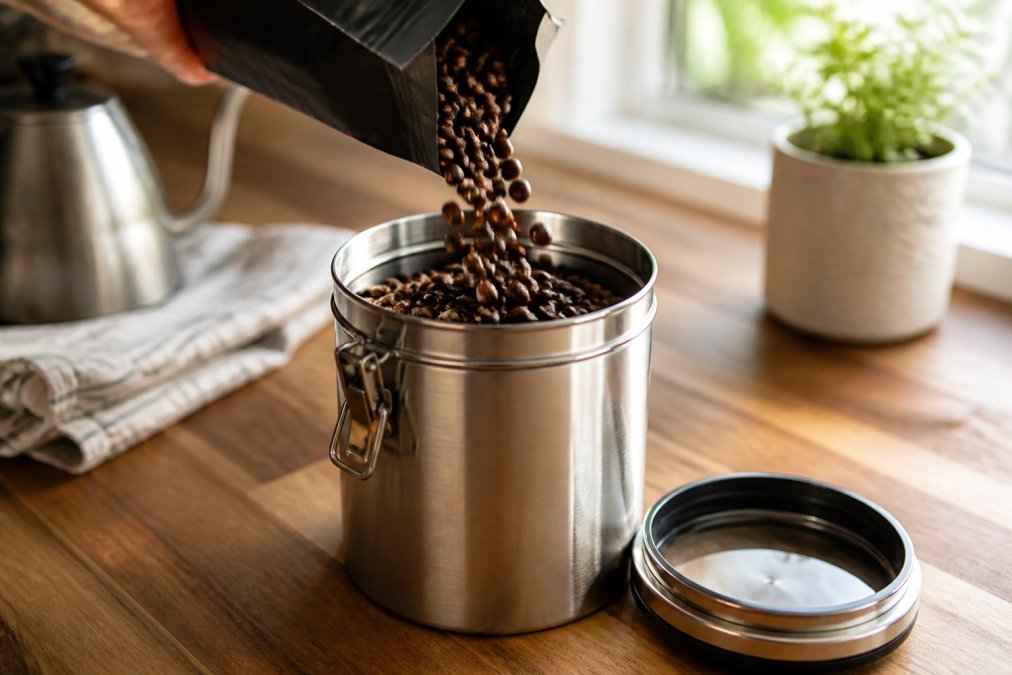
Store your canister in a cool, dark place away from direct sunlight, a pantry, cabinet, or cupboard works far better than a countertop display. The ideal storage temperature stays between 50-70°F, which rules out areas near appliances, windows, or heating vents (usda.gov). Keep your canister away from humidity sources like bathrooms and sinks. Excess humidity can compromise even the best seal and promote mold growth.
Use whole beans rather than ground coffee whenever possible. Ground coffee exposes far more surface area to oxygen, which accelerates oxidation dramatically. Whole beans stay fresh 2-3 times longer than ground coffee in the same container (peer-reviewed research).
The Role of Light and Oxygen in Bean Degradation
Light exposure triggers rapid oxidation in coffee oils through photodegradation, breaking down compounds responsible for flavor and aroma. Even indirect sunlight causes measurable flavor loss within days. Opaque containers outperform clear ones regardless of other features.
Oxygen is the primary culprit in staling. When air touches coffee beans, oxidation begins immediately. A truly airtight seal slows this process dramatically, but cannot stop it entirely. Carbon dioxide off-gassing compounds this challenge, fresh coffee releases CO2 continuously for the first 2-4 weeks after roasting. The best canisters solve this with a one-way valve: CO2 can exit, but oxygen cannot enter.
Temperature and Humidity Control
Temperature stability matters more than absolute coldness. Beans stored in a cool pantry that stays 60°F consistently age better than beans kept in a refrigerator where temperature fluctuates with each door opening. Never store coffee in the refrigerator or freezer unless planning long-term storage beyond 3 months; the moisture and temperature swings cause more damage than benefit.
Humidity levels should stay between 40-60% relative humidity. Most home pantries fall naturally within this range, which is why pantry storage typically outperforms other locations.
Vacuum Seal vs Airtight Coffee Canisters: What's the Real Difference
A vacuum-sealed canister actively removes air from the container using a twist-lock or electric mechanism to create negative pressure inside. This removes oxygen more completely than a passive seal alone, but requires regular maintenance and costs more upfront.
Standard airtight canisters rely on a silicone gasket or rubber seal to prevent new air from entering. They don't remove existing oxygen, just stop additional air from getting in. This is simpler, cheaper, and requires no maintenance.
For most home coffee drinkers, a high-quality airtight seal with a one-way CO2 valve outperforms a vacuum canister in practical use. The one-way valve allows CO2 to escape while blocking oxygen from entering, solving pressure buildup without sacrificing the seal. Canisters with both a tight gasket and a one-way valve deliver nearly all the freshness benefits of vacuum sealing without the maintenance burden.
How Long Does Coffee Stay Fresh in an Airtight Container
Whole beans in a quality airtight coffee canister stay noticeably fresh for 2-4 weeks. Peak flavor typically occurs 5-14 days after roasting, when beans have finished off-gassing but haven't experienced significant oxidation. After four weeks, flavor degradation becomes obvious to most palates.
Ground coffee in the same container stales much faster, within 3-5 days. These timelines assume proper storage conditions: a cool, dark pantry with stable humidity and temperature. Light roasts oxidize faster than dark roasts due to thinner bean structure.
Key Features to Look for in the Best Airtight Coffee Canisters
A reliable one-way valve is non-negotiable. This mechanism allows CO2 from fresh roasts to escape without letting oxygen back in. Check that the valve is replaceable, as some models require replacement every 1-2 months.
Seal integrity matters more than material choice. A silicone gasket or rubber seal must compress fully when the lid closes. Test this by closing the canister and trying to lift the lid without opening the latch, it should resist strongly.
Opacity provides essential light protection. Opaque stainless steel or dark-tinted glass blocks UV and visible light completely. Capacity should match your usage pattern, a 32-ounce canister works for weekly coffee drinkers, while bulk buyers should consider larger options.
Material Considerations: Stainless Steel vs Glass vs Ceramic
Stainless steel canisters offer durability and excellent light blocking. They resist staining and odor retention better than other materials. The downside: you can't see your coffee supply without opening the lid.
Glass canisters provide visibility and elegance but transmit light unless tinted and are fragile. Plastic canisters are lightweight and shatter-resistant, excellent for travel, but can absorb odors over time.
Seal Integrity and One-Way Valve Mechanisms
The silicone gasket is where seal integrity lives. A quality gasket compresses evenly and maintains its shape after hundreds of open-close cycles. When evaluating a canister, press the gasket with your finger, it should feel dense and springy, not thin or mushy.
One-way valves come in two main designs: a simple flap that allows gas to exit but blocks air from entering, or a spring-loaded ball that maintains a tighter seal while allowing CO2 escape. Check whether the valve is replaceable and how much replacement valves cost.
Capacity and Size Requirements
Undersized containers force frequent refilling, which breaks the seal repeatedly. Oversized containers trap more oxygen. The sweet spot is a canister that's 75-85% full when first filled. Most home users find 32-48 ounces ideal for weekly purchases.
Ease of Cleaning and Maintenance
Check whether the gasket and valve are removable for thorough cleaning. Inspect the interior for rough spots or crevices where old coffee residue can hide. A smooth, polished interior is easier to maintain.
Top Airtight Coffee Canisters for Preserving Flavor
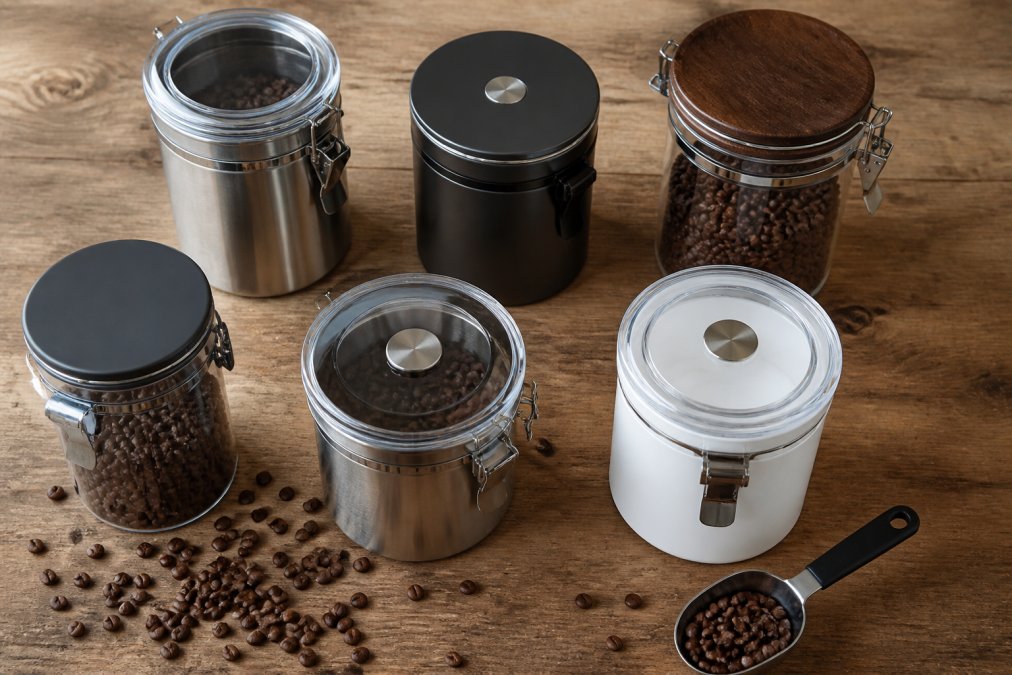
Fellow Atmos: Premium Vacuum Sealing
The Fellow Atmos represents the pinnacle of active freshness preservation. Its twist-to-lock vacuum seal removes air mechanically, creating negative pressure inside the canister. It comes in three sizes: 0.4 L (6 oz coffee beans), 0.7 L (10 oz coffee beans), and 1.2 L (16 oz coffee beans) and two material options: stainless steel and clear glass. A vacuum lock indicator dot shows when the seal is secure. The mechanism requires manual twisting every 4-5 days to maintain optimal vacuum.
Best for: Coffee enthusiasts who prioritize maximum freshness and are willing to invest in a premium vacuum-sealing solution with ongoing maintenance.
Airscape Kilo: Bulk Storage with Air Displacement
The Airscape Kilo uses a patented plunger-style inner lid that physically forces air out of the container. The opaque galvanized steel construction blocks light entirely and resists staining. The Kilo holds up to 2.5 pounds of whole beans, making it ideal for bulk purchases. The plunger mechanism requires no batteries or maintenance.
Best for: Individuals who buy coffee in bulk and prioritize strong air removal and light protection for extended freshness.
Coffee Gator: Affordable with CO2 Valve
Coffee Gator delivers core freshness features. The stainless steel construction includes a one-way CO2 valve and a built-in date tracker on the lid. This canister includes a measuring scoop.
Best for: Daily coffee drinkers seeking an affordable yet effective solution with practical features like a date tracker and CO2 valve.
OXO Good Grips POP: Convenience and Light Protection
The OXO Good Grips POP container prioritizes ease of use. A single button press engages the airtight seal and opens the lid. The tinted body provides light protection. The design is stackable and the entire container is dishwasher-safe.
Best for: Those who value convenience, stackable storage, and a versatile container that works for multiple dry goods beyond coffee.
Veken: Feature-Rich Stainless Steel Option
The Veken combines a one-way CO2 valve, date tracker, and viewing window in a stainless steel canister. The 304 stainless steel resists corrosion and staining. The included stainless steel scoop is a nice touch.
Best for: Coffee lovers looking for a feature-rich and aesthetically pleasing canister that offers good value and helps track freshness.
Friis Coffee Vault: Multi-Layer Freshness Defense
The Friis Coffee Vault uses a multi-layer approach with complete light blocking, a one-way freshness valve, and a year's supply of replacement valves. The design specifically addresses the CO2 issue that fresh beans present.
Best for: Those who prioritize protecting coffee from all major freshness destroyers (air, light, moisture, and CO2) with a dedicated valve system.
Airscape Lite: Clear Storage with Active Air Removal
The Airscape Lite uses the same plunger-lid technology as the Kilo but in a clear, lightweight plastic construction. The transparent design lets you see your coffee supply. The main limitation is that the clear material offers no light protection, you must store it in a dark location.
Best for: Users who want active air removal but prefer a lighter, more compact option.
Prepara Evak: Intuitive Twin-Valve System
Prepara's Evak uses a twin-valve system that removes air intuitively. You push down to evacuate air and pull up to release the lid. The system works with both glass and BPA-free plastic versions.
Best for: Individuals seeking an intuitive and effective air-removal system with a focus on ease of use.
How We Evaluated Airtight Coffee Canisters
Our evaluation focused on features that actually preserve coffee freshness. We assessed seal integrity by testing whether containers could hold water without leaking. We examined valve designs to understand how effectively they allow CO2 escape while blocking oxygen entry. We prioritized canisters with proven track records and reliable manufacturing, excluding options with frequent complaints about seal failure or valve malfunction.
Conclusion
The right airtight coffee canister preserves the flavor and aroma that roasters work to create. Coffee freshness depends on blocking oxygen, light, heat, and moisture, and the best canisters do this reliably for weeks.
At USM Coffee, we roast every batch to order to ensure maximum flavor when it reaches you. Protecting that freshness with a quality airtight canister extends the window where your beans taste exceptional. Whether you choose a vacuum-sealing option like the Fellow Atmos, an air-displacement design like the Airscape Kilo, or an affordable sealed container with a CO2 valve like the Coffee Gator, the investment in proper storage pays dividends in cup quality.
| Feature | Why It Matters | What to Look For |
|---|---|---|
| One-way CO2 valve | Allows fresh beans to vent gases without letting oxygen in | Replaceable valve, proven design |
| Silicone gasket seal | Creates airtight barrier to slow oxidation | Dense, springy gasket that compresses fully |
| Opaque material | Blocks light that triggers flavor degradation | Stainless steel or dark-tinted glass |
| Proper capacity | Minimizes excess headspace and trapped oxygen | 75-85% full when first filled |
| Removable components | Enables thorough cleaning to prevent rancid oils | Gasket and valve that come apart easily |
Frequently Asked Questions
How often should I refill my coffee canister? Refill frequency depends on your consumption and canister size. The goal is to keep the container 75-85% full. Each time you open it, you break the seal and let oxygen in.
Can I store coffee in the freezer to extend freshness? Freezing works for long-term storage beyond three months, but it's not ideal for typical usage. Temperature fluctuations create condensation that damages flavor. If you freeze, keep beans in an airtight canister and allow them to reach room temperature before opening.
What's the difference between a one-way valve and a vacuum seal? A one-way valve allows CO2 to escape while blocking oxygen entry, it's passive. A vacuum seal actively removes air from the container, creating negative pressure. Vacuum seals preserve freshness longer but require maintenance.
Should I store whole beans or ground coffee? Always store whole beans if possible. Ground coffee's larger surface area accelerates oxidation dramatically. Whole beans stay fresh 2-3 times longer than ground coffee in the same container.
Is a clear canister or opaque canister better? Opaque canisters are superior because they block light completely. Clear canisters work if stored in a dark location, but most people leave them on countertops where they're exposed to light.
=== FAQ ANSWERS (audit these too, same rules) ===
[1] Q: Does an airtight container really keep coffee fresh longer? A: Yes. Airtight containers slow oxidation and prevent moisture absorption, which are the primary causes of flavor loss. Standard containers expose beans to oxygen continuously, degrading them within days. Airtight canisters, especially those with vacuum seals or one-way valves, extend freshness by 2-4 weeks compared to open storage. The longer the beans remain sealed away from oxygen and light exposure, the better they preserve their original flavor profile and aroma.
[2] Q: What is the best way to store coffee beans at home for maximum freshness? A: Store whole beans in an airtight container made of opaque material like stainless steel or ceramic to block light. Keep the container in a cool, dark pantry away from heat sources and direct sunlight. Maintain a stable temperature between 60-70°F if possible. If your canister has a one-way CO2 valve, ensure it functions properly to release off-gassing from freshly roasted beans. Avoid the freezer unless storing for over a month, as thawing causes condensation that damages beans.
[3] Q: How long does coffee stay fresh in an airtight container? A: Whole beans in an airtight container stay fresh for 2-4 weeks from the roast date, depending on the seal quality and storage environment. Vacuum-sealed canisters extend this to 4-6 weeks. Ground coffee degrades faster, remaining fresh for only 1-2 weeks even in airtight storage. After the freshness window, beans don't spoil but lose complexity and brightness. Check for the roast date on your bag and use beans within their peak window for the best flavor and aroma.
[4] Q: Should I store coffee in the freezer or an airtight canister at room temperature? A: An airtight canister at room temperature is the better choice for regular use. Freezing causes condensation when beans thaw, introducing moisture that degrades flavor. Reserve freezing only for long-term storage beyond 4-6 weeks, and use an airtight, moisture-proof container. For daily or weekly coffee consumption, a quality airtight canister in a cool, dark pantry preserves freshness and flavor far better than freezing, which disrupts the bean's cellular structure and volatile compounds that define taste.
Frequently Asked Questions
Does an airtight container really keep coffee fresh longer?
Yes. Airtight containers slow oxidation and prevent moisture absorption, which are the primary causes of flavor loss. Standard containers expose beans to oxygen continuously, degrading them within days. Airtight canisters, especially those with vacuum seals or one-way valves, extend freshness by 2-4 weeks compared to open storage. The longer the beans remain sealed away from oxygen and light exposure, the better they preserve their original flavor profile and aroma.
What is the best way to store coffee beans at home for maximum freshness?
Store whole beans in an airtight container made of opaque material like stainless steel or ceramic to block light. Keep the container in a cool, dark pantry away from heat sources and direct sunlight. Maintain a stable temperature between 60-70°F if possible. If your canister has a one-way CO2 valve, ensure it functions properly to release off-gassing from freshly roasted beans. Avoid the freezer unless storing for over a month, as thawing causes condensation that damages beans.
How long does coffee stay fresh in an airtight container?
Whole beans in an airtight container stay fresh for 2-4 weeks from the roast date, depending on the seal quality and storage environment. Vacuum-sealed canisters extend this to 4-6 weeks. Ground coffee degrades faster, remaining fresh for only 1-2 weeks even in airtight storage. After the freshness window, beans don't spoil but lose complexity and brightness. Check for the roast date on your bag and use beans within their peak window for the best flavor and aroma.
Should I store coffee in the freezer or an airtight canister at room temperature?
An airtight canister at room temperature is the better choice for regular use. Freezing causes condensation when beans thaw, introducing moisture that degrades flavor. Reserve freezing only for long-term storage beyond 4-6 weeks, and use an airtight, moisture-proof container. For daily or weekly coffee consumption, a quality airtight canister in a cool, dark pantry preserves freshness and flavor far better than freezing, which disrupts the bean's cellular structure and volatile compounds that define taste.