

Best Blue Bottle Alternatives for Fresh Beans
Table of Contents
- Why Coffee Drinkers Seek Blue Bottle Alternatives
- Best Coffee Subscription Services for Fresh Roasted Beans
- Specialty Roasters Delivering Fresh Whole Beans Direct
- How to Store Coffee Beans for Freshness Between Shipments
- Coffee Bean Roast Date Importance and Freshness Indicators
- Subscription vs. One-Time Purchase: Which Model Fits Your Needs
- Flavor Profiles: Finding Your Preferred Tasting Notes
- Conclusion
Last Updated: August 10, 2026
Why Coffee Drinkers Seek Blue Bottle Alternatives
Blue Bottle has become synonymous with specialty coffee, but a growing number of coffee enthusiasts are exploring Blue Bottle alternatives for fresh beans for reasons beyond brand loyalty. Today's consumers have access to roasters offering comparable or superior quality at different price points, with more direct sourcing connections and subscription models that fit their consumption patterns.
The shift isn't about Blue Bottle being bad, it's about recognizing that the specialty coffee landscape now includes dozens of roasters delivering genuinely fresh, whole bean coffee directly to your door. Many discover that alternatives offer advantages Blue Bottle doesn't: customizable subscription flexibility, or flavor profiles better aligned with their palate.
At USM Coffee, we understand this evolution. Today's best coffee comes from roasters who prioritize roast dates, direct trade relationships, and personalized curation, qualities that define the strongest alternatives to mainstream specialty coffee brands.
This guide covers the most compelling Blue Bottle alternatives for fresh beans, breaking down subscription services matched to your taste preferences, direct-to-consumer roasters with transparent sourcing, and the practical details that separate genuinely fresh coffee from shelf-aged beans.
Best Coffee Subscription Services for Fresh Roasted Beans
Subscription services ensure a consistent supply of freshly roasted beans timed to your consumption rate, the primary advantage over retail coffee that may have been roasted weeks or months prior.
Mistobox: Curated Selection from 50+ Roasters
Mistobox operates as a discovery platform connecting you with specialty roasters rather than selling its own beans. The service partners with over 60 specialty roasters, each contributing to a catalog of 500+ options. You complete a flavor preference quiz, and Mistobox's expert curators select a coffee matched to your taste profile and budget each month.
The real value is curation. Instead of facing overwhelming choice across dozens of roasters, Mistobox narrows the field to one personalized selection shipped directly from the roaster for maximum freshness. Pricing for a 12oz bag typically ranges from $19-$26 with free shipping included, making it competitive with buying directly from specialty roasters while adding personalized selection convenience.
The drawback is limited variety within a single month, you receive one coffee, not multiple options.
Atlas Coffee Club: Single-Origin Discovery with Tasting Notes
Atlas Coffee Club takes a travel-themed approach to coffee discovery. Each month features a single-origin coffee from a different country, paired with a postcard, detailed tasting notes, and origin story. The service emphasizes education alongside consumption.
Bag sizes range from 6oz to 24oz, with flexible delivery every two or four weeks. Pricing starts at $14 per 12oz bag plus $4.95 shipping per shipment. The included tasting notes guide your palate development, helping you identify flavor notes you might otherwise miss.
The limitation is straightforward: one coffee per month. If you drink coffee daily and prefer variety, you'll need supplemental purchases.
Driftaway Coffee: Sustainability and Direct Farmer Connections
Driftaway Coffee begins with a tasting kit to map your flavor preferences. Subsequent shipments feature single-origin coffees matched to your preferences, all roasted to order for maximum freshness.
The brand differentiates on sustainability. All packaging is plastic-free, the operation runs carbon-neutral, and the company explicitly connects consumers to the farmers growing their coffee. Pricing for a 7oz bag starts at $12.00 on a month-to-month basis, making it accessible compared to competitors.
The limitation is that Driftaway offers only single-origin coffees, no blends. This matters if you prefer the consistency and body that blends offer.
Angels' Cup: Palate Development Through Blind Tastings
Angels' Cup inverts the typical subscription model. Instead of receiving full bags for daily brewing, you receive small samples (1.15oz each) in blind tasting flights. You taste each sample, record tasting notes in the mobile app, and compare your observations with professional roastmasters' assessments.
This is coffee education disguised as a subscription service, ideal for serious enthusiasts wanting to develop tasting skills and explore coffees from hundreds of roasters. A Cupping Flight subscription costs $10.99 for 4 samples.
Specialty Roasters Delivering Fresh Whole Beans Direct
Direct-to-consumer roasters offer one-time purchases and subscription options with the advantage of controlling their entire supply chain. These roasters roast to order, giving you the freshest possible beans.
Stumptown Coffee Roasters: Consistent Quality and Direct Trade
Stumptown has built its reputation on accessible specialty coffee with clear roast profiles and flavor descriptions. The roaster offers a range of light, medium, and dark roasts across single-origins and blends, all available in whole bean format. Direct Trade sourcing partnerships support farmers directly, bypassing commodity markets.
Pricing for a 12oz bag runs approximately $14.98, with subscription discounts available. Stumptown's advantage is consistency, you know what you're getting. The limitation is less "boutique" positioning than smaller roasters.
Intelligentsia Coffee: Pioneering Direct Trade and Flavor Clarity
Intelligentsia pioneered the Direct Trade movement, establishing long-term relationships with specific farms and paying premiums above Fair Trade minimums. The roaster emphasizes flavor clarity, the ability to taste the coffee's origin characteristics distinctly in your cup.
Their iconic Black Cat Classic Espresso costs $17.50 for 12oz. Single-origin offerings showcase different origins' flavor profiles with precision. Pricing sits higher than Stumptown, reflecting Direct Trade premiums and the roaster's reputation.
Counter Culture Coffee: Transparency and Ethical Sourcing
Counter Culture operates as a sustainability-first roaster. Every coffee carries detailed sourcing information, you know the farm, altitude, processing method, and the roaster's relationship with the grower. Pricing for a 12oz bag typically ranges from $13.99-$18.99.
Educational resources help customers understand what they're tasting and why sourcing practices matter. Counter Culture's weakness is less emphasis on personalized discovery compared to Mistobox or Driftaway.
Equator Coffees: Certified Sustainability and Award-Winning Quality
Founded in 1995, Equator Coffees holds B Corp certification, signaling commitment to sustainability and ethical business practices. Award-winning coffees demonstrate technical roasting skill. Curated subscription options let you explore single-origins, espresso blends, or specific roast levels. Pricing starts around $18.50 per 12oz bag.
How to Store Coffee Beans for Freshness Between Shipments
Fresh coffee degrades quickly once roasted. Proper storage between shipments determines whether your beans maintain peak flavor or deteriorate into stale coffee.
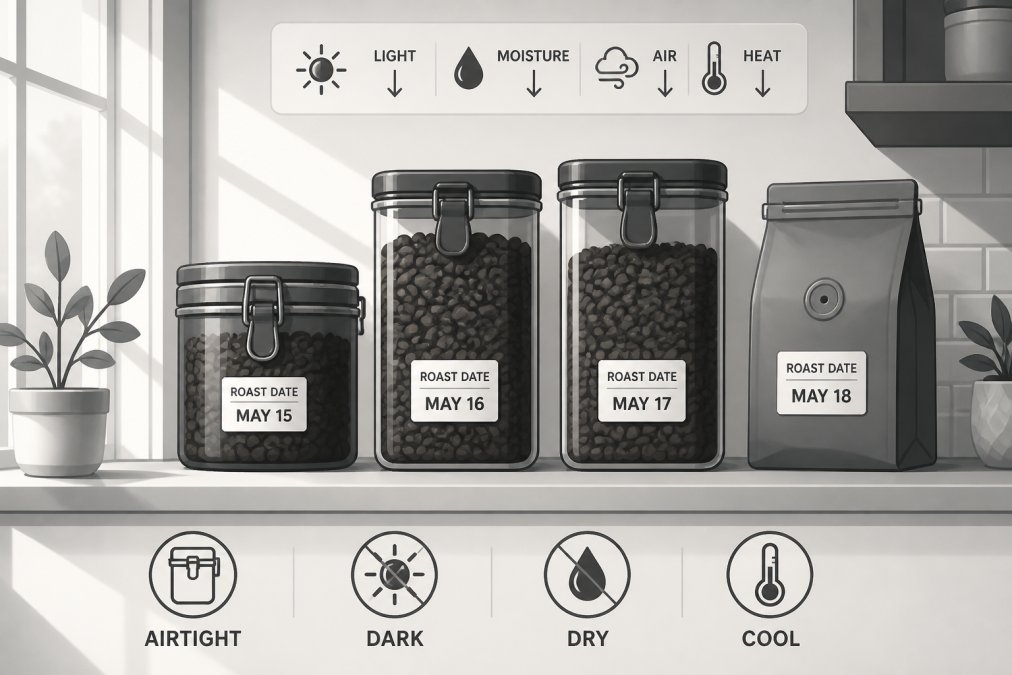
The enemy of fresh coffee is exposure to oxygen, light, heat, and moisture. Whole beans oxidize when exposed to air, breaking down the volatile compounds that create coffee's flavor and aroma. Light accelerates degradation. Heat speeds oxidation. Moisture promotes mold growth.
Airtight containers are non-negotiable. Glass jars with rubber seals work well. Specialized coffee canisters with one-way valves (which let CO2 escape without letting oxygen in) offer premium storage. Avoid storing beans in the original bag unless it has a strong seal.
Location matters equally. Store containers in a cool, dark place, a kitchen cabinet away from the stove, not on a countertop in sunlight. Room temperature (around 65-70°F) is ideal. Never refrigerate or freeze coffee unless storing beans for months; condensation damages beans.
Most specialty coffee stays fresh for 2-4 weeks after roasting when stored properly. This reality shapes subscription frequency, ordering every two weeks aligns with optimal freshness windows.
Coffee Bean Roast Date Importance and Freshness Indicators
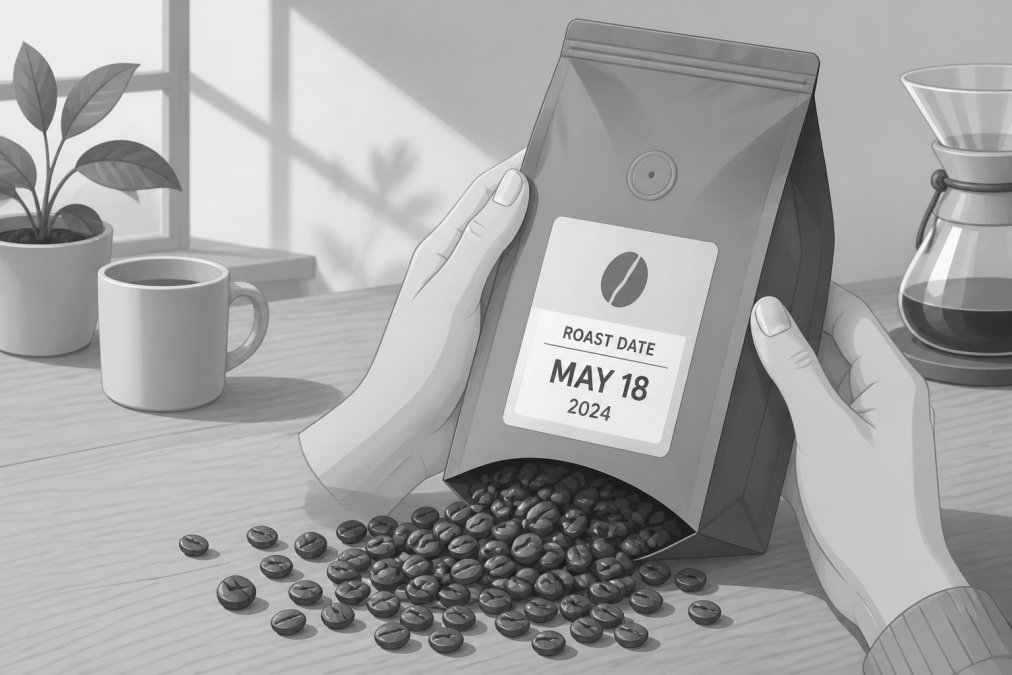
The roast date is the single most important indicator of coffee freshness. Unlike expiration dates on packaged foods, roast dates tell you exactly when the beans were roasted.
Fresh coffee isn't immediately drinkable. Beans need 24-48 hours after roasting to release CO2 built up during the roasting process (called "degassing"). The ideal drinking window extends from day 5 after roasting through day 21-28. Within this window, beans taste their best. After day 28, flavor degradation accelerates noticeably. After day 60, most specialty coffee tastes noticeably stale and flat.
Quality roasters print roast dates on every bag. If a roaster doesn't, that's a red flag, they may be hiding how long beans have sat. Subscription services and direct roasters ship within days of roasting, ensuring you receive beans in their optimal window.
Subscription vs. One-Time Purchase: Which Model Fits Your Needs
The choice between subscription and one-time purchase hinges on your consumption rate, storage capacity, and preference for variety versus consistency.
Subscriptions ensure regular delivery of fresh beans timed to your consumption. If you drink coffee daily, a subscription every two weeks keeps you in the optimal 5-28 day roast window continuously. Subscriptions also simplify decision-making, services like Mistobox and Driftaway make the selection for you, removing cognitive load.
The downside is commitment. Subscription services expect ongoing purchases, and cancellation policies vary. If you discover a coffee doesn't suit your palate, you're committed to that shipment.
One-time purchases offer maximum flexibility. You buy exactly what you want, when you want it. The trade-off is freshness management, you must actively monitor your supply and research roasters yourself.
A hybrid approach works well: maintain a subscription for your daily driver coffee, and supplement with one-time purchases from other roasters for exploration and variety.
Flavor Profiles: Finding Your Preferred Tasting Notes
Understanding your preferences prevents wasted purchases and accelerates your discovery of roasters and coffees you'll genuinely enjoy.
Acidity describes brightness and liveliness in coffee. High-acidity coffees taste crisp and vibrant, with citrus, berries, or floral notes. Low-acidity coffees taste smooth and mellow, with chocolate, nuts, or earthy notes. Lighter roasts typically emphasize acidity; darker roasts mute it.
Body refers to the coffee's weight and texture in your mouth. Light-bodied coffee tastes thin and delicate. Full-bodied coffee tastes thick and syrupy. Medium body falls between.
Flavor notes describe specific tastes you might detect, blueberry, chocolate, caramel, or stone fruit. These aren't added flavoring; they're naturally present compounds that emerge during roasting and brewing. Lighter roasts reveal origin-specific flavor clarity. Darker roasts emphasize roast-created flavors.
Subscription services like Mistobox and Driftaway use flavor preference quizzes to match you with coffees aligned to your palate. Palate development improves with exposure and attention. Angels' Cup explicitly trains this skill through guided blind tastings.
The specialty coffee market has matured beyond a single dominant brand. Today's best Blue Bottle alternatives for fresh beans offer advantages across personalization, sourcing transparency, sustainability, and price. Whether you prioritize curated discovery (Mistobox), ethical sourcing (Driftaway), flavor education (Angels' Cup), or consistent quality from established roasters (Stumptown, Intelligentsia), the market now supports your preferences.
At USM Coffee, we recognize that fresh-roasted beans delivered to your door with transparent sourcing and reliable service define modern coffee satisfaction. Our carefully sourced beans from trusted farms worldwide, roasted to order for maximum flavor and aroma, arrive with fast, reliable delivery, addressing the core needs that drive coffee drinkers to seek alternatives in the first place. Explore roasters and subscription services that align with your flavor preferences, storage capacity, and ethical values. Start with a subscription service offering personalization or education if you're still discovering your preferences. Shift to direct roaster purchases once you've identified your favorite origins and roast profiles. The best coffee isn't necessarily the most recognizable brand, it's the one roasted fresh, stored properly, and matched to your palate.
| Model | Best For | Freshness Window | Flexibility |
|---|---|---|---|
| Subscription (curated) | Convenience + discovery | Optimal (5-28 days) | Month-to-month |
| Subscription (direct roaster) | Consistency + freshness | Optimal (5-28 days) | Varies by roaster |
| One-time purchase | Maximum control | Depends on you | Complete flexibility |
| Hybrid | Balance of both | Optimal + exploration | High |
Frequently Asked Questions
What makes Blue Bottle alternatives worth trying if Blue Bottle is already established?
Many Blue Bottle alternatives offer fresher roast dates, more transparent sourcing, and better value. Services like Mistobox and Driftaway ship directly from roasters within days of roasting, while others provide detailed single-origin information and tasting notes. Specialty roasters like Intelligentsia and Counter Culture often focus on specific sourcing practices, Direct Trade or certified sustainability, that Blue Bottle alternatives may emphasize more strongly. The choice depends on whether you prioritize flavor clarity, ethical sourcing, discovery, or cost.
How important is the coffee bean roast date importance when choosing an alternative?
Roast date is critical for fresh beans. Coffee begins losing flavor compounds within 2-4 weeks of roasting. Top alternatives like Driftaway and Mistobox ship directly from roasters, meaning beans often arrive within 5-10 days of roasting. Always check the roast date on packaging, it should be recent, not months old. Look for roasters who print the date prominently and avoid beans roasted more than 3-4 weeks prior if freshness is your priority.
Is a coffee subscription worth it if I've had subscription fatigue before?
Yes, if you choose the right model. Flexible subscriptions allow you to adjust frequency, pause, or cancel anytime, avoiding the pile-up problem. Mistobox offers 1-4 week cycles based on your consumption. Atlas Coffee Club delivers monthly, giving you time to finish one coffee before the next arrives. If you prefer control, one-time purchases from roasters like Stumptown or Intelligentsia work well. The key is finding a service with transparent cancellation policies and the flexibility to match your actual coffee consumption.
How do I know if specialty coffee alternatives will taste noticeably better in my regular drip coffee maker?
Yes, freshly roasted specialty beans improve any brewing method, including standard drip makers. Fresh beans have more aromatic oils and volatile compounds, which translates to better flavor and aroma even in basic equipment. The difference is most noticeable when comparing fresh specialty beans to stale store-bought coffee. Single-origin coffees from alternatives like Atlas Coffee Club or Counter Culture show distinct tasting notes, citrus, floral, berry, that shine through in simple brewing. You don't need expensive equipment to taste the difference.