

Coffee Alternatives for Daily Drinkers: 10 Options
Table of Contents
- Why Daily Drinkers Switch from Coffee
- Best Coffee Substitutes for Daily Energy
- Low Acid Coffee Alternatives for Sensitive Stomachs
- How to Transition from Coffee to Tea or Herbal Blends
- Comparison Table: Energy, Caffeine, and Flavor Profiles
- Premium Fresh-Roasted Coffee as an Alternative
- Conclusion: Finding Your Daily Brew
Last Updated: August 19, 2026
Why Daily Drinkers Switch from Coffee
Millions of daily coffee drinkers are exploring alternatives, not from lost interest, but from seeking something different. Some experience acid reflux or jitters, others want sustained energy without the afternoon crash, and many simply want to explore what else can deliver ritual and comfort.
Coffee alternatives have evolved far beyond weak herbal teas. Today's options deliver genuine energy, complex flavors, and functional benefits that make the transition feel like an upgrade rather than sacrifice. For daily drinkers accustomed to coffee's intensity, the transition works best when you understand what you're replacing: caffeine, ritual, warmth, and flavor complexity. A proper alternative needs to address at least some of these elements.
Best Coffee Substitutes for Daily Energy
Coffee alternatives fall into distinct categories based on caffeine content, flavor profile, and preparation. Each addresses different priorities: some prioritize sustained energy without jitters, others focus on digestive comfort, and still others emphasize functional benefits beyond basic stimulation.
Mushroom-Based Blends
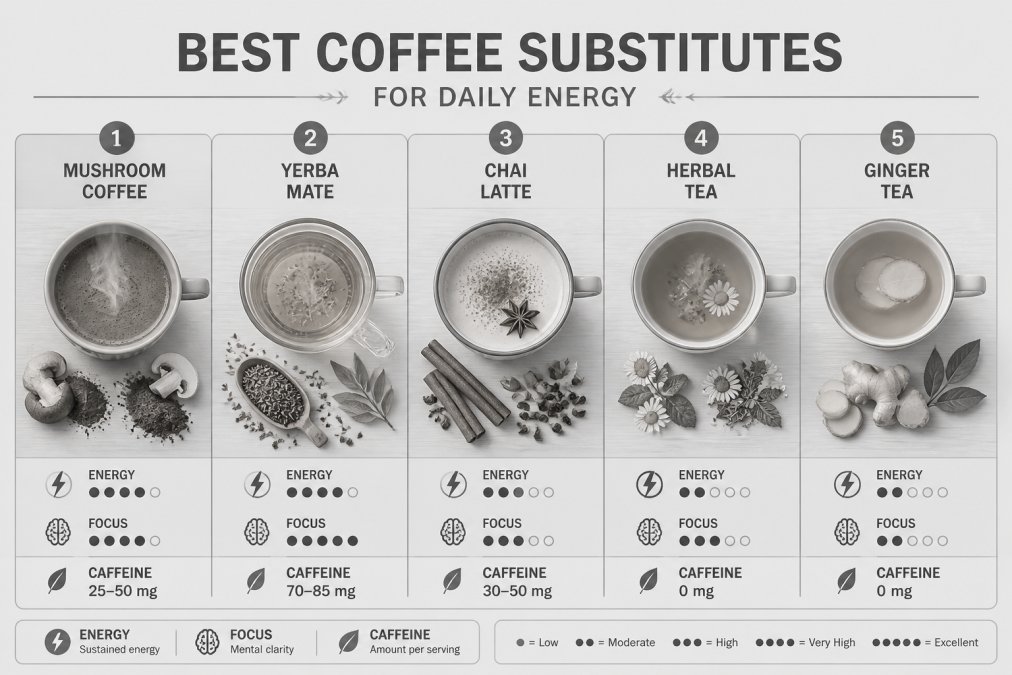
Mushroom coffee combines actual coffee with medicinal mushrooms like Lion's Mane and Chaga, creating a familiar-tasting drink with different effects. Four Sigmatic Mushroom Coffee exemplifies this category, reducing caffeine content while adding adaptogenic properties intended to support focus without jitters. Daily drinkers report the flavor remains recognizably coffee-like, with earthy undertones. The caffeine content is typically 50 mg per serving.
The practical advantage is straightforward: you're modifying coffee rather than abandoning it entirely. Caffeine content is typically 40-50% of standard coffee, which means your body doesn't face withdrawal shock. Setup is identical to regular coffee, brew it the same way. Available in ground form, instant packets, or pods, it requires no new equipment.
The drawback is price and taste. Mushroom blends cost more than conventional coffee, and the earthy notes aren't universally appealing. This is worth testing before committing to a subscription.
Herbal and Grain-Based Options
Teeccino and Dandy Blend represent the caffeine-free end of the spectrum. Teeccino uses roasted herbs, grains, fruits, and nuts to create a dark, slightly bitter brew mimicking coffee's mouthfeel. Dandy Blend offers an instant formula that dissolves in hot water, making it fastest for daily drinkers valuing convenience. It is made from roasted barley, rye, chicory root, and dandelion root extracts.
The appeal is clear for people with acid sensitivity or caffeine intolerance. These alternatives are genuinely gentle on the digestive system. Daily drinkers with reflux often report consuming these blends without discomfort.
The trade-off is flavor authenticity. These taste like roasted grains and herbs, not coffee. For someone attached to coffee's specific profile, this feels like significant loss. The transition works better if you approach it as discovering a new favorite drink rather than replacing an old one.
Tea-Based Alternatives
Black tea, particularly in chai blends, occupies a middle ground with roughly half coffee's caffeine, 25-50 mg per cup versus 95-200 mg for coffee. Chai combines black tea with spices creating warmth and complexity. The flavor differs completely from coffee, but the ritual remains similar: hot water, steeping, a warm mug.
Yerba mate, a South American herbal tea, delivers about 80 mg of caffeine per cup on average. Many daily drinkers report the energy feels cleaner without the crash. The flavor is grassy and slightly bitter, with brightness appealing to those who appreciate coffee's complexity.
Both options are accessible and affordable. Tea bags make preparation trivial for daily routines, and tea culture offers its own rituals and communities.
Low Acid Coffee Alternatives for Sensitive Stomachs
Acid reflux from coffee stems from natural acids (chlorogenic acid primarily) that irritate the stomach lining and esophagus in sensitive individuals. Low-acid alternatives address this directly. Mushroom blends, herbal options like Teeccino, and grain-based substitutes are naturally low in acid. Yerba mate and chai tea also present lower acid profiles than coffee.
For daily drinkers with genuine acid sensitivity, the choice becomes simpler: any option except regular coffee works. The real decision is which delivers the closest approximation to your coffee ritual.
Brewing method affects acid content in coffee itself. Cold brew coffee is significantly less acidic than hot-brewed coffee because cold water doesn't extract acids as effectively. If you have mild acid sensitivity, test cold brew before abandoning coffee entirely.
How to Transition from Coffee to Tea or Herbal Blends
The transition fails most often because daily drinkers attempt a complete switch overnight. Your body and brain have adapted to regular caffeine intake. Stopping suddenly creates withdrawal symptoms: headaches, fatigue, difficulty concentrating. A gradual approach works better.
Caffeine Titration Schedules
Caffeine titration means slowly reducing your total daily intake over weeks, not days. This prevents withdrawal and allows your body to adjust gradually.
Start by calculating your current caffeine intake. A typical coffee drinker consuming three cups daily takes in roughly 285-600 mg of caffeine. Your goal is to reach your target intake over 4-8 weeks.
A practical titration schedule:
Week 1-2: Replace one daily cup with a half-caffeine alternative. Your total caffeine drops by about 33%.
Week 3-4: Replace a second cup. You're at roughly two-thirds your original caffeine intake. Most daily drinkers notice improved sleep quality without significant withdrawal.
Week 5-6: Replace the final cup or remaining coffee cups with a lower-caffeine option.
Week 7-8: Stabilize at your target. Your body has adjusted and withdrawal symptoms are minimal.
Managing Caffeine Withdrawal Symptoms
Even with gradual reduction, some withdrawal occurs. Common symptoms are headaches (usually mild to moderate), fatigue, and difficulty concentrating. These peak around day 2-3 of any reduction step and typically resolve within a week.
Headaches respond well to standard over-the-counter pain relief. Staying hydrated helps, as caffeine is a diuretic. Light exercise and stretching ease the transition without requiring intense energy. Sleep quality often improves during the transition, even though you might feel more tired initially.
The concentration difficulty is temporary. Your brain adapted to caffeine's stimulation. Within 2-3 weeks of stabilization, cognitive function returns to normal levels, sometimes better, because you're no longer dependent on caffeine for alertness.
Matching Flavors to Your Morning Ritual
The psychological component of the transition is as important as the physiological one. Coffee isn't just caffeine delivery, it's a sensory experience and ritual marker.
Successful alternatives preserve elements of that experience. Dark roast drinkers should gravitate toward deeper, earthier alternatives like mushroom coffee or Dandy Blend. Medium roast drinkers might prefer chai or yerba mate. Light roast drinkers might find brightness in certain herbal blends or yerba mate.
If your alternative tastes genuinely good to you, you're more likely to stick with it. Spend a week testing different options before committing to a transition schedule.
Comparison Table: Energy, Caffeine, and Flavor Profiles
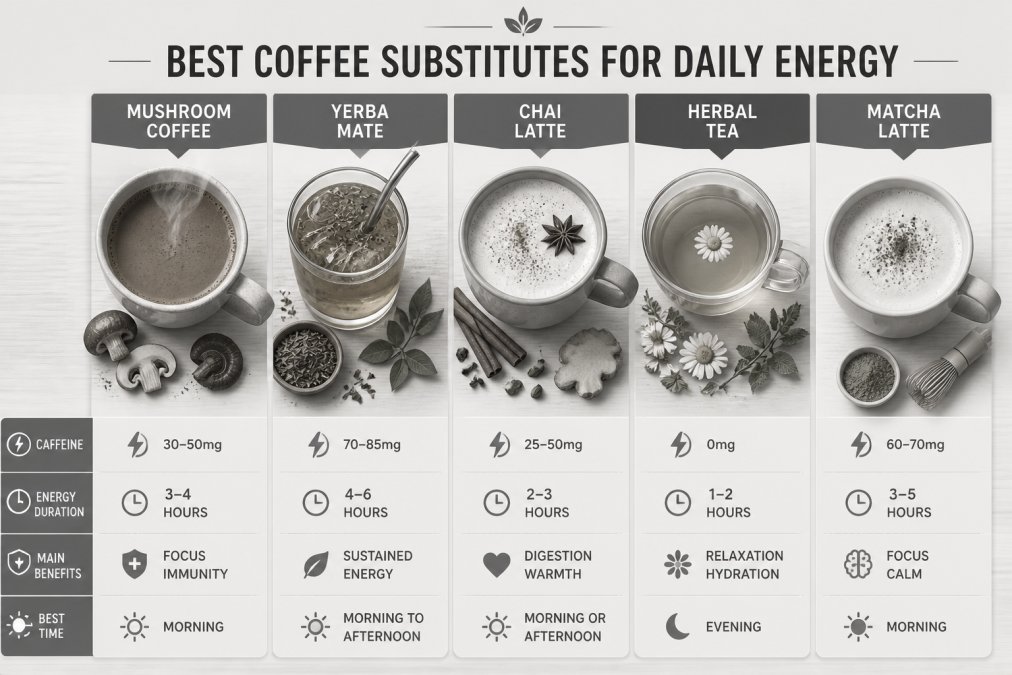
| Alternative | Caffeine per Cup | Energy Duration | Flavor Profile | Best For |
|---|---|---|---|---|
| Mushroom Coffee | 50 mg | 4-6 hours | Earthy, slightly bitter | Gradual transition, sustained focus |
| Teeccino | 0 mg | N/A | Roasted grain, nutty | Acid sensitivity, complete caffeine elimination |
| Dandy Blend | 0 mg | N/A | Roasted root, slightly sweet | Convenience, acid sensitivity |
| Chai Tea | 25-50 mg | 3-5 hours | Warm spice, slightly sweet | Moderate caffeine, ritual preservation |
| Yerba Mate | 80 mg | 4-6 hours | Grassy, slightly bitter | Clean energy, South American flavor |
Premium Fresh-Roasted Coffee as an Alternative
For some daily drinkers, the answer isn't switching away from coffee entirely, it's switching to better coffee. The difference between supermarket coffee and premium fresh-roasted beans is significant. Supermarket coffee is often weeks or months old by the time you brew it. Fresh-roasted coffee, by contrast, is roasted to order and shipped immediately, remaining at peak flavor for 2-4 weeks after roasting.
USM Coffee exemplifies this approach, sourcing beans from trusted farms worldwide and roasting to order. For daily drinkers, this means the morning ritual becomes more satisfying. Better coffee often requires less volume to feel satisfying, a single cup of excellent coffee delivers more sensory pleasure than two cups of mediocre coffee. Some daily drinkers find that switching to premium fresh-roasted beans naturally reduces total consumption, addressing acid sensitivity and jitter concerns without requiring a complete transition to alternatives.
This approach preserves the coffee ritual entirely. You're not learning new brewing techniques or adjusting to unfamiliar flavors.
The trade-off is cost and commitment. Premium fresh-roasted coffee costs more than supermarket options and requires a subscription mindset. For daily drinkers already committed to the coffee experience, this is often worthwhile. For those seeking to move away from coffee, this option doesn't apply.
Conclusion: Finding Your Daily Brew
The shift away from coffee doesn't have to be absolute. Coffee alternatives for daily drinkers range from complete replacements to subtle modifications, from caffeine-free options to premium versions of coffee itself. The right choice depends on your specific goals: addressing acid sensitivity, seeking sustained energy without jitters, reducing caffeine dependence, or exploring new flavors and rituals.
Start with your constraints. If acid reflux is the issue, herbal and grain-based options eliminate the problem immediately. If caffeine sensitivity is the concern, mushroom blends or moderate-caffeine options like chai provide a middle ground. If you simply want better coffee, premium fresh-roasted beans from USM Coffee deliver maximum flavor and freshness through careful sourcing and roast-to-order preparation.
For most daily drinkers, the transition works best as a gradual process paired with flavor matching. Test alternatives over a week or two before committing to a full switch. Use a caffeine titration schedule to avoid withdrawal. The goal isn't to force yourself into drinking something you dislike, it's to find a daily beverage that serves your needs better than what you're currently consuming.
Frequently Asked Questions
What can I replace my daily coffee with for sustained energy?
Several alternatives provide sustained energy without the coffee crash. Yerba mate delivers caffeine from a natural source with a smoother energy curve. Mushroom-based blends like Four Sigmatic combine reduced caffeine with adaptogenic mushrooms for mental clarity. Chai tea offers about half the caffeine of coffee plus antioxidants from black tea and spices. For caffeine-free options, herbal blends with chicory and dandelion root provide a satisfying morning ritual without energy dips. Your choice depends on whether you need caffeine and how you want to experience your daily brew.
Are there low acid coffee alternatives for people with acid reflux?
Yes. Teeccino and Dandy Blend are specifically formulated to be acid-free, making them ideal for sensitive stomachs. These herbal blends use roasted chicory, dandelion root, barley, and rye to mimic coffee's taste and aroma without the acidity. Yerba mate is naturally lower in acid than coffee and provides a gentler option if you still want caffeine. Chai tea, while caffeinated, has less acidity than coffee. If you prefer regular coffee, choosing a fresh-roasted medium or light roast can reduce acidity compared to darker roasts, though it won't eliminate it entirely.
How do I transition from coffee without severe caffeine withdrawal?
Gradual reduction works better than quitting abruptly. Start by mixing your regular coffee with a lower-caffeine alternative, try 75% coffee and 25% herbal blend for the first week, then shift to 50/50, then 25/75 over three to four weeks. This tapering approach minimizes headaches and fatigue. During the transition, stay hydrated, maintain consistent sleep, and keep your morning ritual intact by switching to a new beverage you enjoy. Yerba mate or chai can bridge the gap since they still provide caffeine but with less intensity. Expect mild withdrawal symptoms to peak around day three to five if you reduce too quickly, so a slower schedule prevents disruption to your daily routine.
What coffee alternatives work well in a regular drip coffee maker?
Most alternatives work with standard brewing equipment. Mushroom coffee blends are designed for regular drip machines and French presses. Yerba mate can be brewed loose-leaf in a standard coffee filter or infuser. Chai tea bags fit into any coffee maker that accepts tea bags, or brew loose chai in a coffee filter. Herbal blends like Dandy Blend dissolve instantly in hot water, so no special equipment needed. Fresh-roasted coffee from quality roasters performs exceptionally well in basic drip machines, the key is using freshly roasted beans and proper water temperature, not fancy equipment. You don't need espresso machines or pour-over setups to experience a noticeably better cup than store-bought options.
The right coffee alternative exists for your specific situation. Whether that's a mushroom blend that preserves the coffee experience, a caffeine-free herbal option that solves digestive issues, or simply better coffee that makes you want to drink less, the key is matching the solution to your actual problem. Start by identifying what you're really seeking to change, then test options that address that specific need.