

Cost of Fair Trade Coffee Beans Per Pound: 2026 Review
Table of Contents
- Fair Trade Coffee Beans Cost Per Pound: What You Actually Pay
- Fairtrade Minimum Price Requirements Explained
- Wholesale Coffee Bean Prices Per Pound: Where Roasters Buy
- Fair Trade Coffee vs Organic Coffee Differences in Cost
- What Drives Price Volatility in Green Coffee Beans
- Bulk Buying ROI: When the Per-Pound Price Drops
- Conclusion
- Frequently Asked Questions
Last Updated: September 10, 2026
Fair Trade Coffee Beans Cost Per Pound: What You Actually Pay
The cost of fair trade coffee beans per pound spans a wide range depending on where you enter the supply chain. The Fairtrade Minimum Price for washed Arabica green coffee sits at $2.00 per pound as of December 2026, yet retail shelves routinely price roasted, certified beans between $15 and $25 per pound (fairtrade.net). That gap confuses buyers, and it should. This guide breaks down what actually drives the fair trade coffee beans price you see, from the farmgate floor to the bag on your counter, so you can judge whether a premium is justified or just marketing.
The spread between $2.00 and $25 is not gouging. It reflects sorting loss, roasting yield, certification costs, shipping, and retail markup stacked on top of each other.
Below, we walk through the Fairtrade minimum, wholesale benchmarks, the organic versus Fair Trade cost delta, and when buying in bulk actually pays off.
Fairtrade Minimum Price Requirements Explained
The Fairtrade Minimum Price is a floor, not a ceiling. It guarantees farmers a baseline when the commodity market collapses, and it applies specifically to green coffee beans before roasting. According to Fairtrade International's pricing standards, the minimum for washed Arabica green coffee is set at $2.00 per pound, with a separate 15% Fairtrade Premium paid on top of the commercial price.
That premium funds community projects, not farmer pockets directly. A common mistake is assuming the premium is profit. It is not.
Certification standards also require compliance audits, record-keeping, and cooperative organization, all of which cost money and time.
Washed Arabica Benchmarks and the 15% Premium
Washed Arabica is the reference grade for specialty pricing. The processing method removes the fruit before drying, producing a cleaner, more consistent bean, and that consistency is what buyers pay for. When the commercial price rises above the $2.00 floor, the 15% premium scales with it, so farmers earn more in strong markets rather than being capped.
Wholesale Coffee Bean Prices Per Pound: Where Roasters Buy
Wholesale pricing is where the real numbers live, and it is where most consumers lose visibility. Roasters buy green coffee beans in quantities from a few hundred pounds to full container loads, and unit price drops sharply with volume. A micro-roaster buying 50-pound bags pays a very different per-pound rate than a commercial operation importing 40,000-pound containers.
Here is the part almost no guide explains: the wholesale price a roaster pays is only the first line in a stack of costs that turns a $2.00-per-pound green bean into a $20-per-pound retail bag. Walk the stack yourself:
- Green coffee (FOB origin): $2.00 to $4.00 per pound for Fair Trade washed Arabica, depending on origin, cup score, and crop year.
- Freight and import: ocean freight, inland trucking, customs brokerage, and warehousing commonly add $0.30 to $0.80 per pound of green coffee.
- Certification and compliance: Fair Trade audit fees, cooperative administration, and record-keeping are absorbed across volume; small lots carry a higher per-pound share.
- Sorting and defect loss: removing under-ripes, blacks, and quakers can drop 5% to 15% of green weight before roasting even begins.
- Roast yield loss: green coffee loses 12% to 20% of its weight in the roaster, so 100 pounds of green becomes roughly 80 to 88 pounds of roasted beans.
- Packaging, labor, and overhead: bags with degassing valves, labels, roasting labor, utilities, and equipment depreciation add several dollars per pound at small scale.
- Retail or wholesale margin: roasters and retailers each need a margin, and that is the final multiplier.
Stack those and the math stops looking mysterious. A $2.00 green bean that loses 15% to sorting and another 15% to roasting is effectively $2.77 per roasted pound before freight, certification, packaging, labor, or margin. Add those and you are already past $6.00 before anyone makes a dollar.
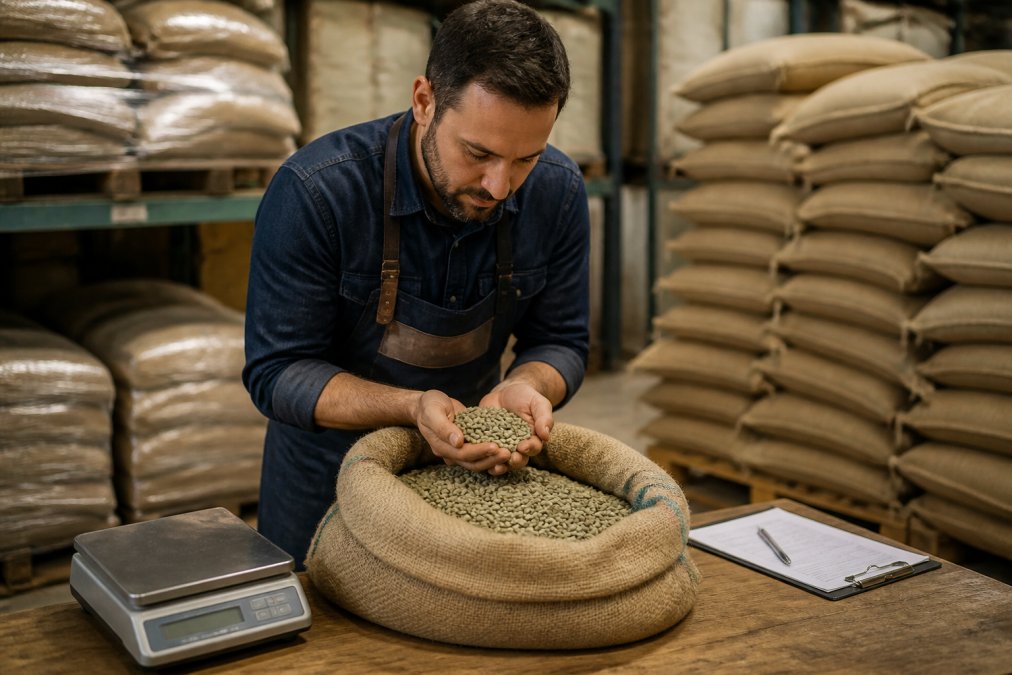
What most guides miss is that wholesale price is not one number. It varies by origin, crop year, bean quality, and the sorting loss the roaster absorbs. Green coffee loses weight during roasting, so a roaster who buys at one price per pound of green beans sells roasted coffee at a higher per-pound cost simply because the yield shrinks.
Fair Trade Coffee vs Organic Coffee Differences in Cost
Fair Trade and organic certifications are separate, and the cost difference between them is real. Fair Trade addresses farmer compensation and community development. Organic certification addresses how the coffee is grown, prohibiting synthetic pesticides and fertilizers. A bean can carry one, both, or neither.
The organic versus Fair Trade cost delta comes down to production costs. Organic farming typically yields less per acre and requires more labor for pest control, which raises the farmgate price. Fair Trade adds its premium on top. When a bean carries both certifications, you are paying for two separate compliance systems, and that stacks.
| Certification | What It Covers | Primary Cost Driver | Typical Price Impact |
|---|---|---|---|
| Fair Trade | Farmer pay, community premium | 15% premium + audit fees | Moderate |
| Organic | Growing methods, no synthetics | Lower yield, more labor | Moderate to high |
| Both | Sourcing ethics + growing | Combined compliance | Highest |
For buyers prioritizing economic sustainability for coffee farmers, Fair Trade alone delivers the direct impact. For those concerned with climate impact and agricultural practices, organic adds a distinct layer. Neither is automatically "better"; they solve different problems.
What Drives Price Volatility in Green Coffee Beans
Price volatility in green coffee beans traces back to the commodity market, and it is brutal. Coffee is one of the most traded agricultural commodities, and its price swings on weather, currency shifts, and speculation. A drought in one growing region can move global prices within weeks.
Climate impact compounds this. Rising temperatures push viable growing zones to higher altitudes, threatening supply from traditional regions and pressuring production costs upward. Economic pressures on coffee farmers intensify when market prices fall below production costs, which is exactly the scenario the Fairtrade price floor was designed to prevent.
A common mistake among buyers is treating today's price as stable. It is not. Historical data shows coffee prices moving sharply across cycles, and any per-pound figure you see is a snapshot, not a guarantee.
Bulk Buying ROI: When the Per-Pound Price Drops
Bulk buying changes the math, but only past a certain volume. The per-pound price falls as package size grows because packaging, handling, and shipping costs spread across more product. A 5-pound bag carries a lower unit price than five 1-pound bags, and a full case lowers it further.
Here is the calculation most guides skip. Suppose a 1-pound bag costs $18 and a 5-pound bag costs $70. The 1-pound buyer pays $18 per pound; the 5-pound buyer pays $14 per pound, a savings of $4 per pound, or about 22%. That sounds like an easy win until you factor in freshness.
Roasted coffee peaks in flavor roughly 5 to 14 days after roasting and begins to fade noticeably after about 4 to 6 weeks, even in a sealed bag with a one-way degassing valve (peer-reviewed research). Whole bean holds longer than ground, but the clock still runs. So the real question is not "what is the per-pound price?" but "what is the cost per cup I actually enjoy?"
Run the break-even:
- 1 cup per day: about 0.6 ounces of coffee per cup, so a 5-pound bag lasts roughly 133 days, or more than four months. At that pace, most of the bag is stale before you finish it. Buy 1-pound bags.
- 2 cups per day: a 5-pound bag lasts about 66 days, or just over two months. Still past the freshness window for the last third of the bag. A 2-pound bag is the better fit.
- 3 cups per day: a 5-pound bag lasts about 44 days, roughly six weeks. This is the sweet spot where bulk pricing and freshness overlap.
- 4 or more cups per day, or a small office: a 5-pound bag lasts under a month, and case quantities (typically 6 to 12 bags) cut unit price further without much staling risk.
A simple rule: divide the bag weight in ounces by 0.6 to get the number of cups, then divide by your daily cups to get the days-to-finish. If that number is under 30, bulk pays off. If it is over 45, you are buying stale coffee at a discount.
There is also a storage variable. Freezing whole beans in an airtight container can extend usable flavor by weeks, but only if you portion out what you need and return the rest to the freezer immediately. Every thaw-and-refreeze cycle pulls moisture onto the beans and accelerates staling. If you are not willing to manage that, do not buy more than you can drink in a month.
For freshness-focused buyers, roasting to order means the clock on flavor starts when your order ships, not when it sat in a warehouse.
Conclusion
The gap between the $2.00 Fairtrade floor and a $20 retail bag is not a scandal; it is the cost of sorting, roasting, certification, shipping, and shelf space stacked on a raw commodity. Understanding that chain is how you decide whether a premium is earned or inflated.
USM Coffee sources beans from trusted farms worldwide and roasts to order for maximum flavor and aroma, so you are paying for freshness and character rather than warehouse time. With an easy ordering process, fast and reliable delivery, and a range of roasts from bold dark to smooth blends, USM Coffee offers a smooth and rich coffee experience. Experience the perfect brew with USM Coffee.
Frequently Asked Questions
What is the current price of Fairtrade coffee per pound?
As of December 2026, the Fairtrade Minimum Price for washed Arabica green coffee is $2.00 per pound, plus a Fairtrade Premium set at 15% of the commercial price. This floor applies before roasting, packaging, shipping, and retail markup, so the price you pay for a finished bag of fair trade coffee beans will be higher. For current retail pricing on roasted beans, check USM Coffee's website.
Is fair trade coffee more expensive than conventional coffee?
At the green bean level, yes. The Fairtrade Minimum Price of $2.00 per pound for washed Arabica sits above what farmers often receive on the open commodity market during price dips. That floor, plus the 15% premium, adds cost before the beans are even shipped. Retail prices also reflect roasting, packaging, and shipping, which is why a bag of fair trade coffee beans can cost more than a conventional supermarket option.
How does the Fairtrade minimum price protect coffee farmers?
The Fairtrade Minimum Price acts as a price floor, meaning farmers receive at least $2.00 per pound for washed Arabica green coffee even when the commodity market drops below that level. The additional 15% Fairtrade Premium is paid on top and is meant for community development projects. Together, these requirements reduce the impact of market fluctuations on smallholder income and support economic sustainability.
What factors influence the retail price of premium coffee beans?
Several factors stack up between the farm and your cup. Green coffee cost, certification fees, sorting loss, roasting yield, packaging, shipping, and retail markup all add to the final price. Washed Arabica beans typically cost more than natural processed beans because of the extra washing step. Organic certification adds another layer of cost. For a specific roasted product, pricing depends on quantity, origin, and delivery, so check USM Coffee's site for current rates.
How much of the price of a bag of coffee goes to the farmer?
The share varies by supply chain, but the Fairtrade system is designed to make that share more transparent. Farmers selling certified coffee receive at least the $2.00 per pound minimum for washed Arabica plus the 15% premium. After that, roasting, packaging, shipping, and retail markup take their cut. Because retail prices vary widely, the farmer's percentage of the shelf price depends on how many steps sit between the farm and the buyer.