

How to Brew Barista Quality Coffee at Home
Table of Contents
- What Makes Barista Quality Coffee Different
- Essential Equipment for Home Barista Brewing
- Selecting and Storing Fresh Coffee Beans
- Understanding Coffee Grind Size and Its Impact
- Mastering the Coffee-to-Water Ratio for Extraction
- Step-by-Step Brewing Methods for Barista Results
- How to Froth Milk at Home Like a Professional
- Troubleshooting Common Brewing Problems
Last Updated: August 28, 2026
What Makes Barista Quality Coffee Different
Barista quality coffee comes down to understanding the variables that control extraction and flavor, then executing with precision. The difference between a mediocre cup and an exceptional one is determined by a handful of decisions made before water touches the grounds.
Most home brewers chase gadgets or expensive beans and miss the fundamentals: how grind size affects extraction time, why water quality matters, and how the coffee-to-water ratio determines whether you're pulling out good flavors or harsh ones. When you understand these mechanics, you can diagnose what went wrong and fix it next time.
Essential Equipment for Home Barista Brewing
You don't need a three-thousand-dollar espresso machine. You need a burr grinder, a scale, and a brewing vessel.
A burr grinder is non-negotiable. Blade grinders produce inconsistent particle sizes, causing uneven extraction. A burr grinder produces uniform particles, the foundation of consistent extraction. This is where your first investment should go.
A scale changes everything. A simple digital scale accurate to 0.1 grams lets you dial in precise ratios and replicate results. Measure your dry grounds and brewed output, and you'll immediately understand what's working.
Choose your brewing method based on preference. Pour-over is affordable and teaches extraction mechanics. Immersion brewing like a French press is forgiving and produces full-bodied results. An espresso machine gives the most control but requires the steepest learning curve.
A gooseneck kettle for pour-over gives you control over water flow. A milk frother opens up espresso-style drinks. A thermometer helps you understand water temperature's role. These are enhancements, not requirements.
Start with a burr grinder, a scale, and a brewing method that fits your lifestyle.
Selecting and Storing Fresh Coffee Beans
Freshness is the single biggest factor in flavor. Beans roasted three weeks ago taste noticeably better than those roasted three months ago. USM Coffee's approach of roasting to order means your beans arrive at peak freshness, not sitting in a warehouse losing character.
Look for a roast date, not just an expiration date. Beans are typically best between 5 and 30 days after roasting (peer-reviewed research). In that window, CO2 has mostly escaped, but flavor compounds haven't degraded. After 30 days, oils begin to oxidize and flavors flatten.
Origin matters, but not the way most people think. A single-origin bean from a respected farm will have distinct flavor notes reflecting altitude, climate, and processing. A well-balanced blend can be more forgiving and deliver consistent results. Both are valid choices.
Keep beans in an airtight container away from light, heat, and moisture. A sealed bag with a one-way valve works fine. Don't refrigerate or freeze beans; condensation damages them. Room temperature in a dark cupboard is ideal. Grind just before brewing.
Buy what you'll use in two to three weeks. Freshness beats price every time.
Understanding Coffee Grind Size and Its Impact
Grind size controls how fast water moves through grounds and how much surface area water contacts. This directly determines extraction yield and flavor profile.
Finer grounds expose more surface area, so water extracts faster and pulls out more compounds. Coarser grounds extract slower. Match grind size to your brewing method's contact time.
For pour-over, use a medium-fine grind. Water moves through in about three to four minutes, so you need enough resistance to slow extraction without channeling. Under-extraction produces sour, thin coffee. Over-extraction produces bitter, harsh notes.
For immersion brewing like a French press, use a coarse grind. Grounds sit in water for four to eight minutes, so coarser size prevents over-extraction. Fine grind produces muddy, bitter results.
For espresso-style brewing, use a fine, consistent grind. Espresso relies on pressure and short contact time, typically 25 to 30 seconds (peer-reviewed research). Fine grind creates the resistance needed for proper pressure development.
The mistake most home brewers make is grinding all beans the same way regardless of method. Invest in a grinder with adjustable settings and dial in the grind size for your specific brewing method.
Mastering the Coffee-to-Water Ratio for Extraction
The coffee-to-water ratio is your primary control lever for extraction yield. A standard starting point is 1:16 by weight, one gram of coffee to sixteen grams of water.
For pour-over, many brewers prefer 1:17 or 1:18 ratios, producing cleaner, brighter cups. For immersion brewing, 1:15 or 1:14 produces fuller body. For espresso, the ratio is typically 1:2 or 1:2.5 by weight.
The ratio works with grind size and brew time to control extraction. Sour or thin coffee means under-extraction; adjust with finer grind, higher ratio, or longer brew time. Bitter or harsh coffee means over-extraction; adjust with coarser grind, lower ratio, or shorter brew time.
A scale becomes invaluable here. Measure your dry grounds and final brewed output. Once you dial in a ratio that works, you can replicate it exactly.
Step-by-Step Brewing Methods for Barista Results
Pour-Over Technique
Pour-over teaches you extraction mechanics because you control every variable in real time.
Start with a clean dripper and filter. Wet the filter with hot water to remove paper taste and preheat the dripper. Place grounds in the filter using your dialed-in grind size and coffee-to-water ratio. For a 1:16 ratio with 25 grams of coffee, use 400 grams of water.
Pour a small amount of hot water to saturate the grounds and stop. This bloom phase lasts 30 to 45 seconds. CO2 escapes, allowing water to penetrate evenly and preventing channeling.
After bloom, pour remaining water in slow, circular motions using a gooseneck kettle. Total brew time should be three to four minutes. If faster, your grind is too coarse or you poured too aggressively. If slower, your grind is too fine.
Aim for water temperature of 195 to 205 degrees Fahrenheit (peer-reviewed research). Let water cool 30 seconds after boiling, or use a thermometer.
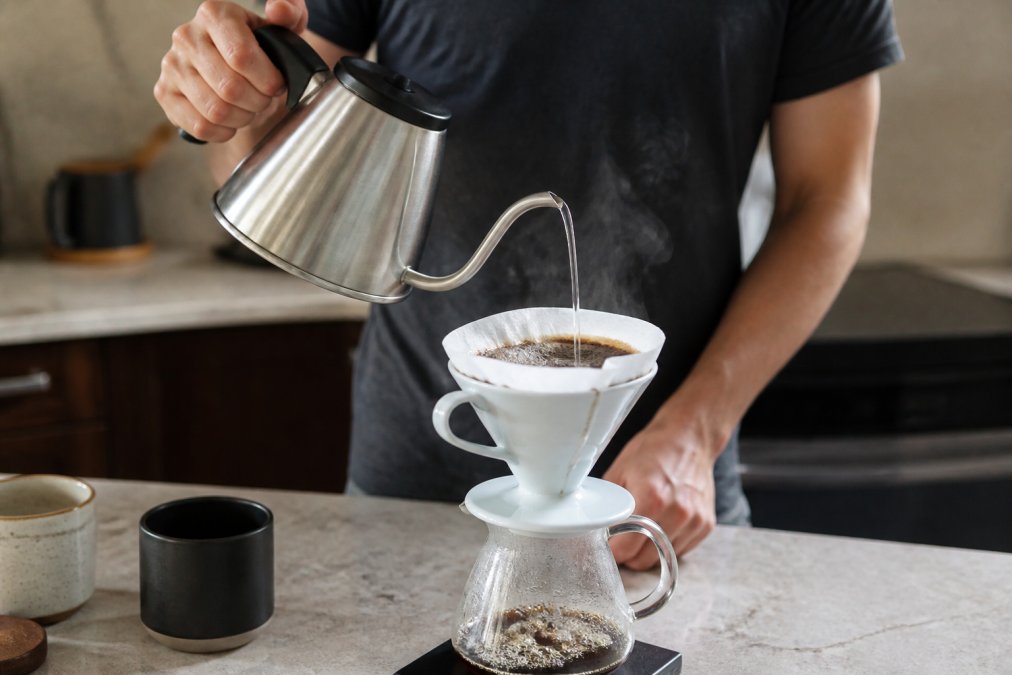
Pour-over rewards attention and consistency, producing clean, bright coffee that reveals the bean's origin characteristics.
Espresso-Style Immersion Brewing
Immersion brewing is more forgiving than pour-over because grounds sit in water the entire time.
Start with coarse grounds and fresh, hot water. Use your coffee-to-water ratio, typically 1:15 for full body. Add grounds, pour hot water, and stir gently. Let it sit for four minutes, then press the plunger slowly downward over 20 to 30 seconds.
Immersion brewing produces fuller-bodied coffee because more oils and compounds end up in your cup. This is ideal for darker roasts. Lighter roasts can taste muddy because extended contact time pulls out harsh, astringent notes.
The advantage is simplicity; the disadvantage is you can't adjust mid-brew.
How to Froth Milk at Home Like a Professional
Milk texturing separates a basic espresso drink from a professional one. The goal is microfoam, tiny, uniform bubbles that integrate with milk to create smooth, velvety texture.
Start with cold milk in a metal pitcher. Position the steaming wand just below the surface, angled so milk spins. You want a soft hissing sound, not a loud screech.
After about five seconds, submerge the wand deeper. Keep the milk spinning and let heat do the work. Total steaming time is typically 15 to 20 seconds. Milk should reach about 150 to 155 degrees Fahrenheit.
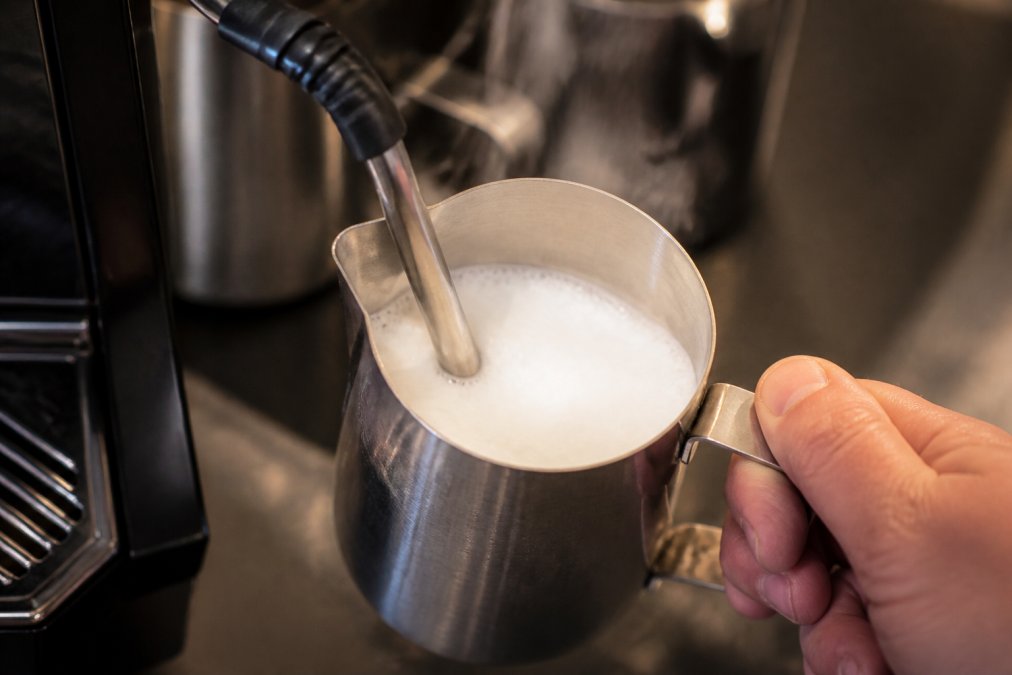
The common mistake is introducing too much air, creating large bubbles instead of microfoam. Large bubbles separate and float to the top. Microfoam stays integrated because bubbles are tiny. Control the air-injection phase, then focus on heat and spin.
Troubleshooting Common Brewing Problems
Sour, thin coffee means under-extraction. Fix this by using a finer grind, increasing brew time, raising water temperature, or using a higher coffee-to-water ratio. Change one variable at a time.
Bitter, harsh coffee means over-extraction. Fix this by using a coarser grind, decreasing brew time, lowering water temperature, or using a lower coffee-to-water ratio.
Channeling during pour-over happens when water finds a path through grounds instead of saturating evenly. Fix this with a proper bloom phase, finer grind, or slower pouring.
Stale-tasting coffee comes from old beans or improper storage. Check the roast date. If more than 30 days old, freshness has degraded. Store beans in an airtight container away from light and heat.
Muddy, over-extracted immersion coffee usually means your grind is too fine for the brewing method. French press needs coarse grounds.
Weak, watery espresso-style drinks mean your grind is too coarse or your dose is too low. Try a finer grind and slightly higher dose.
Change one variable at a time and taste the result. This teaches you how each factor affects flavor.
Brewing barista quality coffee at home is learnable. It's not about talent or expensive equipment, it's about understanding extraction variables and executing with precision. Start with fresh beans from a roaster you trust, invest in a burr grinder and a scale, dial in your brewing method, and taste the difference. USM Coffee delivers fresh-roasted beans roasted to order, giving you the freshness foundation that makes everything else work. Your attention to grind size, ratio, and technique determines whether you're brewing a forgettable cup or one that rivals a cafe.
Frequently Asked Questions
What is the 15-15-15 rule for coffee brewing?
The 15-15-15 rule is a starting point for espresso extraction: 15 grams of coffee grounds, 15 seconds of pre-infusion (bloom phase), and 15 seconds of total extraction time for a 1:2 brew ratio. While this serves as a baseline, most barista quality coffee requires adjustments based on grind size, bean freshness, and water temperature. Use a scale and timer to dial in your specific setup, then refine from there.
How does grind size affect barista quality coffee?
Grind size controls how quickly water extracts flavor compounds from coffee grounds. Too coarse, and you get under-extraction with sour, thin coffee. Too fine, and over-extraction produces bitter, harsh flavors. Medium-coarse grinds work best for pour-over methods, while finer grinds suit immersion brewing. Consistency matters as much as size, a burr grinder produces uniform particles that extract evenly, which is essential for barista quality results.
What's the ideal coffee-to-water ratio for home brewing?
A 1:16 ratio (1 gram of coffee to 16 grams of water) is the professional standard for balanced flavor. For stronger coffee, try 1:15; for lighter, go 1:17. Measure both coffee and water by weight using a scale for precision, volume measurements are unreliable. Fresh beans, proper grind size, and water quality all influence how this ratio performs, so taste your brew and adjust slightly if needed.
Can I make barista quality coffee in a regular drip machine?
Yes, but with limitations. A standard drip maker cannot control water temperature, bloom time, or agitation precisely, which limits extraction control. You can improve results by using fresh beans from a trusted roaster, grinding just before brewing, and using filtered water. For true barista quality, with full control over flavor variables, a pour-over setup or immersion brewer is worth the investment.