

Ihaveabean vs Premium Coffee Roasters: A Buyer's Guide
Table of Contents
- What Defines Premium Coffee Roasters
- How to Choose Specialty Coffee Beans
- The Importance of Roast Date Freshness
- Best Coffee Subscription Services for Your Needs
- Flavor Profiles, Tasting Notes, and Brewing Methods
- Roast-to-Order vs. Store-Bought: What You Actually Taste
- Sustainability and Ethical Sourcing in Premium Coffee
- Frequently Asked Questions
Last Updated: September 1, 2026
What Defines Premium Coffee Roasters
Premium coffee roasters distinguish themselves through meticulous sourcing, precise roasting control, and a commitment to freshness that mass-market alternatives cannot match. They source specialty coffee beans scoring 80 points or higher on the Specialty Coffee Association's 100-point scale, build direct relationships with growers, and roast in small batches to preserve the bean's inherent character (sca.coffee).
Premium roasters invest in equipment that allows precise temperature control throughout the roast, monitoring bean density and color development to extract optimal flavor complexity. Coffee begins to stale the moment roasting ends as volatile aromatics escape and oils oxidize (peer-reviewed research). Premium roasters ship freshly roasted beans within days, not weeks, which is why roast date appears prominently on every bag, your guarantee that the coffee hasn't been sitting in a warehouse losing its character.
How to Choose Specialty Coffee Beans
Selecting specialty coffee beans requires understanding the variables that influence flavor and quality. Start by identifying what matters most to you: single origin complexity, consistent blended smoothness, or a specific roast profile that suits your brewing method.
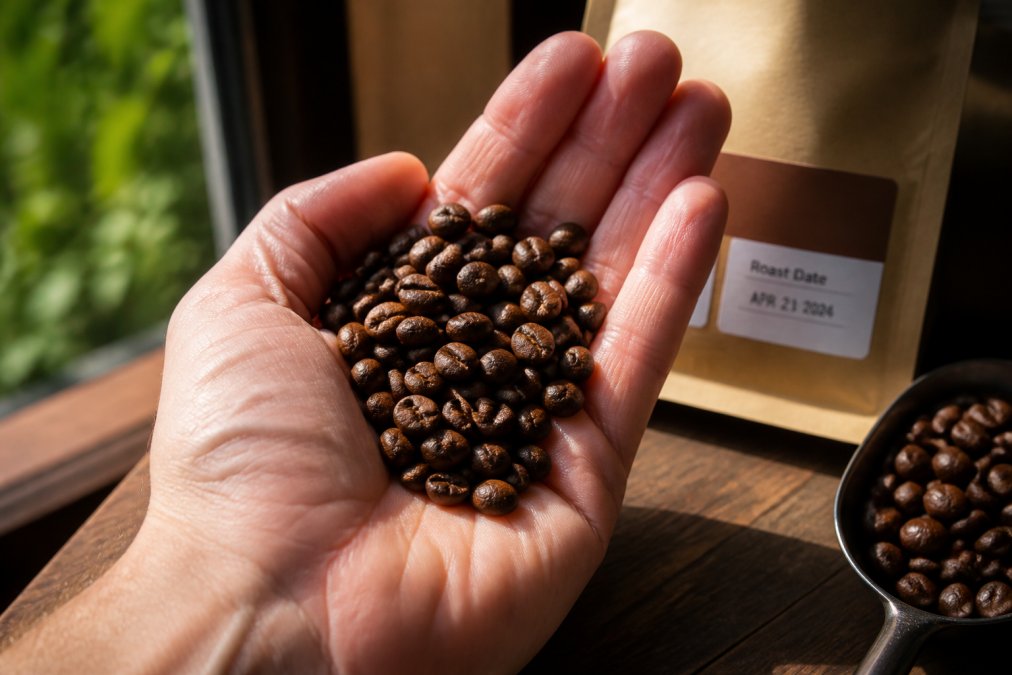
The cupping score, that 80+ number on specialty coffee bags, reflects professional tasters' assessment of flavor complexity, balance, acidity, body, and aftertaste. A single origin Ethiopian Yirgacheffe at 85 points will taste noticeably different from a Brazilian Santos at the same score, reflecting distinct regional characteristics.
Consider your brewing method when selecting beans. Light roast with pronounced acidity shines in pour-over or AeroPress, where water contact time highlights delicate flavors. Medium roast works well across most methods. Dark roast, often chosen for espresso or French press, develops deeper body and lower perceived acidity, ideal if you prefer bold, chocolatey notes.
Single Origin vs. Blended Coffee
Single origin coffee comes from one specific farm, region, or country, allowing you to taste the unique characteristics of that terroir. These coffees tend to have pronounced, distinct flavor profiles: bright acidity in East African coffees, earthy complexity in Indonesian beans, balanced sweetness in Central American origins.
Blended coffee combines beans from multiple origins to achieve a specific flavor target. A well-crafted blend balances strengths: perhaps a Brazilian bean providing body and sweetness, an Ethiopian bean adding brightness and floral notes, and a Colombian bean contributing balance. Blends offer consistency and often provide better value.
The choice depends on your preference. Single origin enthusiasts enjoy exploring how geography shapes flavor. Blend loyalists appreciate refined balance and reliable experience. Many coffee drinkers rotate between both.
Arabica vs. Robusta Quality
Arabica beans account for roughly 60% of global coffee production and dominate the specialty coffee market. Arabica grows at higher elevations, develops more complex flavors, and naturally contains less caffeine than Robusta. Premium coffee roasters focus almost exclusively on Arabica because the species' flavor potential justifies the higher cost and more demanding cultivation requirements.
Robusta comprises the remaining 40% of global coffee and thrives at lower elevations. Robusta contains nearly double the caffeine of Arabica and produces heavier body with earthy notes. Robusta appears primarily in instant coffee, espresso blends, and commercial products where cost drives the decision.
When comparing premium coffee roasters, check whether they source 100% Arabica. A specialty roaster's commitment to Arabica reflects their focus on flavor complexity over profit margin.
The Importance of Roast Date Freshness
Roast date freshness determines whether you experience the coffee as the roaster intended. Coffee peaks in flavor 3-7 days after roasting, when CO2 has largely degassed but volatile aromatics remain intact (peer-reviewed research). After two weeks, noticeable degradation begins. After a month, the coffee tastes noticeably flat and stale.
Premium coffee roasters emphasize roast-to-order fulfillment. When you order from a roaster that roasts after you purchase, your beans ship within 2-3 days of roasting. Compare this to buying from a grocery store shelf, where the roast date may be months old or unlisted entirely.
Subscription services appeal to serious coffee drinkers because they ensure you receive freshly roasted beans on a predictable schedule, eliminating the problem of beans aging in your pantry.
Understanding Degassing and Storage
Degassing is the process of CO2 escaping from freshly roasted beans. By day 3-4, the rate slows significantly. This serves a practical purpose: CO2 in your brewing water creates uneven extraction and sour flavors. Waiting a few days allows enough degassing while the bean retains aromatic volatiles that give coffee its complexity.
Store your beans in an airtight container away from light, heat, and humidity. Whole beans stay fresher longer than ground coffee. A sealed, opaque container in a cool cabinet preserves flavor far better than a clear jar on the counter or refrigerator.
The shelf life of whole beans peaks around 2-3 weeks from roast date. This window, not months, is when you'll experience the roaster's intended flavor profile.
Best Coffee Subscription Services for Your Needs
A coffee subscription solves the freshness problem by delivering roasted beans on your schedule. Evaluate subscriptions based on five criteria: roast frequency, flavor variety, sourcing transparency, delivery speed, and cancellation flexibility.
USM Coffee delivers fresh roasted beans on a schedule you control, with sourcing transparency that lets you understand exactly where your beans originate. The simple ordering process means you're not locked into rigid subscriptions. Fast, reliable delivery ensures beans arrive at peak freshness, and the ability to pause or modify orders prevents the common subscription problem of accumulating unopened bags.
Sourcing Transparency and Direct Trade
Sourcing transparency means understanding the origin of your beans and the relationship between the roaster and the farmer. Direct trade relationships, where the roaster purchases directly from the farm rather than through commodity brokers, ensure farmers receive fair prices and the roaster gains control over quality and processing methods.
When a roaster publishes detailed information about each origin, farm name, elevation, processing method, harvest date, and tasting notes, you're seeing the result of direct trade relationships. Look for roasters that publish tasting notes tied to specific origins. Notes like "Ethiopian Yirgacheffe, natural process, blueberry and floral, light roast" indicate the roaster understands the beans they're selling.
Flavor Profiles, Tasting Notes, and Brewing Methods
Coffee flavor exists in a spectrum defined by roast profile, origin, and brewing method. Understanding this spectrum helps you select beans that match both your palate and your equipment.
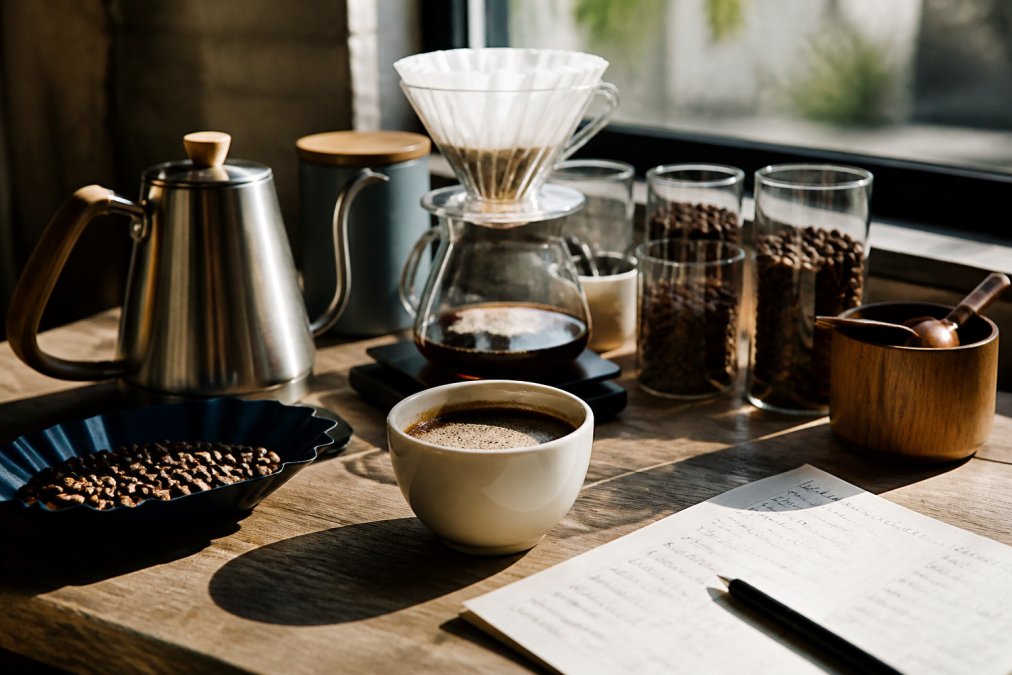
Tasting notes describe the flavors you'll experience when the coffee is brewed correctly. A light roast Ethiopian Yirgacheffe might taste of blueberry, jasmine, and bergamot. A medium roast Colombian might offer chocolate, orange, and balanced sweetness. A dark roast Brazilian might deliver cocoa, hazelnut, and heavy body.
Acidity in specialty coffee refers to brightness and complexity, not sourness. A high-acidity coffee tastes crisp and lively. A low-acidity coffee tastes smooth and heavy. Light roasts typically have higher acidity; dark roasts lower acidity.
Body describes the coffee's weight and texture in your mouth. Light body feels thin and tea-like. Medium body feels balanced. Full body feels heavy and creamy. Brewing method influences body: espresso and French press produce heavier body than pour-over or AeroPress.
Matching brewing method to bean is essential. A light roast with delicate floral notes gets lost in a French press. The same bean shines in a pour-over, where water passes through quickly, highlighting brightness and complexity. A dark roast's bold character holds up to French press or espresso.
Roast-to-Order vs. Store-Bought: What You Actually Taste
The difference between roast-to-order and store-bought coffee is immediate and unmistakable. Store-bought coffee, even from quality brands, has aged weeks or months since roasting. The volatile aromatics have largely evaporated. The oils have begun oxidizing. The coffee tastes flat and dull compared to fresh roasted.
Roast-to-order coffee arrives at your door days after roasting, still in the optimal flavor window. The first brew reveals the roaster's intended flavor profile: bright acidity, complex tasting notes, clean finish. This difference matters most for single origin coffees, where subtle terroir characteristics are easy to lose.
Store-bought coffee from supermarket shelves often lacks any roast date at all. Premium roasters always print the roast date prominently because freshness is central to their value proposition. The cost difference between roast-to-order and store-bought is smaller than most people expect.
Sustainability and Ethical Sourcing in Premium Coffee
Premium coffee roasters increasingly emphasize sustainable farming practices and fair compensation for growers. Sustainable farms produce better coffee. Farmers who receive fair prices invest in quality over volume.
Look for roasters that provide specifics about sourcing: the farm name, region, elevation, and processing method. This level of transparency indicates direct relationships and intentional sourcing decisions. Certifications like Fair Trade, Rainforest Alliance, and Organic matter, but some exceptional coffees come from small farms without formal certification. Direct trade relationships often provide better outcomes than certification-based sourcing.
Environmental impact varies by region and processing method. Washed processing uses significant water; natural processing uses less but produces different flavor profiles. Understanding these trade-offs helps you make informed choices aligned with your values.
The coffee you drink at home should taste like the roaster intended, arrive at peak freshness, and come from sources you trust. Premium coffee roasters deliver on all three fronts. USM Coffee sources specialty beans from trusted farms worldwide, roasts every batch to order for maximum flavor and aroma, and ships with fast, reliable delivery. The result is coffee that tastes noticeably better than store-bought alternatives. If you've never experienced freshly roasted specialty coffee, the difference will be immediate. Start with a single origin that matches your brewing method and taste preferences.
Frequently Asked Questions
What makes premium coffee roasters different from store-bought coffee?
Premium coffee roasters source beans from specific farms, control the roasting process precisely, and often roast to order. Store-bought coffee has usually sat on shelves for weeks or months, losing flavor complexity and freshness. Specialty roasters focus on single-origin beans with documented cupping scores and processing methods, details that preserve the bean's unique characteristics. The difference is most noticeable in acidity, body, and aftertaste complexity when brewed properly.
How do I know if a coffee subscription service is actually worth the cost?
Evaluate subscription services by their sourcing transparency, roast dates, and flexibility. Look for direct trade or micro-lot sourcing, clearly printed roast dates (not just 'fresh'), and the ability to adjust shipment frequency or cancel without penalty. Compare what you'd spend monthly against local roasters or specialty shops. Premium coffee subscriptions justify their cost through consistent quality, convenience, and access to single-origin lots you couldn't source individually. Factor in delivery time, beans roasted and shipped within days retain more flavor than those sitting in warehouses.
What does a coffee freshness guide tell me about shelf life?
Coffee freshness depends on roast date, storage conditions, and bean density. Whole beans stay flavorful for 2-4 weeks after roasting if stored in an airtight container away from light, heat, and moisture. Ground coffee degrades faster, use it within 1-2 weeks. Arabica beans, which are less dense, lose flavor complexity more quickly than Robusta. Roast-to-order services ship beans within days of roasting, maximizing the window when flavor complexity and acidity are at their peak. Always check the roast date on packaging; it should be recent, not vague claims like 'fresh.'
Will premium coffee taste noticeably better in a regular drip coffee maker?
Yes, but the difference depends on your brewing method and grind size. Premium beans with complex tasting notes shine more in pour-over or French press because these methods extract more of the bean's nuance. Drip makers work fine, but you'll notice improvement most in the smoothness, body, and aftertaste. Grind size matters, too coarse and you miss extraction; too fine and you get bitterness. Even with basic equipment, freshly roasted specialty beans produce noticeably richer flavor than store-bought options. The real advantage of premium roasters is that their beans are roasted to highlight specific flavor profiles, making them forgiving across different brewing methods.