

Is Coffee Subscription Worth the Money? A 2026 Cost Guide
Table of Contents
- The Real Math: Coffee Subscription Cost Comparison
- Freshness and Roast Dates: Why They Change the Value Equation
- How to Choose a Coffee Subscription That Fits Your Routine
- Hidden Costs: Shipping, Packaging Waste, and Subscription Fatigue
- Best Dark Roast Coffee Subscription Options for Bold Flavor
- Membership Perks, Cancellation Policies, and Risk-Free Trials
- Verdict: When a Coffee Subscription Pays Itself Off
- Frequently Asked Questions
Last Updated: September 12, 2026
The Real Math: Coffee Subscription Cost Comparison
Whether a coffee subscription is worth the money comes down to three numbers: cost per cup, how much stale coffee you pour down the drain, and what you pay for convenience. At USM Coffee, we roast every batch to order, so the freshness clock starts when your order ships.
A coffee subscription rarely wins on raw price per ounce. It wins on freshness, consistency, and eliminating waste. If you buy a bag, let half go stale, and still stop at a cafe three mornings a week, it usually pays for itself. If you drink one cup a day and finish every bag, it's a convenience purchase, not a savings play.
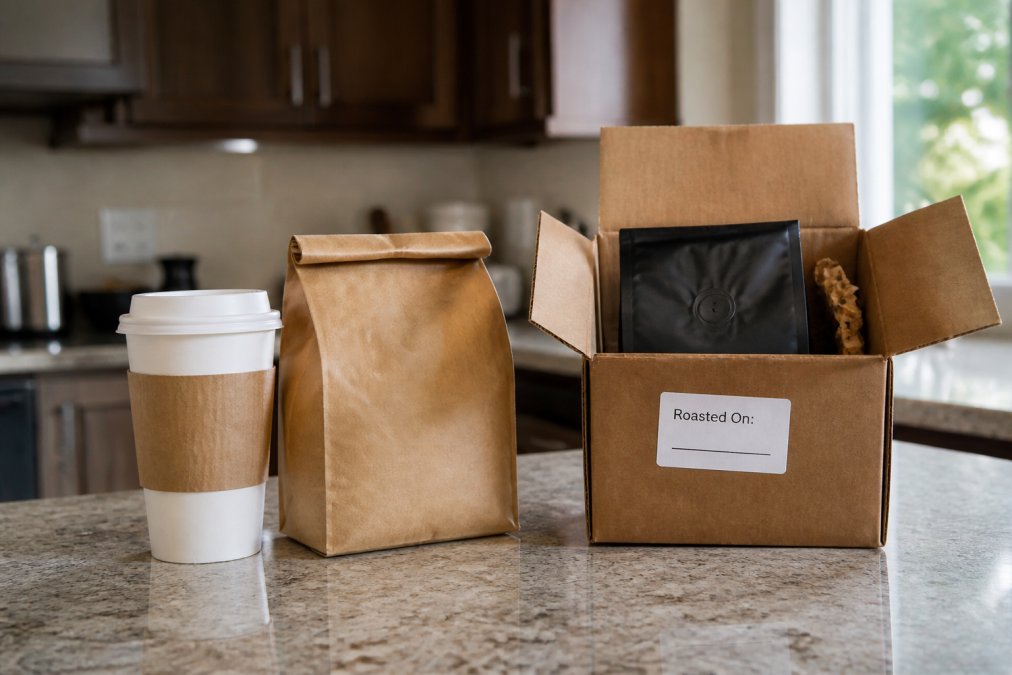
Subscription vs. Cafe vs. Grocery: Cost Per Cup
Cost per cup is the only comparison that matters, and it's the one most buyers skip. A cafe charges by the drink, a grocery bag by the ounce, and a subscription by the delivery. To compare fairly, divide total cost by the cups you actually drink.
A standard 12-ounce bag yields roughly 22 to 27 cups at a 16-gram dose, or 30 to 40 cups if you brew weaker; a pound lands around 30 to 40 cups (peer-reviewed research). Cafe drip runs a few dollars per cup before tip, a latte several times that. Grocery beans vary widely, and subscription pricing depends on quantity, roast selection, and delivery frequency.
Rather than trust a generic average, run your own numbers:
- Cost per cup from a cafe = (drink price + tip) ÷ 1 cup.
- Cost per cup from grocery = bag price ÷ cups per bag, then add the cups you pour out.
- Cost per cup from a subscription = (bag price + shipping) ÷ cups per bag.
The grocery number is where people fool themselves. If you drink two-thirds of a bag and dump the rest, your real cost per cup is the bag price divided by the cups you actually drank, not the cups the bag could have made. That waste multiplier is usually the difference between grocery looking cheapest and grocery losing.
| Source | What You Pay For | Freshness at Brew | Waste Risk |
|---|---|---|---|
| Cafe | Per drink, plus tip | Brewed to order | None |
| Grocery bag | Per ounce, in bulk | Unknown roast date | High, if you drink slowly |
| Coffee subscription | Per delivery, recurring | Roasted to order | Low, if frequency fits |
The pattern holds across most households: cafes cost the most per cup, grocery bags look cheapest but lose value to staleness, and subscriptions sit in the middle with predictable freshness. Check USM Coffee's site for current rates rather than trusting a generic average.
The Waste Multiplier: The Number Most Buyers Ignore
Staleness is a cost, not just a flavor problem. A pound is roughly 30 to 40 cups, about two to three weeks at two cups a day, right at the edge of peak flavor (peer-reviewed research). Buy three pounds at once and the third pound tastes noticeably flatter, so its cups are worth less than the ones you brewed in week one.
To price that in, estimate the share of each bag you finish before it goes flat. Finish 70 percent of a grocery bag and your effective cost per cup is the bag price divided by 0.7 of its cup yield. A subscription sized to your consumption pushes that finish rate toward 100 percent, narrowing the gap even when its sticker price is higher.
When the Subscription Actually Wins
Run the three numbers and the verdict usually falls out on its own. A subscription tends to win when your finish rate on grocery bags is low, when you also buy cafe drinks, and when you value not reordering. It tends to lose when you finish every bag, drink one cup a day, and enjoy shopping for beans in person. The point isn't to declare a winner, it's to replace a feeling with a number you can check.
Freshness and Roast Dates: Why They Change the Value Equation
Roast date, not expiration date, determines whether your coffee tastes like the tasting notes on the bag. Coffee peaks in the days and weeks after roasting and declines steadily from there. A bag with no roast date is a bag you cannot evaluate.
This is where subscription value gets concrete. Supermarket coffee may sit in distribution for weeks before reaching a shelf, and there's no way to know how long. USM Coffee roasts to order, so beans ship close to their roast date.
What most guides miss is that freshness only helps if you drink the coffee fast enough. A pound is roughly 30 to 40 cups, about two to three weeks at two cups a day, right at the edge of peak flavor. Buy three pounds at once and the third tastes noticeably flatter.
How to Choose a Coffee Subscription That Fits Your Routine
Choosing a coffee subscription is a matching exercise, not a shopping spree. The right plan matches your consumption rate, your equipment, and your tolerance for repetition. Get those right and it feels effortless; get them wrong and you end up with a cabinet full of beans you're not excited about.
Start with an honest count of how many cups you brew in a week, then work backward to bag size and delivery frequency. Most subscription frustration traces back to ordering more coffee than you drink.
Match Delivery Frequency to Your Actual Consumption
Delivery frequency should follow consumption, not the other way around. One cup a day usually means a monthly single bag; three or four cups a day means a larger bag or a shorter interval.
A simple way to set this up:
- Count your actual cups per day for one week
- Multiply by seven to get weekly consumption
- Divide your bag size by weekly consumption to find how long a bag lasts
- Set delivery frequency slightly longer than that window
- Adjust after the first two deliveries based on what's left on the shelf
That last step matters. Your first cycle is a calibration, not a commitment.
Equipment-Specific Matching: Drip, Espresso, and Pour-Over
Your brewing method dictates the roast profile and grind that taste good in your kitchen. Espresso rewards darker roasts and a fine, consistent grind; pour-over and drip reward medium roasts and a coarser grind that lets water move through evenly.
With a standard drip machine, you don't need specialty equipment to notice the difference. Freshly roasted whole beans ground just before brewing produce a noticeably richer cup than pre-ground coffee open for a month. Grind size is the variable most home brewers ignore, and often why a good bean tastes mediocre.
Hidden Costs: Shipping, Packaging Waste, and Subscription Fatigue
The sticker price is not the full cost. Shipping, packaging, and the slow creep of unused deliveries all affect what you actually spend, which is why a subscription can feel expensive even when the per-cup math looks fine. Price each one instead of waving at it.
Shipping: The Per-Shipment Penalty
Shipping is the most visible hidden cost, and it scales the wrong way. A roaster pays roughly the same to ship a one-pound box as a two-pound box, so shipping per ounce is nearly twice as high on the smaller order. That's why a monthly single-bag plan often costs more per cup than a biweekly two-bag plan, even at an identical bag price.
Before you commit, answer three questions:
- Is shipping folded into the listed price or added at checkout?
- Does the rate change with order size, or is it flat per shipment?
- Is there a free-shipping threshold you can hit by sizing up?
A flat per-shipment fee rewards larger, less frequent orders. A free-shipping threshold does the same thing. Either way, the cheapest per-cup configuration is usually the one that fills a box, not the one with the smallest bag.
Packaging Waste: What Actually Gets Recycled
Packaging waste is the quieter cost. A typical shipment contains a corrugated outer box, an inner bag, and a one-way degassing valve. The box is widely recyclable curbside; the inner bag is the problem, since multi-layer foil and plastic laminates are recyclable in only a minority of municipal programs, and the valve is a mixed-material component most facilities can't separate (the EPA).
The practical levers are consolidation and material choice. Fewer, larger shipments cut packaging per ounce, and some roasters ship in recyclable or compostable bags or run bag-return programs. If sustainability matters to you, ask two questions before subscribing: what is the inner bag made of, and does the roaster accept returns or refills? A vague answer is an answer.
Subscription Fatigue: The Inventory Creep Problem
Subscription fatigue is when recurring deliveries keep arriving after your consumption slows, you travel, drink more tea in summer, get busy, and the surplus quietly stacks up. It's the most common reason people cancel, and it's mechanical, not moral: recurring billing doesn't know you skipped a week.
The fix is to treat inventory as a number you track, not a feeling you notice. A simple running count works:
- Note the roast date on each bag when it arrives.
- Estimate your daily cup count and convert it to ounces per day.
- Subtract as you brew, and flag the bag when it crosses roughly three weeks past roast.
- If two unopened bags are on the shelf, pause the next delivery.
That last rule alone prevents most over-accumulation. A subscription you can pause is a subscription you can calibrate, and calibration is worth more than a small per-bag discount.
| Hidden Cost | What It Looks Like | How to Limit It |
|---|---|---|
| Shipping | Flat per-shipment fee or free-shipping threshold | Size up to fill a box; consolidate deliveries |
| Packaging waste | Foil/plastic inner bags, one-way valves | Ask about recyclable or compostable bags; consolidate |
| Subscription fatigue | Deliveries arriving after consumption slows | Pause when two unopened bags are on the shelf |
| Over-ordering | More beans than you can drink fresh | Match frequency to consumption, not to deals |
The International Shipping Question
If you're considering a roaster abroad, add international shipping and any customs or import handling fees. These can exceed the cost of the coffee itself on small orders and usually aren't shown until checkout. For most households, a domestic roaster-direct subscription wins on landed cost even when the foreign bag looks cheaper. Confirm the all-in delivered price before comparing per-cup math.
Best Dark Roast Coffee Subscription Options for Bold Flavor
If you prefer bold, low-acidity coffee, dark roast is where a subscription earns its keep. Dark roasts are developed longer, muting brighter acidity and pushing forward the chocolatey and caramel notes many drinkers prefer. For anyone who finds lighter roasts sharp, a well-executed dark roast is often the difference between coffee they tolerate and coffee they look forward to.
USM Coffee's dark roast lineup is roasted to order. Ordering roaster-direct shortens that window.
When comparing dark roast subscriptions, weigh four things: roast date transparency, whether the beans ship whole or pre-ground, how flexible the delivery frequency is, and whether the plan lets you pause or skip. A plan that scores well on all four is worth the money for a daily dark roast drinker. One that hides the roast date is not.
Membership Perks, Cancellation Policies, and Risk-Free Trials
Membership perks and cancellation terms are where subscriptions quietly differ, and they're the first thing to read before signing up. A generous perk program is worthless if canceling is a hassle.
Look for clear answers to four questions before you commit:
- Can you pause or skip a delivery without canceling entirely?
- Is there a minimum commitment, or can you stop after one shipment?
- Are member perks like early access or apparel discounts actually useful to you?
- Is the cancellation process self-service, or does it require a phone call?
A subscription you can pause is one you can calibrate, and that flexibility is worth more than a small per-bag discount because it prevents the over-accumulation that drives most cancellations. If a plan makes cancellation difficult, treat that as a warning sign regardless of how good the coffee sounds.
Verdict: When a Coffee Subscription Pays Itself Off
A coffee subscription pays for itself when three conditions line up: you drink coffee daily, you currently waste beans to staleness, and you value not thinking about reordering. Then the freshness and convenience more than offset the modest premium over grocery store pricing.
It does not pay off if you drink one cup a week, finish every bag you buy, or genuinely enjoy shopping for beans in person. A subscription is a tool, and like any tool it's only worth the money when it fits the job.
The clearest test is a single month. Order one delivery sized to your actual consumption, track how many cups you brew from it, and compare that to what you spent at cafes and grocery stores over the same period. Most people find the answer within one cycle.
The real challenge with coffee subscriptions isn't finding one that's worth the money. It's finding one that roasts fresh, matches your routine, and doesn't leave you with a cabinet full of stale beans. USM Coffee offers beans sourced from trusted farms worldwide, roasted to order for maximum flavor and aroma, and delivered through a simple ordering process with fast, reliable delivery. If you want bold dark roasts or smooth blends that taste like they were roasted for you, get started with USM Coffee and taste the difference a roast date makes.
Frequently Asked Questions
How much money can you actually save with a coffee subscription?
Savings depend on what you replace. If you buy a $5 to $7 cafe latte five days a week, brewing at home with a subscription can cut your monthly coffee spend significantly. The savings come from cost-per-cup math: a bag of freshly roasted beans makes multiple cups for the price of one or two cafe drinks. Shipping fees and premium single-origin selections reduce those savings, so compare your current weekly spend against the subscription's total delivered cost before committing.
What are the hidden costs of coffee subscription services?
Beyond the bag price, watch for shipping fees, especially on international roaster-direct shipments, which can add several dollars per delivery. Some services charge more for decaf, single-origin, or limited releases. Packaging waste is another cost, both environmental and financial, since individual bags and boxes add up. Finally, subscription fatigue is real: if deliveries outpace your drinking pace, you end up storing stale beans or canceling mid-cycle, wasting money on coffee you never brew.
Which coffee subscription is best for dark roast lovers?
Look for roasters that specialize in bold, low-acidity profiles and roast to order. A best dark roast coffee subscription should list roast dates on every bag, offer whole bean and pre-ground options, and let you set delivery frequency. Dark roasts also tend to be more forgiving in standard drip machines, so you do not need espresso equipment to taste the difference. Check whether the roaster sources ethically and provides tasting notes so you can match the flavor profile you enjoy.
How do you cancel a coffee subscription if you are not satisfied?
Before you sign up, read the cancellation policy. Reputable services let you pause, skip, or cancel online without a phone call or retention runaround. Some require notice before your next roast date, so mark your calendar. If you are unsure, start with a one-time order or a short trial instead of a long commitment. A clear cancellation process is a sign the roaster trusts its product and values your repeat business.