

Signs of Stale Coffee Beans: How to Tell
Table of Contents
- What Makes Coffee Beans Go Stale
- Visual Signs Your Coffee Beans Have Gone Stale
- How to Smell-Test for Freshness and Detect Staleness
- The Coffee Bloom Test: A Hands-On Method
- How Long Do Coffee Beans Last Before They Stale
- Best Way to Store Coffee Beans to Prevent Staleness
- What You Can Do With Stale Coffee Beans
- Conclusion
Last Updated: August 12, 2026
What Makes Coffee Beans Go Stale
Coffee beans go stale through a natural process called degassing and oxidation. When beans are roasted, they release carbon dioxide (CO2) and develop complex flavor compounds. Over time, these volatile aromatic oils oxidize when exposed to oxygen, light, and heat, causing the beans to lose their vibrant character and distinctive notes.
The primary culprits behind stale coffee beans are oxygen exposure, moisture, and time. Once roasted, coffee begins a gradual decline in freshness. The oils that create complexity and brightness break down, leaving behind flat, bland flavors. This oxidation process accelerates in the presence of heat and humidity, which is why storage conditions matter enormously.
What most people don't realize is that stale coffee beans still look relatively normal. The staleness isn't always obvious visually at first glance. The real indicators emerge through smell, taste, and specific tests that reveal how much of the bean's character has faded. Understanding these signs helps you catch declining freshness before brewing a disappointing cup.
At USM Coffee, we roast every batch to order specifically to minimize this window of degradation. Fresh-roasted beans delivered directly to your door preserve the maximum flavor and aroma that makes specialty coffee worth the investment. The difference between beans roasted last week and beans sitting on a shelf for months is dramatic when you know what to look for.
Visual Signs Your Coffee Beans Have Gone Stale
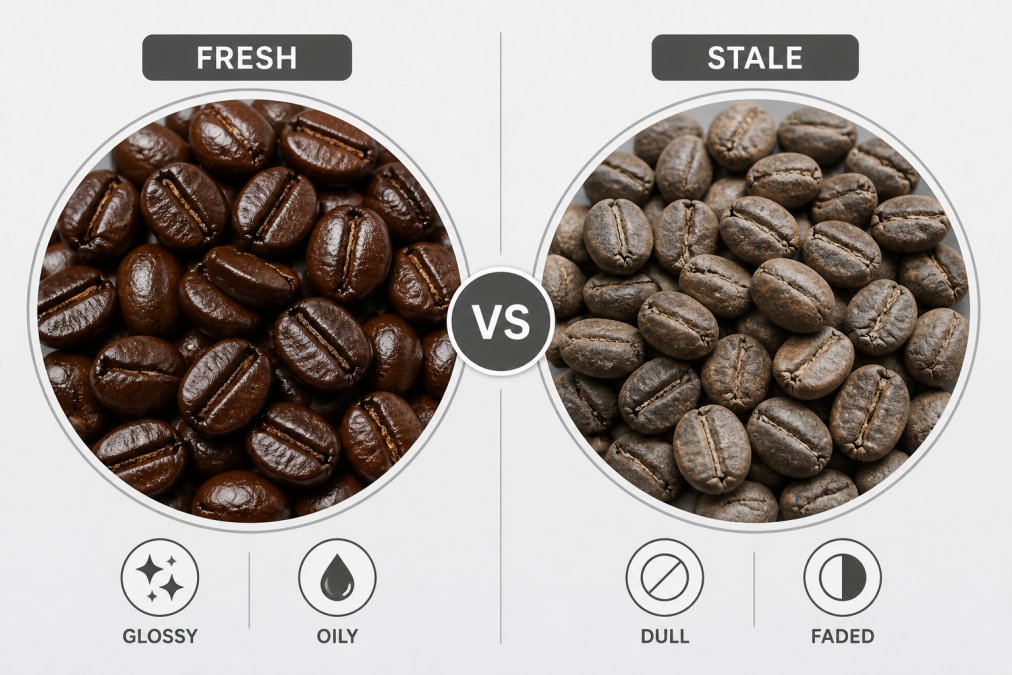
Fresh coffee beans have a rich, deep color with a subtle sheen from natural oils. Stale beans lose this luster and develop a dull, flat appearance. The color may shift toward a grayish or ashy tone, especially on the surface. If your beans look lackluster compared to a fresh sample, that's a reliable visual warning sign.
Oil migration is another visual indicator of aging. Fresh, medium-to-dark roasted beans often show visible oils on the surface, particularly if roasted within the past week or two. As beans age, these oils either evaporate or become absorbed back into the bean structure, leaving the surface looking dry and matte. Very stale beans may appear almost powdery or chalky on the outside.
Check for visible cracks or fractures in the bean structure. While some cracking is normal in darker roasts, excessive cracking or a brittle appearance suggests the bean has lost internal moisture and structural integrity. Fresh beans have a firm, dense quality. Stale beans become more fragile and break apart more easily when handled.
The roast date on your packaging is your most straightforward visual clue. Beans roasted more than four weeks ago are entering the staleness zone for whole beans. Ground coffee deteriorates even faster, typically within two weeks. If your bag lacks a roast date entirely, that's a red flag, reputable roasters always print this information prominently.
How to Smell-Test for Freshness and Detect Staleness
Open your bag and take a deliberate sniff near the opening. Fresh coffee has an immediately recognizable aroma, bright, complex, and inviting. You should detect specific notes depending on the origin and roast: fruity, floral, nutty, chocolatey, or spicy undertones. The aroma should feel alive and energetic.
Stale coffee smells flat, muted, or musty. The complexity disappears, leaving behind a one-dimensional, almost cardboard-like scent. Some stale beans develop a slightly rancid or off odor, particularly if they've been exposed to moisture. If the smell is noticeably weaker than you remember from a previous bag, staleness is advancing.
A useful technique is the "aroma comparison." If you have access to fresh beans from USM Coffee or another specialty roaster, smell them side by side with your suspect beans. The contrast becomes unmistakable. Fresh beans practically announce themselves. Stale beans feel like an echo of what they should be.
Pay attention to how long the aroma lingers. Fresh beans release volatile aromatic compounds that persist for several seconds after opening the bag. Stale beans lose this persistence, the smell fades quickly or barely registers. This is because the aromatic compounds have either evaporated or oxidized into less volatile compounds.
Ground coffee presents a different smell profile. Fresh ground coffee releases an intense burst of aroma due to increased surface area. Stale ground coffee smells muted almost immediately. If you're grinding at home, the difference between grinding fresh beans versus stale ones is instantly obvious.
The Coffee Bloom Test: A Hands-On Method
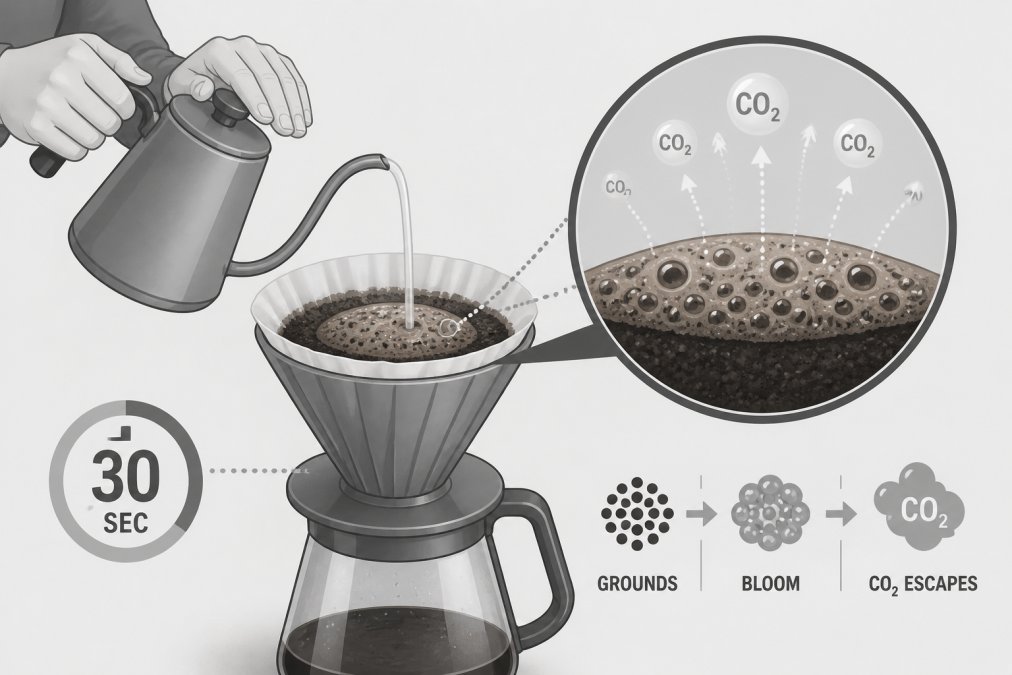
The bloom test is one of the most revealing ways to assess stale coffee beans. When hot water first contacts freshly roasted ground coffee, the residual carbon dioxide (CO2) trapped inside the beans is released rapidly, creating visible bubbles and foam. This is the bloom. Fresh beans produce vigorous, dramatic blooms. Stale beans produce weak or barely noticeable blooms.
Here's how to perform the bloom test at home. Grind a small amount of beans (about 15-20 grams) to medium-fine consistency, similar to pour-over grind. Place the grounds in a cup or pour-over dripper. Heat water to 195-205 degrees Fahrenheit. Pour just enough hot water to saturate the grounds, about twice the weight of the grounds (30-40 grams of water). Watch for the next 30-45 seconds.
Fresh beans bloom dramatically. You'll see the grounds rise up and bubble vigorously, with visible foam and CO2 bubbles escaping. The bloom might last 30-60 seconds before settling. This vigorous reaction indicates the beans still contain significant trapped CO2, which is a marker of recent roasting and retained freshness.
Stale beans produce a weak or absent bloom. The grounds might bubble slightly, but there's minimal foam and the reaction dies quickly, within 10-15 seconds. Some very stale beans show almost no bloom at all. The lack of CO2 release indicates the beans have already degassed significantly, meaning they've lost volatile compounds that create complexity and brightness.
The scientific principle here is straightforward: CO2 degassing is a direct marker of how long beans have been roasted. Beans roasted 3-7 days ago bloom vigorously. Beans roasted 2-3 weeks ago bloom moderately. Beans roasted 4+ weeks ago show minimal bloom. By observing the bloom, you're essentially measuring the bean's remaining freshness window.
This test works best with whole beans ground immediately before testing. If you're testing pre-ground coffee, the bloom will be less dramatic because some CO2 has already escaped during grinding and storage. But the principle still applies, fresh ground coffee blooms noticeably; stale ground coffee barely reacts.
How Long Do Coffee Beans Last Before They Stale
The timeline for stale coffee beans depends on storage conditions and roast level. Whole beans stored in ideal conditions (cool, dark, airtight) remain fresh for 2-4 weeks after roasting. This is the premium window where flavor complexity and brightness are at their peak. After four weeks, the beans enter the acceptable-but-declining phase.
Ground coffee degrades much faster than whole beans because grinding dramatically increases surface area exposed to oxygen. Ground coffee begins noticeably losing quality within 3-5 days, even in airtight storage. After two weeks, ground coffee is approaching stale status. This is why coffee enthusiasts grind beans immediately before brewing, the difference in flavor is substantial.
Roast level affects the staleness timeline slightly. Lighter roasts, which have more acidity and delicate floral or fruity notes, begin losing complexity within 2-3 weeks. Darker roasts, with their bolder, more stable flavor compounds, can maintain acceptable quality for 3-4 weeks. However, all roasts follow the same fundamental degradation curve once the roast date passes.
Environmental factors accelerate staleness significantly. Beans stored in warm conditions (above 75°F) degrade faster than those kept cool. Humidity promotes moisture absorption and mold risk, accelerating oxidation. Exposure to light, particularly direct sunlight, speeds up the degradation of aromatic oils. Poor storage can compress the fresh window from 4 weeks to just 10-14 days.
The practical takeaway is this: plan your coffee consumption around a 2-4 week window from roast date for whole beans, and 1-2 weeks for ground coffee. Ordering smaller quantities more frequently preserves freshness better than buying large amounts. This is where subscription services become valuable, you receive fresh beans on a schedule that matches your consumption rate, eliminating the risk of beans aging on your shelf.
Best Way to Store Coffee Beans to Prevent Staleness
Airtight containers are non-negotiable for preventing stale coffee beans. Oxygen is the primary enemy of freshness. Use containers that seal completely, mason jars with rubber gaskets, vacuum-sealed bags, or specialized coffee canisters with one-way valves. The one-way valve design is particularly effective because it allows CO2 to escape (which beans naturally release) while preventing oxygen from entering.
Keep beans in a cool, dark location. The ideal storage temperature is 50-70°F. Room temperature in most homes (68-72°F) is acceptable but not optimal. Never store beans above the stove, near a window, or in direct sunlight. Heat and light both accelerate oxidation. A pantry, cabinet, or basement typically provides better conditions than a kitchen counter.
Avoid the refrigerator or freezer despite common advice suggesting otherwise. Cold temperatures can cause condensation when the container warms up, introducing moisture that promotes staleness and mold. If you must use cold storage, ensure the container is completely airtight and allow it to reach room temperature before opening to prevent moisture accumulation.
Buy beans in quantities you'll consume within 3-4 weeks. Buying large amounts "to save money" often backfires, you'll end up drinking stale coffee, which defeats the purpose of choosing premium beans. Smaller, more frequent purchases preserve freshness and ensure you're always brewing at peak quality.
Store beans in their original packaging if it has a good seal and is opaque. Many specialty roasters, including USM Coffee, package beans in bags with one-way valves and light-blocking materials specifically designed for optimal storage. Transferring beans to different containers can compromise these protective features.
Keep whole beans separate from ground coffee. Ground coffee's faster degradation can create an odor environment that affects nearby whole beans. Store them in different areas if possible, or at minimum in separate sealed containers.
What You Can Do With Stale Coffee Beans
Stale coffee beans aren't waste, they have legitimate uses beyond composting. The first option is cold brew. Cold brewing extracts flavor differently than hot water, and the extended steeping time (12-24 hours) can compensate for some of the complexity lost to staleness. Cold brew also masks flatness better than hot coffee because the brewing method emphasizes different flavor compounds.
Use stale beans for flavored coffee drinks. Milk-based beverages like lattes, cappuccinos, and macchiatos mask staleness effectively. The milk and espresso intensity cover the flat or bland notes that become obvious in black coffee. If you're making specialty drinks with syrups, spices, or chocolate, stale beans work adequately because the other flavors dominate.
Stale whole beans can be repurposed for coffee-based cooking and baking. Ground stale beans work well in coffee rubs for meat, coffee-infused desserts, tiramisu, coffee cake, brownies, or coffee-flavored ice cream. The cooking process actually benefits from slightly older beans because the subtle, flat notes blend into baked goods without standing out.
Make cold-brew concentrate using stale beans. The concentrate is useful for coffee drinks, cooking, or even as a base for coffee-flavored cocktails. The long steeping time extracts what flavor remains, and the concentrate can be stored for weeks in the refrigerator.
Coffee grounds (used or stale) have practical household applications. Dried grounds work as a natural odor absorber in the refrigerator or freezer. They can be mixed into garden soil as a mild fertilizer. Some people use dried grounds as an exfoliating scrub in homemade skincare products.
Compost is the final option. If beans are truly too stale or moldy to use, composting returns the organic matter to soil. This is better than throwing them away, though it's the least preferable option if the beans are still salvageable for any of the uses above.
Knowing how to identify stale coffee beans transforms your coffee experience. The visual signs, smell test, and bloom test give you concrete ways to assess freshness before brewing. Fresh beans make an undeniable difference in flavor complexity, brightness, and overall satisfaction. When you commit to fresh-roasted coffee delivered on a schedule that matches your consumption, you eliminate the guesswork entirely. USM Coffee's roast-to-order model ensures maximum flavor and aroma in every cup, paired with fast, reliable delivery that keeps your supply consistently fresh. Start with beans roasted within the past week and taste the difference that true freshness delivers.
Frequently Asked Questions
What does stale coffee taste like?
Stale coffee tastes flat, bland, and lacking in complexity. The vibrant acidity and rich flavor notes fade over time as oxidation and CO2 degassing progress. Instead of tasting smooth and balanced, stale beans produce a bitter, woody, or musty cup. The body feels thin and watery compared to fresh-roasted beans. If your brew tastes dull and one-dimensional, staleness is likely the culprit.
Can stale coffee beans make you sick?
Stale coffee beans themselves are not dangerous to consume. However, if beans have developed mold or moisture damage during storage, they can pose health risks. Properly stored stale beans are safe to drink but will taste poor. If beans smell musty, rancid, or off, discard them. Storage in an airtight container away from moisture prevents spoilage and keeps beans shelf-stable for months.
How long do coffee beans last after you open the bag?
Once opened, whole beans stay reasonably fresh for 1-2 weeks if stored in an airtight container away from heat and light. Ground coffee deteriorates faster, losing flavor within 3-5 days after grinding due to increased surface area exposed to oxygen. The roast date matters significantly, beans roasted within the past 2-4 weeks will taste noticeably better than older stock. Check your bag's roast date to gauge remaining freshness.
What's the difference between expired and stale coffee?
Expired coffee has passed a manufacturer's recommended date, while stale coffee has lost flavor and aroma through oxidation and degassing. Stale beans are safe to drink but taste flat and bland. Expired beans may be stale, but the terms describe different things, expiration is about safety, staleness is about quality. Fresh-roasted beans with a recent roast date will taste significantly better than older beans, even if both are technically safe.