

Smooth Dark Roast Coffee Beans: 9 Best Options
Table of Contents
- What Makes Dark Roast Coffee Smooth
- Quick Comparison: Top Smooth Dark Roast Coffee Beans
-
9 Best Smooth Dark Roast Coffee Beans Ranked
- 1. USM Coffee: Premium Fresh-Roasted Selection
- 2. Peet's Coffee Major Dickason's Blend: Bold and Complex
- 3. Death Wish Coffee Dark Roast: Smooth Power
- 4. Stone Street Coffee Cold Brew Reserve: Chocolate Smoothness
- 5. Stumptown Coffee Roasters French Roast: Organic Balance
- 6. Kicking Horse Coffee Kick Ass: Sweet Complexity
- 7. Allegro Coffee Organic French Roast: Everyday Smooth
- 8. Seattle's Best Coffee Post Alley Blend: Accessible Quality
- 9. Starbucks French Roast: Intense Smokiness
- How to Brew Dark Roast Coffee for Maximum Smoothness
- Best Dark Roast Coffee for Espresso
- Avoiding Bitterness: Why Your Dark Roast Tastes Burnt
- Whole Bean vs. Pre-Ground: Freshness Matters
- Single-Origin vs. Blended Dark Roasts
Last Updated: August 13, 2026
What Makes Dark Roast Coffee Smooth
A smooth dark roast achieves deep color and bold flavor without harsh bitterness through precise roasting technique and high-quality bean selection. Roasters must stop at the exact moment when caramelization is complete but the bean structure remains intact, preserving natural oils and complexity rather than pushing into char.
At USM Coffee, we've learned that smoothness requires sourcing beans with lower acidity profiles, then roasting to a point where the oily surface signals perfect timing. A well-executed smooth dark roast delivers chocolate notes, subtle sweetness, and rich mouthfeel that improves as it cools. Freshness matters critically: beans roasted weeks ago oxidize and lose character, while fresh-roasted beans maintain the oils and aromatic compounds that create smoothness.
Quick Comparison: Top Smooth Dark Roast Coffee Beans
| Coffee | Roast Style | Tasting Notes | Best Brewing Method | Key Advantage |
|---|---|---|---|---|
| USM Coffee Premium Selection | Fresh-roasted dark | Chocolate, caramel, smooth finish | Pour-over, French press | Roasted to order for maximum freshness |
| Peet's Major Dickason's Blend | Bold dark blend | Earth, spice, full-bodied | French press, drip | Consistent quality, widely available |
| Death Wish Dark Roast | Intense dark | Dark chocolate, black cherry | Espresso, drip | High caffeine, smooth despite intensity |
| Stone Street Cold Brew Reserve | Dark, optimized | Chocolate, smooth acidity | Cold brew, iced | Specifically engineered for cold brewing |
| Stumptown French Roast | Organic dark | Clove, bittersweet chocolate | Pour-over, French press | Balanced smokiness without burnt taste |
| Kicking Horse Kick Ass | Fair Trade dark | Vanilla, molasses, licorice | Any method | Complex sweetness, ethical sourcing |
| Allegro Organic French Roast | Organic dark | Cocoa, roasted nuts | Drip, French press | Smooth and sweet, everyday friendly |
| Seattle's Best Post Alley | Accessible dark | Well-rounded, balanced | Drip coffee | Affordable, smooth, no bitterness |
| Starbucks French Roast | Darkest available | Dark caramel, sweet smoke | Espresso, drip | Ubiquitous availability, consistent |
9 Best Smooth Dark Roast Coffee Beans Ranked
1. USM Coffee: Premium Fresh-Roasted Selection
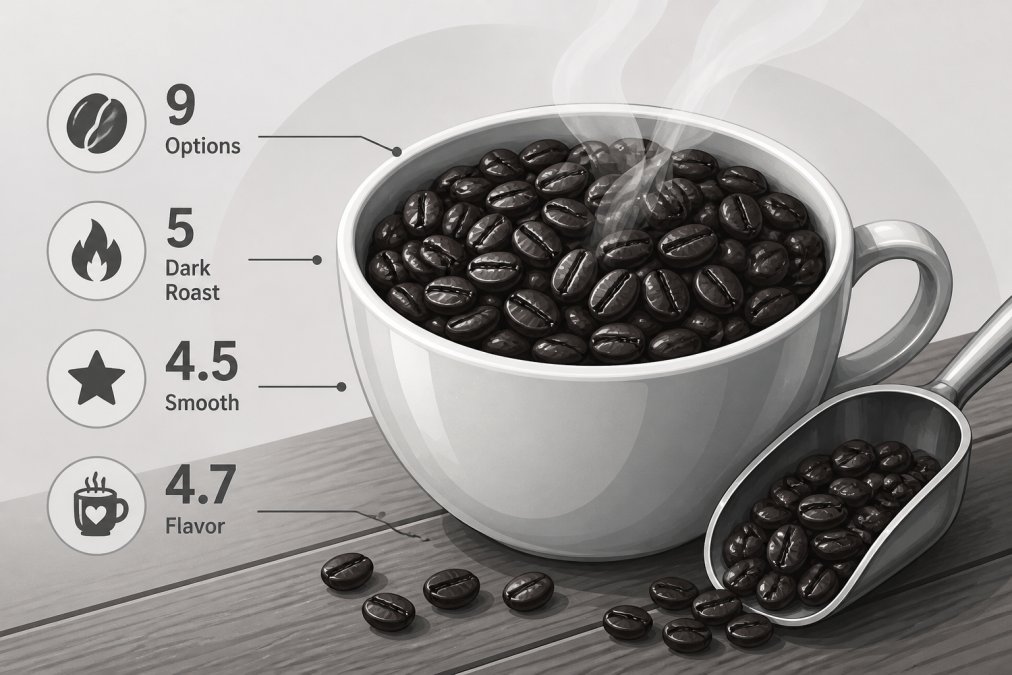
USM Coffee stands apart because every batch is roasted to order, arriving at peak freshness within days of shipment. The roasting process is calibrated to bring out smoothness without crossing into ashy, over-roasted territory. USM sources from trusted farms worldwide, selecting beans with naturally lower acidity and fuller body, non-negotiable for smooth dark roasts. The result is coffee with chocolatey depth and caramel sweetness without harsh bite. USM Coffee also includes coffee-inspired apparel with orders.
Pros:
- Roasted to order ensures maximum freshness
- Carefully sourced beans with lower acidity
- Fast, reliable delivery
- Simple ordering process
- Includes apparel with orders
Cons:
- Premium pricing compared to mass-market options
- Subscription flexibility may require checking the website for current options
2. Peet's Coffee Major Dickason's Blend: Bold and Complex
Peet's Major Dickason's Blend combines Latin American and Indo-Pacific beans to create a full-bodied coffee with earthy and spicy notes that develop into subtle sweetness as it cools. The smoothness comes from careful blending where each bean contributes to a rounded mouthfeel, delivering hints of dark chocolate and subtle earthiness without bitterness.
Pros:
- Consistently high-quality blend
- Versatile for any brewing method
- Subscription discounts available
- Widely available in grocery stores
- Complex flavor profile without bitterness
Cons:
- Higher price point than mass-market brands
- Blend-based, so less transparency into single-origin sourcing
3. Death Wish Coffee Dark Roast: Smooth Power
Death Wish Coffee delivers nearly double the caffeine of standard dark roasts while remaining smooth. The beans are sourced from high-altitude farms where natural caffeine levels are higher. Rather than relying on over-roasting to create intensity, Death Wish uses high-quality beans and controlled roasting that preserves natural oils and flavor compounds, delivering dark chocolate and black cherry notes without burnt taste.
Pros:
- Exceptionally high caffeine without sacrificing smoothness
- Organic and Fair Trade certified
- Available in multiple formats (whole bean, ground, pods)
- Good for espresso
Cons:
- Caffeine content may be excessive for some users
- Premium pricing for the intensity level
4. Stone Street Coffee Cold Brew Reserve: Chocolate Smoothness
Stone Street Coffee Cold Brew Reserve is engineered specifically for cold brewing. Cold water extracts coffee differently than hot water, pulling out sweetness and smooth body while leaving harsh compounds behind. The Colombian Arabica Supremo beans are roasted to deliver pronounced chocolate notes, smooth acidity, and clean finish.
Pros:
- Optimized specifically for cold brewing
- High-quality Colombian Arabica beans
- Smooth acidity and chocolate notes
- Subscription options available
Cons:
- Primarily marketed for cold brew
- Less readily available in physical stores
5. Stumptown Coffee Roasters French Roast: Organic Balance
Stumptown's French Roast rejects the burnt profile that gives French roast a bad reputation. Their dark roast is big and smoky while maintaining sweetness and complexity. The 100% Arabica beans are sourced through Direct Trade relationships, delivering clove and bittersweet chocolate notes with a smooth mouthfeel.
Pros:
- Organic certified and Direct Trade sourced
- Balanced smoky flavor without bitterness
- Works well in French press and pour-over
- Ethical sourcing practices
Cons:
- Higher price point than mass-market options
- Flavor intensity may be too much for newcomers to dark roasts
6. Kicking Horse Coffee Kick Ass: Sweet Complexity
Kicking Horse Kick Ass is a Fair Trade and organic dark roast with vanilla, dark chocolate, molasses, and licorice notes. The sweetness differentiates it from most dark roasts, coming from bean selection and roast precision calibrated to bring out caramelization without pushing into char.
Pros:
- Fair Trade and organic certified
- Complex, multi-layered flavor profile
- Actual sweetness in a dark roast
- Subscription discounts available
Cons:
- Unique flavor profile may not appeal to everyone
- More difficult to find in physical stores
7. Allegro Coffee Organic French Roast: Everyday Smooth
Allegro Coffee sources from small-holder co-ops at high elevation, which naturally produces beans with good body and lower acidity. The dark roast stays smooth because of bean quality and roasting restraint, delivering mellow cocoa and roasted nuts that work well for everyday brewing in any method.
Pros:
- Organic certified and ethically sourced
- Well-balanced, approachable flavor
- Good for any brewing method
- Reasonable pricing for organic
Cons:
- Flavor profile is less complex than specialty roasters
- Availability depends on retailer
8. Seattle's Best Coffee Post Alley Blend: Accessible Quality
Seattle's Best Post Alley Blend is 100% Arabica roasted to a dark level, delivering a well-rounded and flavorful cup without harshness. The smoothness comes from bean quality and roast control, providing reliable, drinkable coffee at a significantly lower price point than specialty roasters.
Pros:
- Affordable price point
- Widely available
- Smooth without bitterness
- Consistent quality
- Works in any brewing method
Cons:
- Less complex flavor profile than specialty roasts
- Limited information on sourcing and bean origins
9. Starbucks French Roast: Intense Smokiness
Starbucks French Roast is the darkest roast Starbucks offers, prioritizing intensity over subtlety. The 100% Arabica beans deliver bold and straightforward flavor with dark caramel and sweet smoke notes. Compared to specialty roasters, it's harsher, but it's a well-executed dark roast that wins on ubiquity and consistency.
Pros:
- Extremely widely available
- Consistent flavor profile
- Bold, intense dark roast
- Reasonable pricing
- Available in multiple formats
Cons:
- Can taste burnt or overly bitter to some palates
- Less nuanced flavor compared to specialty roasts
- Limited sourcing transparency
How to Brew Dark Roast Coffee for Maximum Smoothness
The brewing method matters as much as the beans. A smooth dark roast can become bitter if brewed incorrectly, or even smoother with the right technique.
Water Temperature and Extraction
The ideal water temperature for brewing smooth dark roast coffee is between 195-205 degrees Fahrenheit. This range extracts full flavor while minimizing bitterness. Water above 205 degrees over-extracts and pulls harsh compounds; water below 195 degrees under-extracts and leaves coffee tasting weak and sour.
Dark roast beans have fragile cell structures from roasting, making them more susceptible to over-extraction. Using slightly cooler water than you'd use for light roasts helps preserve smoothness. Automatic drip coffee makers typically heat water to around 200 degrees, which is ideal. For manual methods, invest in a simple kitchen thermometer or electric kettle with temperature control.
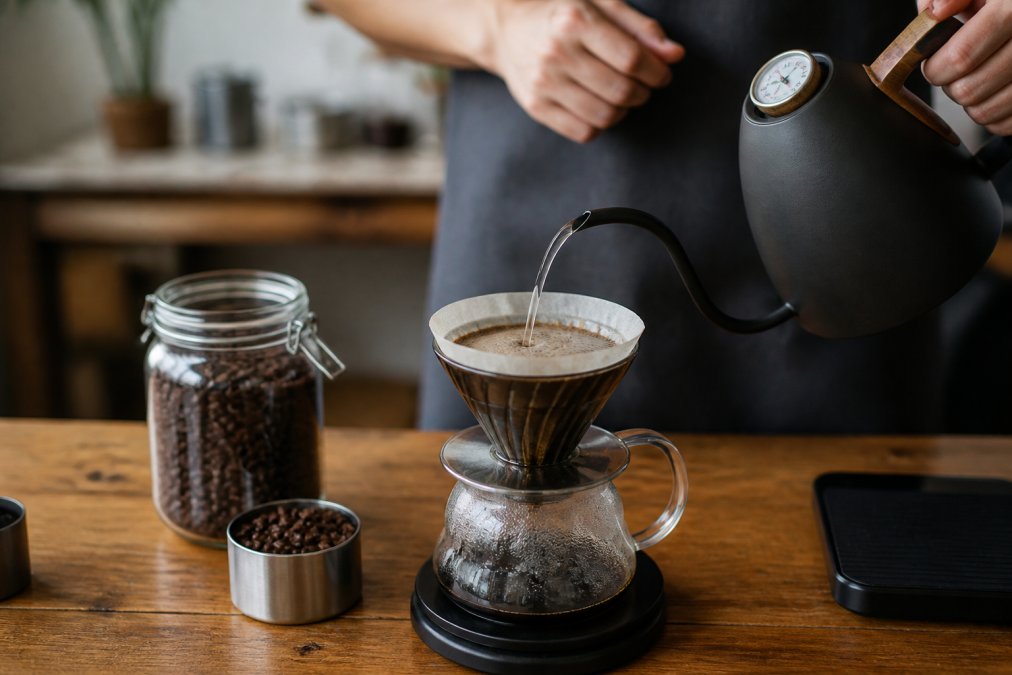
Extraction time also matters. For pour-over, aim for 3-4 minutes total brew time. For French press, 4 minutes is standard. For espresso, 25-30 seconds. Shorter brew times produce smoother coffee because there's less time for harsh compounds to dissolve.
Grind Size and Brewing Method
Grind size controls extraction speed. For French press, use a coarse grind to slow extraction during the 4-minute steep. For pour-over, use a medium-fine grind to match the faster flow rate. For espresso, use a fine grind since water flows quickly under pressure. For drip coffee makers, use a medium grind.
If your dark roast tastes bitter, try a coarser grind, cooler water, or shorter brew time. If it tastes weak or sour, try a finer grind, hotter water, or longer brew time.
Best Dark Roast Coffee for Espresso
Dark roast for espresso needs specific characteristics. The roast must be dark enough to create body and crema, but not so dark that it becomes ashy. Death Wish Coffee Dark Roast works well because high caffeine content comes from bean density, translating to good body in espresso. Peet's Major Dickason's Blend is another strong choice, with its blend creating thick crema and balanced flavor.
For espresso, grind size is critical. You need a fine grind that compacts well in the portafilter. Extraction time should be 25-30 seconds for a double shot. If shots run too fast, your grind is too coarse or tamp pressure too light. If they run too slow, your grind is too fine or tamp pressure too heavy.
Avoiding Bitterness: Why Your Dark Roast Tastes Burnt
If your dark roast tastes burnt or excessively bitter, the problem is usually one of three things: over-extraction, old beans, or poor roasting.
Over-extraction happens when water spends too much time in contact with grounds, pulling out harsh compounds. Fix this by lowering temperature by 5-10 degrees, using a coarser grind, or reducing brew time by 30 seconds.
Old beans oxidize and lose smooth character. Beans sitting in warehouses for months develop stale, ashy qualities that taste burnt regardless of brewing method. Store open beans in an airtight container away from light and heat.
Poor roasting is the third culprit. Some roasters push dark roasts too far, creating actual char rather than controlled caramelization. This produces ashy, harsh taste that no brewing adjustment can fix. Switch to better beans from a specialty roaster.
Whole Bean vs. Pre-Ground: Freshness Matters
Whole beans stay fresh significantly longer than pre-ground coffee. Grinding exposes the interior to oxygen, beginning oxidation immediately. Ground coffee loses character within days; whole beans maintain flavor for weeks.
For smooth dark roast coffee, invest in a burr grinder and buy whole beans. Grind just before brewing. Burr grinders produce uniform sizes that extract evenly, while blade grinders produce inconsistent particle sizes causing uneven extraction. A decent burr grinder costs $30-50 and lasts years.
If you can't grind fresh, buy from roasters who grind to order. USM Coffee and other specialty roasters will grind your beans right before shipping, preserving freshness better than grocery store pre-ground.
Single-Origin vs. Blended Dark Roasts
Single-origin dark roasts come from one country or region and showcase that origin's characteristics. Blended dark roasts combine beans from multiple origins to create a specific flavor profile. For smoothness specifically, blends often have an advantage because a skilled blender can choose beans that work together to create smooth mouthfeel and balanced flavor. Single-origins are more interesting if you want to explore regional differences, but they can be more challenging or intense.
Finding the right smooth dark roast coffee means prioritizing freshness, roast precision, and bean quality. Start with USM Coffee if you want maximum freshness and control, or explore the specialty roasters listed if you prefer established names. The key is buying fresh beans, grinding them yourself, and brewing with attention to temperature and time. Once you've experienced a truly smooth dark roast, the burnt, ashy coffees of the past will become instantly recognizable for what they are: missed opportunities.
Frequently Asked Questions
What is the smoothest dark roast coffee?
The smoothest dark roast coffees combine careful sourcing, precise roasting to avoid over-carbonization, and beans with naturally lower acidity. Stone Street Coffee Cold Brew Reserve and Allegro Coffee Organic French Roast are known for exceptional smoothness due to their balanced roast profiles and high-quality bean selection. Smooth dark roasts typically feature chocolatey and nutty tasting notes rather than harsh, smoky char. Freshness also matters, beans roasted to order deliver superior smoothness compared to aged grocery store stock.
How do you choose a dark roast that isn't bitter?
Bitterness in dark roast coffee often results from over-roasting or improper brewing, not the roast level itself. Look for beans with specific tasting notes like chocolate, caramel, or nuts rather than generic descriptions. Choose whole beans roasted within the past 2-4 weeks for maximum flavor. When brewing, use water between 195-205°F and avoid over-extraction by timing your brew carefully. Specialty roasters like USM Coffee that roast to order provide fresher beans with better flavor balance than mass-produced options.
Does dark roast coffee have less caffeine than light roast?
Dark roast and light roast contain nearly identical caffeine levels. The roasting process doesn't significantly reduce caffeine content. The perception of strength comes from flavor intensity, not caffeine. If you need maximum caffeine, Death Wish Coffee Dark Roast is specifically bred and roasted for exceptionally high caffeine content. For most people, brewing method and bean density matter more than roast level when seeking a caffeine boost.
What brewing method makes dark roast coffee taste smoother?
French press and pour-over methods produce exceptionally smooth dark roast coffee because they allow full contact between water and grounds without paper filtration removing oils. Cold brewing naturally produces smooth results by reducing extraction of harsh compounds. For espresso-style drinks, use a grind size between espresso and drip coffee. Water temperature of 200-202°F and a 3-4 minute steep time in a French press bring out the full-bodied richness and mouthfeel that makes dark roast smooth.
Are single-origin dark roasts smoother than blends?
Smoothness depends more on roasting skill and bean quality than origin. Single-origin dark roasts can be exceptionally smooth when sourced from high-elevation farms with naturally lower acidity. Blends are often smoother because roasters combine beans to balance acidity and create complexity. Peet's Major Dickason's Blend and Kicking Horse Kick Ass demonstrate how skillful blending creates remarkably smooth, well-rounded profiles. Choose based on specific tasting notes and roaster reputation rather than assuming single-origin is inherently smoother.