

Trade Coffee Alternative for Fresh Beans: 2026 Guide
Table of Contents
- Why Look for a Trade Coffee Alternative for Fresh Beans
- Best Coffee Subscription Services for Roast-to-Order Freshness
- Coffee Subscription Cost Comparison: What You Actually Pay
- How to Choose a Coffee Subscription That Fits Your Routine
- Direct-to-Roaster vs. Aggregator: Which Model Delivers Fresher Beans
- Storage, Shelf Life, and Getting the Most from Your Beans
- Conclusion
Last Updated: August 5, 2026
Why Look for a Trade Coffee Alternative for Fresh Beans
The biggest complaint about coffee subscriptions is receiving beans roasted weeks before arrival. A trade coffee alternative for fresh beans matters because roast date is the most important freshness indicator, and many services have longer fulfillment pipelines than subscribers realize.
Specialty coffee peaks in flavor between four days and three weeks after roasting, with the window varying by roast level. According to Specialty Coffee Association resources on coffee freshness, freshness is a defining quality criterion in specialty coffee. Some services roast to order after you place your purchase; others maintain inventory and ship from stock. The difference in cup quality is noticeable.
Below, we break down the strongest alternatives by roasting model, subscription flexibility, cost, and cup quality.
Best Coffee Subscription Services for Roast-to-Order Freshness
Roast-to-order is the gold standard for freshness. The services below represent the most credible options for coffee drinkers who want beans at peak flavor.
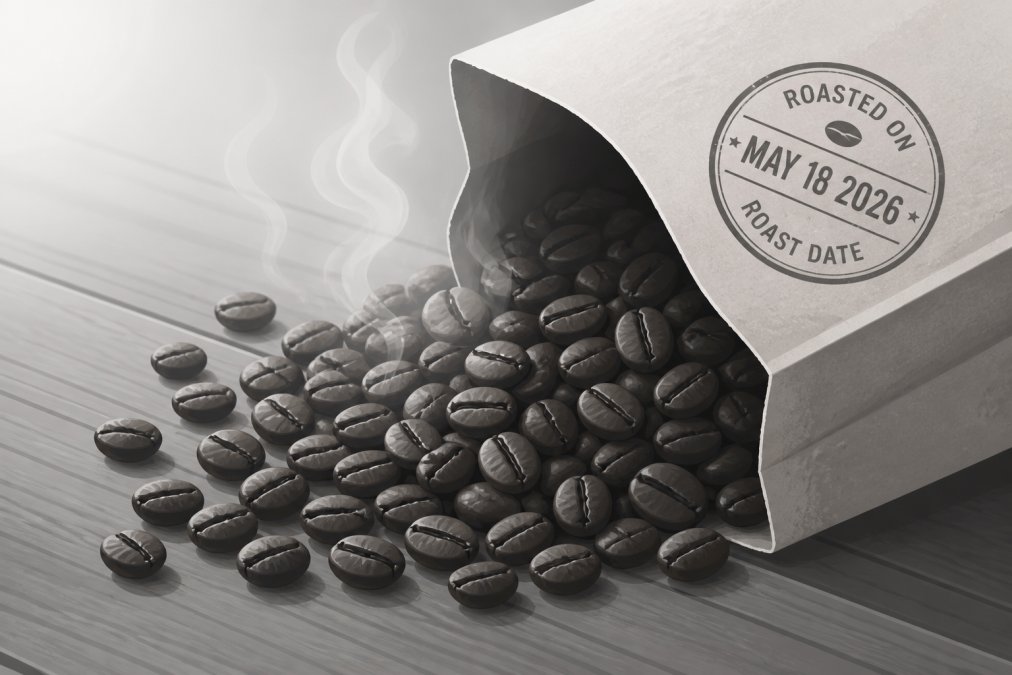
USM Coffee: Roasted to Order, Shipped Fast
USM Coffee offers a premium selection of fresh roasted coffee. Every batch is roasted to order, no inventory sitting in a warehouse. When your order arrives, your beans go into the roaster.
Bean sourcing comes from trusted farms worldwide, covering bold dark roasts to carefully crafted blends. The ordering process is simple, addressing the common subscription frustration of overcomplication that leads to over-ordering. Fast, reliable delivery is built into the model. USM Coffee also carries teas and coffee-inspired apparel.
Best for: Home brewers who want maximum freshness, a range of roast profiles, and straightforward ordering.
Pros:
- Roasted to order for every shipment
- Carefully sourced beans from trusted farms
- Simple ordering process
- Fast and reliable delivery
Cons:
- Newer to the market compared to some established aggregators
Atlas Coffee Club: Single-Origin World Tour
Atlas Coffee Club sources single-origin beans from more than 50 countries and roasts to order before shipping. Each shipment includes a postcard with tasting notes, acidity and body descriptors, and sourcing background.
The educational component helps drinkers develop their palate without formal cupping. Flexible delivery runs every two or four weeks, with options for whole bean or pre-ground at multiple grind sizes.
The limitation is that Atlas controls roasting in-house, so you don't access a range of roasters. If you want variety in roasting philosophy beyond bean origin, this model has a ceiling.
Best for: Coffee enthusiasts who want to explore single-origin beans from different regions and learn about sourcing transparency.
Pros:
- Roasted to order for freshness
- Curated selection from 50+ countries
- Supports above-fair-trade pricing for farmers
Cons:
- Limited control over specific coffee selection month-to-month
- Single roaster limits stylistic variety
Mistobox: Aggregator Access to 50+ Roasters
Mistobox connects subscribers to more than 50 independent roasters and over 500 individual coffees. A taste quiz at signup drives personalized recommendations, with dedicated curators available to refine selections.
Beans ship directly from each roaster, preserving the roast-to-order chain for many partners. The variety of flavor profiles, altitude ranges, and processing methods available through a single subscription is impressive.
The downside: shipping fees apply to most plans, and there are no trial bags or samples to test before committing.
Best for: Experienced coffee drinkers who want access to many roasters and are comfortable with personalization algorithms.
Pros:
- Extensive curated selection across roasters
- Personalized recommendations that improve over time
- Flexible delivery frequency
Cons:
- Shipping fees on most plans
- No sample or trial option
Angels' Cup: Blind Tasting and Palate Development
Angels' Cup uses blind tasting: subscribers receive numbered samples without identifying information, then record tasting notes before comparing them to the roastmaster's notes via a companion app.
Subscription tiers include the Cupping Flight for small samples, the Black Box for larger samples, and All Stars for full bags.
The model is time-intensive by design. If you want to brew and drink without the tasting ritual, this isn't the right fit.
Best for: Coffee enthusiasts who want to develop palate skills through structured blind tasting.
Pros:
- Unique blind tasting format
- Wide variety from multiple roasters
- Flexible subscription tiers
Cons:
- Requires time investment for the tasting ritual
- Not customized to individual flavor preferences upfront
Driftaway Coffee: Personalized Single-Origin Subscriptions
Driftaway starts every new subscriber with a tasting kit containing five different single-origin coffees. Feedback from that kit drives all future recommendations, grounding personalization in actual taste data.
All roasting happens in Brooklyn with a commitment to sustainability: plastic-free packaging, carbon-neutral shipping, and "coffee story" cards connecting subscribers to specific farmers. Sourcing transparency is core to the brand identity.
The limitation mirrors Atlas: all roasting is done in-house, so roaster variety isn't part of the offering.
Best for: Drinkers who want personalization grounded in tasting data and care about sustainability credentials.
Pros:
- Tasting kit establishes real preference data
- Plastic-free packaging and carbon-neutral operation
- Fresh, single-origin whole beans
Cons:
- No roaster variety
- Limited control over specific selections once preferences are established
Coffee Subscription Cost Comparison: What You Actually Pay
Understanding true subscription cost requires looking beyond per-bag price. Shipping fees, delivery frequency, and bag size all affect real value.
| Service | Starting Price | Shipping | Roasting Model | Roaster Variety |
|---|---|---|---|---|
| USM Coffee | Visit site for pricing | Fast, reliable delivery | Roasted to order | Single roaster, broad range |
| Atlas Coffee Club | $14.00/shipment | Included | Roasted to order | Single roaster |
| Mistobox | $19.00/bag | Fees on most plans | Ships from roaster | 50+ roasters |
| Angels' Cup | $10.99/shipment | Included | Varies by roaster | Multiple roasters |
| Driftaway Coffee | $15.00/shipment | Included | Roasted to order | Single roaster |
Bag size varies significantly across services. A $14 shipment might be 6 oz; a $19 bag might be 12 oz. Always calculate cost per ounce before comparing value.
Shipping costs compound over time. A service charging $5 per delivery on a bi-weekly schedule adds $130 per year in shipping alone. For services that include shipping, that cost is baked into the per-bag price.
How to Choose a Coffee Subscription That Fits Your Routine
Choosing a coffee subscription means matching the service model to how you actually brew and consume coffee.
Match Your Brewing Method to the Right Bean Format
Grind size compatibility is the most underappreciated factor in subscription selection. Pre-ground coffee loses volatile aromatics within hours of grinding. For any brewing method benefiting from precise grind, whole bean is correct.
- Drip coffee maker: Medium grind; whole bean preferred
- Pour-over: Medium-fine grind; whole bean strongly preferred
- French press: Coarse grind; whole bean essential
- Espresso: Fine grind; whole bean only
- Cold brew: Extra coarse grind; whole bean preferred
If you have a quality burr grinder at home, always order whole bean. According to the National Coffee Association's brewing guide, grind consistency is one of the two variables with the most impact on extraction quality.
Subscription Flexibility and Cancellation Policies
The most common complaint among coffee subscribers is accumulation. Beans pile up because delivery frequency doesn't match consumption rate, and pausing or canceling is harder than it should be.
Before committing, verify these four things:
- Pause without penalty: Can you pause a shipment without losing your subscription?
- Frequency adjustment: Can you change delivery frequency without contacting customer service?
- Cancellation process: Is cancellation self-service through an account dashboard?
- Bag size options: Can you order smaller quantities to avoid over-accumulation?
Driftaway and Mistobox both offer pause functionality; Atlas Coffee Club allows frequency adjustment between two and four weeks.
Direct-to-Roaster vs. Aggregator: Which Model Delivers Fresher Beans
The direct-to-roaster vs. aggregator distinction is one of the most important factors in a trade coffee alternative for fresh beans decision.
Direct-to-roaster means one company controls sourcing, roasting, and shipping. USM Coffee, Atlas Coffee Club, and Driftaway operate this way. The advantage is control. When they say "roasted to order," there's no intermediary fulfillment step adding days to the timeline.
Aggregator means a platform connects you to multiple independent roasters. Mistobox is the clearest example. Freshness quality depends on each roaster's fulfillment speed. Most quality aggregator partners roast to order, but verification is harder for subscribers.
The aggregator advantage is roaster variety. If exploring different roasting philosophies and regional styles matters, aggregators deliver more range. If freshness is your primary concern, direct-to-roaster is the safer choice.
Direct-to-roaster services consolidate shipping into a single package from one location. Aggregators may ship from multiple roasters across regions, potentially meaning more packaging and higher per-delivery carbon footprint. For subscribers who care about sustainability, consolidating shipments is one of the most effective ways to reduce environmental impact.
Storage, Shelf Life, and Getting the Most from Your Beans
Getting roast-to-order beans is only half the equation. How you store them after delivery determines whether you preserve freshness or squander it within a week.
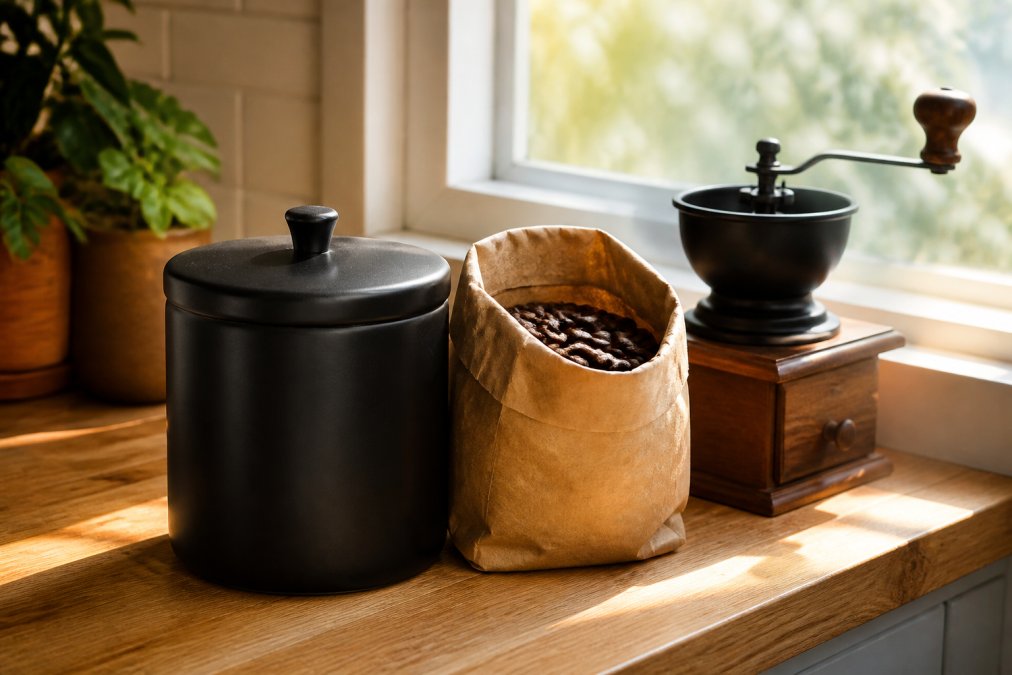
Whole bean coffee has four enemies: oxygen, moisture, light, and heat. Address all four and your beans hold quality for three to four weeks post-roast.
Practical storage rules:
- Container: Use an airtight canister with a one-way CO2 valve, not a zip-lock bag.
- Location: Store at room temperature in a dark cupboard. Avoid the refrigerator and freezer.
- Quantity: Order the amount you'll consume in two to three weeks.
- Grind timing: Grind immediately before brewing.
Lighter roasts show staleness more quickly than darker roasts due to higher acidity and more delicate tasting notes. The subscription model that best supports good storage habits is one with adjustable delivery frequency.
According to the USDA's food storage guidelines, oxygen exposure is the primary driver of lipid oxidation in roasted coffee, the chemical process responsible for stale, flat flavor. Airtight storage preserves what the roaster built into the beans.
Finding a trade coffee alternative for fresh beans requires looking past marketing language into the actual roasting model, shipping timeline, and storage guidance each service provides. The difference between a bag roasted the day before shipping and one sitting in inventory for two weeks is the difference between a cup that tastes alive and one that tastes like it used to be good. USM Coffee's roast-to-order model, broad roast range, and fast reliable delivery make it a strong starting point for home brewers who want cafe-quality experience without leaving the house. Visit USM Coffee to see current offerings and find the roast profile that fits your brewing setup.
Frequently Asked Questions
Which coffee subscription service offers the freshest beans?
Services that roast to order and ship directly from their own roastery consistently deliver the freshest beans. USM Coffee, Driftaway Coffee, and Atlas Coffee Club all roast after you place your order. Aggregator platforms like Mistobox ship from partner roasters, which can add a day or two to transit. For maximum freshness, check that the roasting date is printed on the bag and aim to brew beans within two to four weeks of that date.
How does roast-to-order shipping work for coffee subscriptions?
With a roast-to-order coffee subscription, your beans are roasted only after your order is confirmed, not held in warehouse inventory. The roaster batches orders, roasts them fresh, and ships within one to three business days. This means the roasting date on your bag closely matches your delivery date. Contrast that with retail or some aggregator models where beans may sit in a fulfillment center for weeks before reaching you, dulling the flavor profile and aroma.
Do coffee subscriptions actually save money compared to buying in-store?
Specialty coffee subscriptions generally cost more per bag than supermarket brands but are often priced comparably to buying directly from a local roaster or cafe. The value comes from convenience, roast-to-order freshness, and curated bean quality you rarely find on store shelves. Shipping fees vary by service and can affect the total cost significantly. Check each provider's per-bag price plus any delivery fee before committing to a plan.
What should I look for when choosing a Trade coffee alternative for fresh beans?
Prioritize services that print the roasting date on every bag and ship within a few days of roasting. Beyond freshness, evaluate delivery frequency options, whether you can choose whole bean or pre-ground, and how easy it is to pause or cancel your coffee subscription. If you want variety, aggregator platforms give you access to multiple roasters. If you want a consistent flavor profile dialed in to your taste, a direct-to-roaster service with personalization is a better fit.
Can I get fresh-roasted coffee beans without a subscription?
Yes. Several roasters, including USM Coffee, allow one-time purchases alongside their subscription model, so you can order fresh-roasted beans without committing to automated recurring orders. This works well if your consumption is irregular or you want to try a roaster before subscribing. The trade-off is that subscriptions often include perks like lower per-bag pricing, priority roasting slots, or free shipping that one-off orders do not.