

Trade Coffee vs Local Roasters: A Cost Breakdown
Table of Contents
- Understanding the Trade Coffee vs Local Roaster Pricing Model
- Cost Per Cup Analysis: Subscription vs Retail
- Is Trade Coffee Worth It? Breaking Down the Value Proposition
- Coffee Subscription Cost Comparison: Hidden Fees and Shipping
- Freshness, Roast Dates, and the Convenience Factor
- Local Roaster Sourcing: Direct Trade, Fair Trade, and Bean Quality
- Making Your Choice: Subscription Model vs. Local Purchase
Last Updated: August 26, 2026
Understanding the Trade Coffee vs Local Roaster Pricing Model
When you're deciding between a coffee subscription service and buying from a local roaster, the comparison often comes down to one question: what are you actually paying for? The answer isn't as straightforward as comparing sticker prices. Trade Coffee vs local roaster pricing reveals fundamental differences in how these two models operate, what you receive, and what hidden costs might be lurking in each approach.
A coffee subscription service like Trade Coffee operates on a recurring delivery model, where beans arrive at your door on a predetermined schedule. Local roasters, by contrast, typically sell through retail channels, either in-person at their shop or via one-time online orders. These aren't just different sales channels; they're different value propositions with distinct cost structures.
The tension between convenience and cost runs through this entire comparison. Subscription services promise consistency, freshness, and curated selection. Local roasters offer immediacy, personal relationships, and the ability to inspect beans before purchase. Understanding which model makes financial sense for your situation requires looking beyond the per-pound price tag.
Cost Per Cup Analysis: Subscription vs Retail
The cost per cup is where the real comparison begins, and it's more complex than dividing total price by number of servings. Most coffee drinkers use about 0.4 ounces of beans per cup with standard brewing methods, though this varies by brewing technique and personal preference (peer-reviewed research).
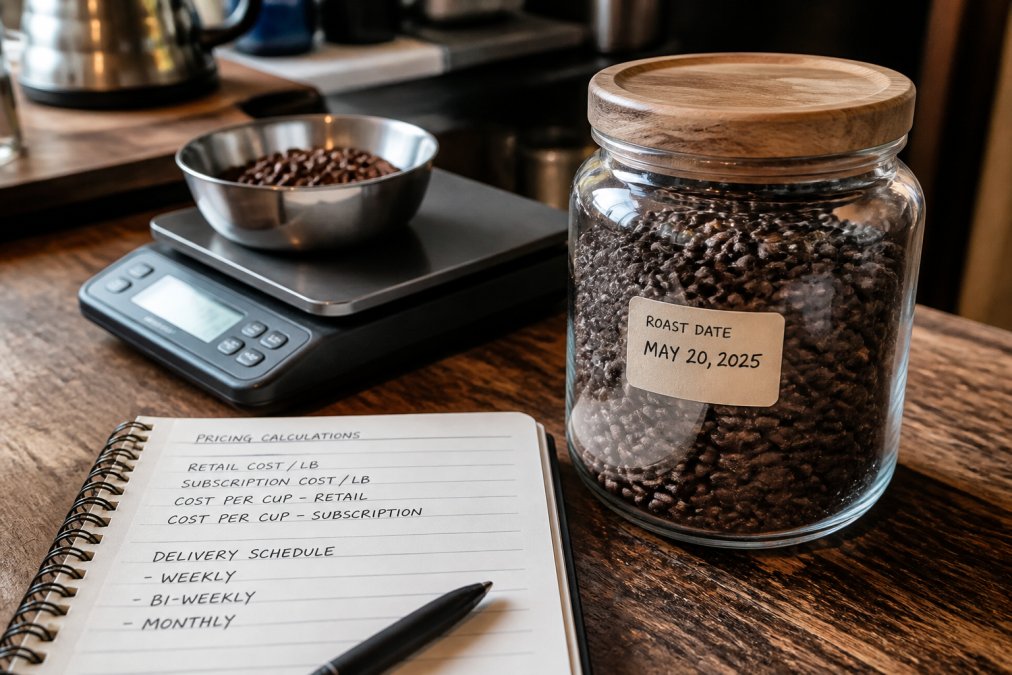
With a subscription model, you're paying for roasted-to-order beans delivered directly to your home. The pricing structure typically includes the cost of the beans themselves, roasting labor, packaging, and shipping. When you factor in all these components, the per-cup cost depends heavily on how much coffee you order and how frequently. A subscriber who orders one bag monthly pays more per cup than someone ordering three bags at once due to fixed shipping costs being spread across fewer servings.
Local roaster pricing works differently. You walk in, buy beans at retail markup, and leave. There's no subscription fatigue to manage, no commitment to a delivery schedule. However, you're paying the full retail markup that covers the roaster's storefront, staff, and overhead. The convenience factor cuts both ways: you get immediate access without waiting for delivery, but you also can't benefit from bulk discounts that subscription services often offer to committed customers.
The real calculation requires accounting for freshness window as well. Coffee peaks in flavor 5-14 days after roasting and remains drinkable for about three weeks (peer-reviewed research). A subscription that arrives on schedule keeps you within that optimal window. A local purchase depends on when the roaster last roasted those beans, some shops rotate stock daily, others weekly. If you buy beans that were roasted two weeks ago, you're already past the peak flavor window, which means you're paying for a diminished product.
Is Trade Coffee Worth It? Breaking Down the Value Proposition
Trade Coffee positions itself as a premium subscription service, and the value proposition hinges on three claims: carefully sourced beans, roasted-to-order freshness, and simplified ordering. Whether this justifies the premium over local roasters depends on what you're prioritizing.
The sourcing argument carries weight if you care about origin transparency and direct trade relationships. Trade Coffee sources from trusted farms worldwide, which means beans with documented provenance and ethical sourcing practices. Local roasters vary widely on this front, some are meticulous about sourcing, others less so. If origin transparency and fair trade practices matter to you, you need to evaluate your specific local roaster's sourcing claims, not assume they're equivalent.
Roasted-to-order is the freshness guarantee that subscription services emphasize. Your beans are roasted after you place your order, ensuring maximum flavor and aroma when they arrive. This is genuinely different from retail shelves where beans may have been roasted weeks earlier. The freshness window advantage is real and measurable, beans roasted five days ago will taste noticeably brighter and more complex than beans roasted three weeks ago.
The ordering simplicity claim deserves scrutiny. A subscription model removes decision fatigue if you're happy with your current selection, but creates a different problem: subscription fatigue. Many coffee drinkers sign up for subscriptions, receive beans on schedule, accumulate unopened bags, and eventually cancel. The "simple ordering" becomes a burden when you're receiving coffee faster than you consume it. USM Coffee addresses this with flexible delivery frequency and easy cancellation, but the fundamental challenge remains: a subscription only saves time if you actually want coffee arriving on that schedule.
Coffee Subscription Cost Comparison: Hidden Fees and Shipping
The sticker price on a coffee subscription never tells the full story. Shipping costs, subscription minimums, and dynamic pricing all affect the actual amount you pay per cup.
Shipping is the most obvious hidden cost. Subscription services build shipping into their model, but the per-shipment cost varies by order size and frequency. A single bag shipped monthly costs more to ship than three bags shipped together. Some services offer free shipping above a certain order value or for annual prepayment, which changes the math significantly. You need to compare total annual cost, not just per-bag price.
Subscription minimums create another layer of complexity. Some services require a minimum order frequency or minimum number of bags per shipment. If you only drink two cups of coffee daily, you need roughly 25 ounces of beans per month. That's less than one standard 12-ounce bag if you're ordering whole beans. A service that requires a minimum of two bags per shipment forces you to either accumulate excess inventory or pay for coffee you don't drink.
Dynamic pricing is less common in the coffee subscription space than in other industries, but some services adjust pricing based on bean selection, origin, or roast type. A single-origin specialty bean might cost more per pound than a house blend, which means your per-cup cost fluctuates based on what you select each month. This makes budgeting difficult if you're trying to maintain consistent monthly spending.
Local roaster pricing is more straightforward but less flexible. You pay the retail price for whatever beans you buy that day. There's no subscription discount, no bulk pricing, no shipping to negotiate. What you see is what you pay. For coffee drinkers who buy occasionally or prefer variety, this transparency can actually be simpler than managing a subscription's variable costs.
Freshness, Roast Dates, and the Convenience Factor
Roast date is the single most important specification for fresh coffee, yet many retail customers never check it. A roast date tells you exactly how fresh your beans are and whether they're still within the optimal flavor window.
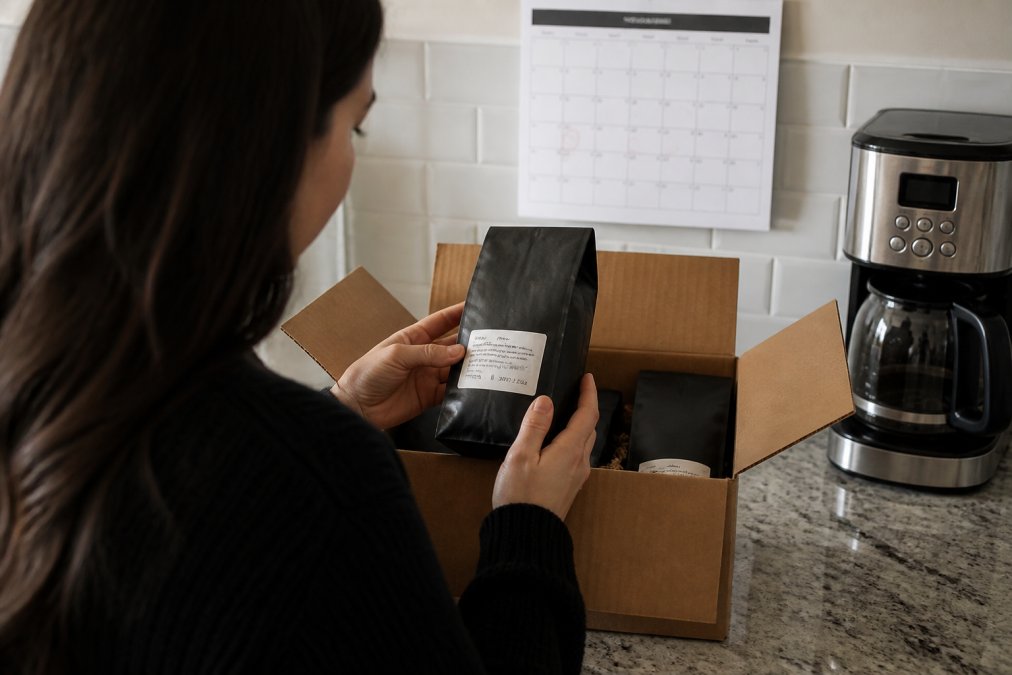
Subscription services publish roast dates prominently because freshness is their competitive advantage. Beans roasted to order arrive within days, meaning you're consuming coffee at its peak. This is genuinely superior to retail coffee that's been sitting on a shelf. The flavor difference between a bean roasted five days ago and one roasted three weeks ago is substantial, brighter acidity, more complex aromatics, better body (peer-reviewed research).
Local roasters who rotate stock frequently can match this freshness if you buy soon after their roasting day. Many roasters post roasting schedules online or mark roast dates on bags. If your local roaster roasts daily and you buy within two days, you're getting coffee as fresh as any subscription service. The catch: you have to be intentional about timing and know your roaster's schedule.
Convenience cuts both directions. A subscription delivers coffee to your door on a predictable schedule, eliminating a shopping trip. For busy professionals and remote workers, this is genuinely valuable, one less errand, one less decision to make. But convenience also creates inertia. Subscription services count on the fact that many customers will keep paying even when they're not actively consuming the product.
Local roaster convenience depends on proximity. If a quality roaster is five minutes from your home or office, the friction of buying local is minimal. If the nearest specialty roaster is a 30-minute drive, the convenience calculus shifts. You're trading the friction of a subscription (managing delivery frequency and cancellation) for the friction of the friction of travel time.
The flexibility factor favors local roasters. You can buy one bag, try it, and decide whether you want more. With a subscription, you're committing to at least one delivery cycle. If the beans don't match your taste preferences, you're stuck with them for a month. USM Coffee mitigates this with straightforward cancellation, but the principle remains: subscriptions require more upfront commitment.
Local Roaster Sourcing: Direct Trade, Fair Trade, and Bean Quality
Local roasters often emphasize their sourcing practices in ways that national subscription services cannot. When you buy from a roaster, you can ask questions directly about where beans come from, how much farmers are paid, and what quality standards are maintained.
Direct trade is a sourcing model where roasters buy directly from farmers, eliminating middlemen and ensuring higher prices reach producers. This typically increases the roaster's cost and gets passed to consumers, but it also guarantees traceability and ethical practices. Not all local roasters practice direct trade, and not all direct trade beans are superior in cup quality, the relationship between sourcing ethics and flavor is independent.
Fair trade certification provides third-party verification that farmers received fair compensation and worked under acceptable conditions. It's a label you can look for on both subscription service beans and local roaster beans. Fair trade certification costs money, so it's often found on premium beans rather than everyday options.
Bean quality varies dramatically between roasters. A specialty roaster sources high-scoring beans from cupping competitions, seeking single-origin lots with distinctive flavor profiles. A commodity roaster buys beans based on price and availability, prioritizing consistency over complexity. These aren't moral judgments, they're different business models serving different customer needs. A specialty roaster's beans cost more per pound but deliver more flavor complexity. A commodity roaster's beans cost less and deliver consistent, reliable flavor.
Tasting notes and flavor profiles are marketing language that requires skepticism. A coffee described as having "notes of blueberry and chocolate" might taste that way to the roaster's palate but taste completely different to yours depending on water quality, brewing method, and personal taste perception. The best way to evaluate a local roaster's quality is to taste their coffee yourself, which is an advantage local roasters have over subscription services.
Making Your Choice: Subscription Model vs. Local Purchase
The decision between Trade Coffee vs local roaster pricing isn't about finding the objectively cheapest option. It's about matching the model to your actual consumption patterns, priorities, and lifestyle.
Choose a subscription service if you drink coffee consistently, want guaranteed freshness, value convenience, and can commit to a regular delivery schedule without accumulating excess inventory. Subscriptions work best for remote workers, busy professionals, and coffee enthusiasts who want curated selection without the research burden. USM Coffee serves this segment well with roasted-to-order beans, sourced from trusted farms, and a simple ordering process that eliminates decision fatigue.
Choose a local roaster if you prefer to inspect beans before purchase, want to support a business in your community, enjoy the social aspect of visiting a roaster in person, or have inconsistent coffee consumption that makes subscriptions wasteful. Local roasters work best if one is conveniently located and rotates stock frequently enough to guarantee freshness.
Consider a hybrid approach: maintain a subscription for your everyday coffee and supplement with occasional local roaster purchases when you want to explore new origins or support a specific roaster. This balances convenience with flexibility and lets you compare the value proposition of each model directly.
The value proposition question, is it worth it?, depends entirely on what you're paying for. If you're comparing per-pound price alone, a subscription service probably costs more. If you're comparing actual cost per cup accounting for freshness, convenience, and waste, the calculation becomes more favorable to subscriptions. If you're comparing the experience and community aspect, local roasters win. There's no single right answer, only the right answer for your situation.
The coffee subscription vs. local roaster decision ultimately reflects your priorities as a consumer. If maximum freshness, reliable delivery, and curated selection matter most, a subscription model delivers measurable value. USM Coffee's roasted-to-order approach ensures you're drinking coffee at peak flavor, with careful sourcing from trusted farms and straightforward ordering that respects your time. For those who prioritize community connection, hands-on selection, and supporting local businesses, a quality neighborhood roaster remains the better choice. The key is understanding what you're actually paying for in each model and whether that matches what you actually need.
Frequently Asked Questions
Q: Is Trade Coffee worth the price compared to local roasters?
A: Whether Trade Coffee offers better value depends on your priorities. Subscription services provide consistency, roast-to-order freshness, and convenience, but local roasters often have lower shipping costs and support community businesses. Calculate your cost per cup by dividing total monthly spending by cups consumed. Many subscribers find the convenience and guaranteed freshness justify the premium; others prefer the flexibility and lower per-pound markup of local purchases.
Q: What are the hidden costs in coffee subscription services?
A: Beyond the base price, consider shipping fees, which can add to the cost per delivery. Some subscriptions charge for customization or skip fees. Subscription fatigue occurs when deliveries arrive faster than consumption, leading to stale beans or waste. Cancellation policies vary, some services make it easy, others require contacting customer service. Always factor total monthly cost including shipping into your cost per cup calculation.
Q: How does freshness impact the value of roasted-to-order coffee?
A: Beans peak in flavor 5-14 days after roasting. Roasted-to-order services guarantee this freshness window, while retail coffee sits on shelves for weeks or months. The flavor profile and aroma intensity decline significantly after the optimal window. If you prioritize taste quality and brewing method precision, the freshness premium of subscription models justifies the cost. For casual drip coffee drinkers, the difference may be less noticeable.
Q: What should I look for when comparing local roaster pricing?
A: Check the price per pound, roast date on the bag, and sourcing transparency (direct trade, fair trade, single origin). Compare bulk discounts for larger purchases. Ask about their cupping scores and bean quality standards. Visit during roasting to understand their process. Many offer loyalty programs or subscription discounts that reduce the value proposition gap versus national services.