

Why Ethical Coffee Sourcing Matters for Farmers
Table of Contents
- The Economic Reality: How Coffee Prices Break Down for Farmers
- Fair Trade Coffee vs Organic Coffee: What Are the Real Differences?
- The Benefits of Direct Trade Coffee for Farming Communities
- How to Identify Ethical Coffee Brands You Can Trust
- Why Ethical Coffee Sourcing Matters for Environmental Sustainability
- Post-Harvest Processing and Its Impact on Farmer Income
- Climate Change Adaptation: How Ethical Sourcing Supports Farmer Resilience
- Frequently Asked Questions
Last Updated: September 15, 2026
The Economic Reality: How Coffee Prices Break Down for Farmers
Most coffee drinkers never see the math behind their morning cup, and that math is brutal for the people growing the beans. On the global commodity market, green coffee trades as a raw commodity, and the farmer's share of the final retail price is often just a small fraction of what you pay at the register (usda.gov). The rest goes to exporters, shippers, roasters, and retailers.
That structure explains why ethical coffee sourcing matters so much. When buyers pay above commodity rates, negotiate directly, or commit to long-term contracts, farmers gain a predictable income instead of riding a price rollercoaster. Price volatility is the quiet killer of small farms: a single bad harvest year combined with a market dip can wipe out savings built over a decade.
The practical takeaway: the price you pay is a policy decision. Choosing brands that publish their sourcing standards is one of the few levers consumers actually control.
Fair Trade Coffee vs Organic Coffee: What Are the Real Differences?
Fair Trade and Organic certifications address different problems, and conflating them is one of the most common mistakes in this space. Fair Trade focuses on the economics of the trade: guaranteed minimum prices, a social premium paid to cooperatives, and labor standards (Fair Trade Standards & Requirements). Organic focuses on how the coffee is grown: no synthetic pesticides or fertilizers, and specific soil and biodiversity requirements (ams.usda.gov).
A farm can hold one, both, or neither. Many smallholder farmers pursue Fair Trade first because the price floor directly addresses income stability, then add Organic certification when they can afford the transition period and inspection costs. Certification standards also vary in cost and complexity, which matters for farms operating on thin margins.
| Certification | Primary Focus | What It Guarantees | Typical Farmer Benefit |
|---|---|---|---|
| Fair Trade | Economics and labor | Minimum price, social premium | Income stability, cooperative funding |
| Organic | Farming practices | No synthetic inputs, soil standards | Lower input costs, premium pricing access |
| Direct Trade | Buyer-farmer relationship | Often higher prices, less formal | Stronger relationships, faster feedback |
| Rainforest Alliance | Environmental and social | Combined criteria | Market access, training programs |
The honest answer is that no single label solves everything. The strongest ethical supply chains usually combine a price guarantee with environmental standards and a real relationship between buyer and grower.
The Benefits of Direct Trade Coffee for Farming Communities
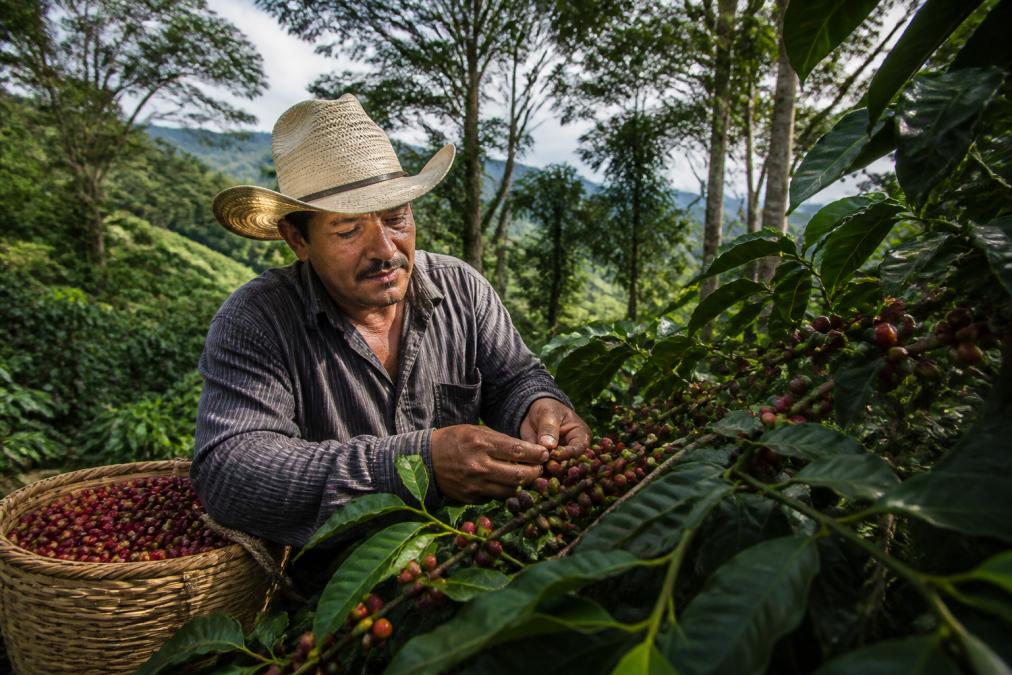
Direct trade is the model many roasters now prefer because it removes layers of intermediaries and puts buyers face to face with growers. In practice, that means farmers often earn more per pound, get paid faster, and receive feedback on quality that helps them improve future harvests. Market access improves too: a direct relationship can turn a one-time purchase into a multi-year contract.
Direct Trade vs. Fair Trade: The Debate Most Guides Skip
The two models are not competing labels on the same shelf, they solve different problems, and conflating them is why so much sourcing marketing reads as noise.
Fair Trade is a third-party certification with published standards. It sets a minimum price floor that applies when the commodity market falls below it, plus a social premium paid to the cooperative rather than the individual farmer. The cooperative then votes on how to spend that premium, typically on community infrastructure, training, or equipment. The trade-off is structural: the price floor is a safety net, not a ceiling, so a Fair Trade farmer can still earn commodity-level money in a strong market year. Certification also carries annual fees and inspection costs that small farms absorb through their co-op.
Direct trade is a relationship, not a certification. There is no universal standard, no inspection body, and no minimum price. A roaster who buys direct typically negotiates a price above the commodity benchmark, often tied to cup quality scores, and pays on a shorter cycle. The upside is real: many direct relationships pay well above Fair Trade floors, and the buyer-farmer feedback loop is tighter. The downside is equally real, anyone can print 'direct trade' on a bag, and the model depends entirely on the buyer's honesty and continued interest.
| Dimension | Fair Trade | Direct Trade |
|---|---|---|
| Verification | Third-party certification | None (buyer's word) |
| Price mechanism | Published minimum floor + social premium | Negotiated, often quality-linked |
| Who receives payment | Cooperative, then distributed | Often the farm directly |
| Farmer risk | Low (floor protects downside) | Higher (no floor if buyer walks) |
| Upside potential | Capped near floor in weak markets | Uncapped, tied to quality and relationship |
Why the Hybrid Model Usually Wins
For farming communities, the strongest arrangement is often a hybrid: a verifiable price floor that protects against a market crash, plus a direct relationship that rewards quality above that floor. A cooperative can hold Fair Trade certification to guarantee a baseline for every member, while individual farms within it negotiate direct contracts with roasters for their best lots. The farmer gets downside protection and upside opportunity at the same time.
What This Means for Farmer Income
When a roaster pays above the commodity benchmark and pays on delivery rather than 60 or 90 days later, the farmer's cash flow changes materially. Smallholders often borrow against the coming harvest to cover labor and inputs; a faster payment cycle reduces the cost of that borrowing. Over a multi-year contract, the farmer can plan replanting, invest in processing equipment, or send a child to school, decisions that are nearly impossible on volatile spot-market income. That predictability, more than any single price point, is what direct relationships deliver.
How to Identify Ethical Coffee Brands You Can Trust
Trust signals are easier to verify than most shoppers realize. Start with the roaster's website and look for specific, checkable claims rather than vague language about "supporting farmers."
- Does the brand name the farms, cooperatives, or regions it buys from?
- Are certifications listed with verifiable logos (Fair Trade, Organic, Rainforest Alliance)?
- Does the brand publish its price relationship, such as paying above commodity rates?
- Is there a traceability page showing where specific lots come from?
- Does the brand explain its roasting and shipping process in detail?
At USM Coffee, we source beans from trusted farms worldwide, roasting every batch to order to ensure maximum flavor, aroma, and character in every cup. That kind of transparency is the baseline. If a brand can't tell you where its beans come from, it almost certainly can't tell you how the farmers were paid.
Why Ethical Coffee Sourcing Matters for Environmental Sustainability
Environmental stewardship and farmer livelihoods are the same conversation.
Climate Change Adaptation: The Technical Layer Most Guides Miss
The Farmer's Calculus
Post-Harvest Processing and Its Impact on Farmer Income
Climate Change Adaptation: How Ethical Sourcing Supports Farmer Resilience
Frequently Asked Questions
What is ethical sourcing in the coffee industry?
Ethical sourcing in coffee means buying beans in ways that ensure farmers receive fair compensation, work in safe conditions, and can invest in their communities. It involves supply chain transparency, sustainable agriculture practices, and long-term relationships between roasters and producers. Ethical sourcing addresses issues like price volatility, labor conditions, and environmental stewardship. Certifications such as Fair Trade and Organic provide third-party verification, while direct trade models build closer connections between buyers and smallholder farmers.
What is the difference between Fair Trade and direct trade coffee?
Fair Trade coffee follows certification standards that set minimum prices, require cooperative structures, and mandate community development premiums. Direct trade coffee involves roasters buying directly from farmers without a certifying body, often paying above commodity market rates for higher quality. Fair Trade guarantees a floor price; direct trade relies on negotiated relationships. Both aim to improve farmer livelihoods, but they use different mechanisms. Some roasters combine both approaches, sourcing Fair Trade certified beans while maintaining direct relationships with specific farms.
How can consumers identify truly ethical coffee brands?
Look for certifications like Fair Trade, Rainforest Alliance, or Organic on packaging, but also check brand websites for sourcing details. Ethical brands typically name their farm partners, disclose how much they pay above commodity prices, and publish impact reports. Visit the roaster's site to see if they explain their supply chain transparency, farmer relationships, and environmental practices. Brands that provide traceability from farm to cup and discuss living wage commitments are more likely to be genuinely ethical than those using vague language about sustainability.
How does ethical sourcing directly impact the livelihood of coffee farmers?
Ethical sourcing raises farmer income through premium pricing, which allows families to cover healthcare, education, and farm improvements. Long-term contracts reduce exposure to price volatility, giving farmers stability to plan for the future. Community investment programs funded by certifications or direct trade relationships build infrastructure like schools and clean water systems. When farmers earn a living wage, they can invest in better harvesting practices, quality control, and sustainable agriculture, which improves both their lives and the coffee they produce.
Coffee farmers face a market that rewards them least when they can least afford it, and the choices buyers make ripple all the way back to the hillside. USM Coffee roasts every batch to order from carefully sourced beans, so the flavor in your cup reflects a supply chain built on trust rather than anonymity. We keep ordering simple, delivery fast, and the origin story visible. Get started with USM Coffee and taste what fresh-roasted, responsibly sourced coffee actually delivers.