

Why Fresh Roasted Beans Taste Better: A Guide
Table of Contents
- Why Fresh Roasted Beans Taste Better
- Understanding the Coffee Degassing Process
- The Peak Flavor Window by Roast Profile
- Best Time to Drink Coffee After Roasting
- How to Store Coffee Beans for Freshness
- Fresh vs. Peak Flavor: Why Newer Isn't Always Better
- Brewing Method and Its Impact on Freshness
- Conclusion
Last Updated: August 7, 2026
Why Fresh Roasted Beans Taste Better
Fresh roasted beans taste better because they retain volatile aromatic compounds and maintain optimal solubility for extraction immediately after roasting. At USM Coffee, we prioritize roasting to order specifically because this window, the first two to four weeks after roasting, delivers the most vibrant flavor clarity, complexity, and sensory experience that coffee enthusiasts seek.
The difference isn't subtle. A freshly roasted bean contains hundreds of volatile compounds that create the aroma and flavor profile you experience in your cup. These compounds begin to degrade the moment roasting stops. Within days, oxidation accelerates. Within weeks, staling processes take hold. The bean's ability to release these compounds during extraction, a process called bloom, diminishes measurably.
But here's where most coffee guides get it wrong: newer isn't always better. A bean roasted yesterday might actually underperform compared to one roasted five days ago. Understanding this distinction separates casual coffee drinkers from those who truly appreciate what fresh roasted beans taste better can deliver.
Understanding the Coffee Degassing Process
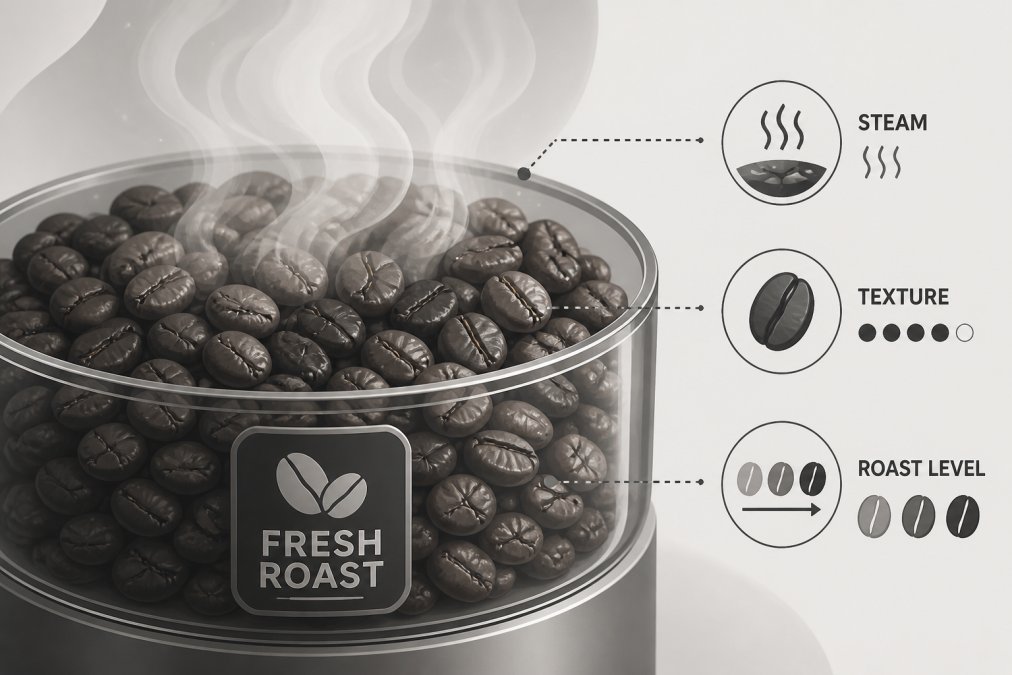
The coffee degassing process is the release of carbon dioxide and other volatile compounds that accumulate inside the bean during roasting. This process begins the moment roasting ends and continues for weeks, fundamentally affecting how the bean behaves during extraction.
When beans roast, heat causes chemical reactions that produce CO2 as a byproduct. This gas becomes trapped inside the bean's cellular structure. Immediately after roasting, the bean is saturated with CO2, so much that it actually interferes with water's ability to extract flavor compounds during brewing. The bloom phase of brewing exists specifically to release this excess gas before full extraction begins.
A bean roasted 24 hours ago will produce vigorous bubbling during bloom. A bean roasted 10 days ago will produce moderate bubbling. A bean roasted 30 days ago will produce minimal bubbling. This progression tells you something important: the bean's chemical state is changing constantly.
The degassing process affects solubility, the degree to which flavor compounds dissolve into water. Fresh beans have lower solubility because CO2 occupies space that water needs to access flavor compounds. As degassing progresses, solubility increases. By day 5-7, solubility peaks. After day 14-21 (depending on roast profile), solubility begins declining as oxidation dominates.
:::pro Many brewers assume "fresh" means "roasted today." In practice, beans roasted 3-7 days ago often extract more cleanly than same-day roasts because enough CO2 has escaped to allow proper extraction, but volatile compounds remain intact. :::
The Peak Flavor Window by Roast Profile
The peak flavor window, the period when a bean delivers its best sensory experience, varies significantly based roast profile. Light roasts, medium roasts, and dark roasts degas at different rates and maintain volatile compound stability for different durations.
Light roasts typically peak between days 7-14 after roasting. Light roasts have less roasting time, which means fewer volatile compounds are driven off during roasting. More complexity remains in the bean. However, light roasts also develop acidity as a dominant characteristic, and this acidity can become sharp or sour if oxidation progresses too far. The window is narrower, about one week of optimal flavor before sourness dominates.
Medium roasts peak between days 10-21 after roasting. This is the broadest window because medium roasts balance volatile compound development with roasting duration. The bean has enough complexity to remain interesting, but the roasting process has also created a stable flavor foundation. Bitterness and acidity are both present but balanced. This window is why most specialty coffee roasters recommend medium roasts for general consumption.
Dark roasts peak between days 14-28 after roasting. Dark roasts have been roasted longer, driving off more volatile compounds during roasting itself. What remains is a more stable, less volatile flavor profile. However, dark roasts also develop deeper, more complex flavors from the roasting process, caramelization, roasted nut notes, chocolate notes. These flavors actually improve slightly as the bean matures. The window is longer because there's less volatility to lose.
The practical implication: if you're buying a light roast, use it within two weeks. If you're buying a medium roast, you have nearly a month. If you're buying a dark roast, the bean remains excellent for four weeks or longer. USM Coffee roasts to order specifically because we know your roast profile and can guide you toward the optimal consumption window for your specific beans.
Best Time to Drink Coffee After Roasting
The best time to drink coffee after roasting depends on your brewing method and roast profile, but most coffee achieves peak flavor between five and fourteen days post-roast for standard brewing methods.
For espresso extraction, which requires rapid water contact and high pressure, the timing is more critical. Espresso demands beans that have degassed enough to allow proper water penetration, but still retain volatile compounds. Espresso pulled from beans roasted 2-3 days ago often tastes thin and sour because CO2 interference prevents extraction of sweeter compounds. Espresso pulled from beans roasted 8-12 days ago typically delivers the best balance of crema development, sweetness, and complexity.
For drip coffee and pour-over methods, which use lower pressure and longer contact time, the window is more forgiving. These brewing methods are less sensitive to CO2 interference because water has more time to work around the gas. Drip coffee from beans roasted 5-21 days ago typically performs well. The longer contact time allows the brewing method to compensate for the bean's chemical state.
For French press, which involves extended immersion, the window extends even further. French press coffee from beans roasted 7-28 days ago can deliver excellent results because the extended contact time extracts flavor compounds regardless of CO2 saturation. However, French press is also more sensitive to staling, oxidation affects the cup more noticeably in immersion brewing than in pressure-based methods.
A common mistake is assuming that "rest time" means the same thing for all beans. It doesn't. A light roast needs less time to degas than a dark roast, but it also stales faster. A bean destined for espresso needs different rest timing than a bean for drip coffee. USM Coffee's roast-to-order model lets us match your bean's rest period to your brewing method.
How to Store Coffee Beans for Freshness
The coffee degassing process continues even after you receive your beans, and storage directly controls how quickly oxidation and staling progress. Proper storage extends the peak flavor window and prevents premature decline.
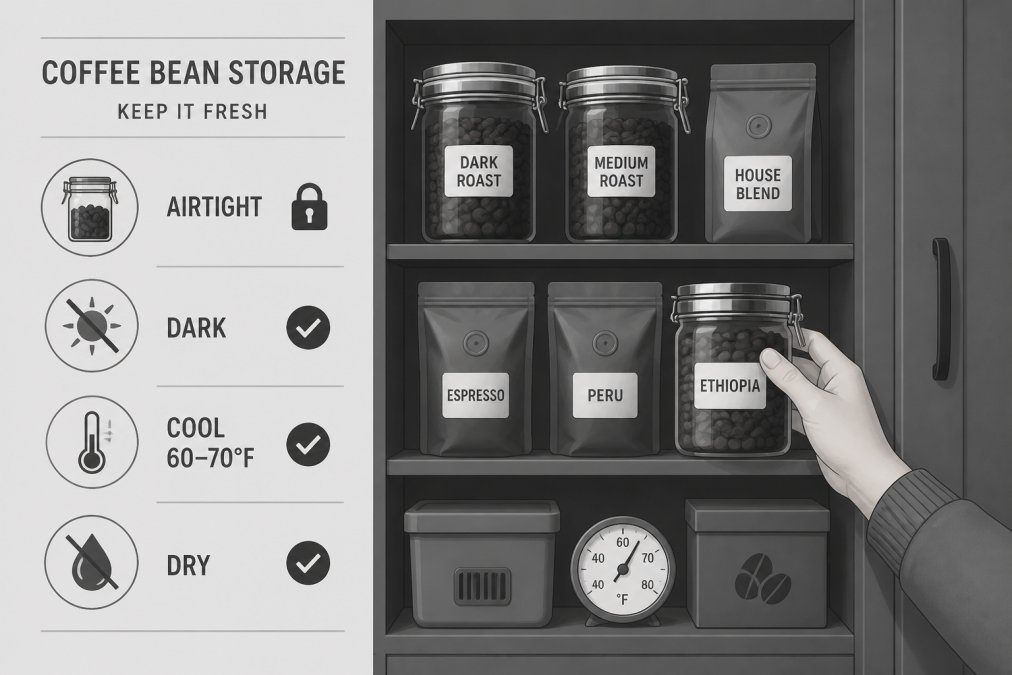
Airtight containers are non-negotiable. Oxygen accelerates oxidation and volatile compound loss. A bean stored in an open container or a bag with a one-way valve will stale noticeably faster than a bean in a sealed, airtight container. One-way valves allow degassing but also allow oxygen ingress. For long-term storage beyond three weeks, airtight containers outperform valve bags.
Cool, dark conditions slow oxidation. Light exposure accelerates oxidation. Heat accelerates oxidation. A pantry shelf away from direct sunlight and heat sources (not above the stove, not near a window) is ideal. Room temperature, around 65-70°F, is better than warm conditions. Some enthusiasts refrigerate beans, which slows oxidation further, but condensation risk makes this approach risky unless beans are in sealed, waterproof containers.
Whole beans outperform ground coffee. Grinding increases surface area exposed to oxygen by orders of magnitude. Ground coffee stales in days. Whole beans maintain peak flavor for weeks. If you must grind ahead, grind only what you'll use within 24 hours and store ground coffee in an airtight container.
Vacuum sealing extends shelf life. Vacuum-sealed bags remove most oxygen, slowing oxidation dramatically. If you purchase multiple bags from USM Coffee, vacuum sealing unopened bags extends their peak window by several weeks. Once opened, transfer to an airtight container.
Moisture content matters. Beans stored in humid conditions absorb moisture, which accelerates staling and can introduce mold risk. A cool, dry location is better than a cool, humid location. Silica gel packets in storage containers can help manage humidity in particularly damp environments.
Fresh vs. Peak Flavor: Why Newer Isn't Always Better
The distinction between "fresh" and "peak flavor" is where most coffee guidance fails. Fresh means recently roasted. Peak flavor means optimal for extraction. These are not the same thing.
A bean roasted yesterday is fresh. It's also probably not at peak flavor yet. The CO2 saturation is still too high. Extraction will be incomplete. The cup will taste thin, sour, or underdeveloped. This is why the coffee industry developed the "rest period" concept, a waiting period between roasting and consumption that allows CO2 to escape while volatile compounds remain stable.
Peak flavor occurs after the rest period ends and before staling begins. For most beans, this window is 5-28 days post-roast. Within this window, the bean has degassed enough for proper extraction, but oxidation hasn't yet degraded the volatile compounds that create flavor complexity and aroma.
After peak flavor, the bean enters the staling phase. Oxidation accelerates. Volatile compounds degrade. Acidity becomes sharper or more unpleasant. Flavor clarity diminishes. The bean is still drinkable, staling is gradual, not sudden, but the sensory experience declines measurably.
The practical implication is counterintuitive: buying beans roasted one week ago and using them immediately might deliver worse results than buying beans roasted two weeks ago and using them immediately. The older beans have completed their rest period and are at or near peak flavor. The newer beans are still degassing and won't extract optimally.
This is why USM Coffee's roast-to-order model creates an advantage. We control the roast date and can time delivery to align with your brewing method's optimal window. You're not gambling on when the beans were roasted relative to when you receive them.
Brewing Method and Its Impact on Freshness
The brewing method you use fundamentally changes how fresh roasted beans taste better becomes relevant to your actual cup. Different extraction methods are sensitive to different aspects of bean freshness in different ways.
Espresso extraction is most sensitive to CO2 saturation and bean density. Espresso forces water through a compressed puck of ground coffee at high pressure. CO2 trapped in the bean interferes with this process, causing uneven extraction and sour, thin shots. Espresso from beans roasted 2-3 days ago often tastes underextracted. Espresso from beans roasted 8-14 days ago typically extracts evenly and tastes balanced. Espresso from beans roasted beyond 21 days may taste overextracted and bitter as the bean's density has changed through oxidation.
Drip coffee is least sensitive to CO2 interference because water percolates through grounds over 4-6 minutes. This extended contact time allows the brewing method to extract flavor compounds even if CO2 is present. Drip coffee from beans roasted 5-21 days ago typically performs well. The long extraction window compensates for the bean's chemical state.
Pour-over methods (V60, Chemex, Kalita Wave) sit between espresso and drip in sensitivity. Pour-over relies on precise water control and contact time. Beans roasted 5-14 days ago typically perform best. Too fresh and CO2 causes channeling (water finding paths of least resistance). Too stale and oxidation creates flat, one-dimensional cups.
French press uses immersion, the grounds steep in water for 4 minutes. This method is insensitive to CO2 but highly sensitive to oxidation and staling. Beans roasted 7-28 days ago work well, but stale beans (beyond 35-40 days) produce noticeably flat, dull cups because immersion brewing extracts everything the bean has to offer, including oxidized compounds.
Cold brew involves 12-24 hour immersion in cold water. Cold temperatures slow oxidation, so cold brew is the most forgiving brewing method for older beans. Cold brew from beans roasted 14-60 days ago can still taste excellent because the extended immersion and cold temperature compensate for volatile compound loss. However, very old beans (beyond 60 days) will still taste flat.
The insight most guides miss: the "best" roast date isn't universal. It's method-specific. If you're brewing espresso, you need beans roasted 8-14 days ago. If you're brewing French press, you can use beans roasted 7-28 days ago. USM Coffee's approach lets you specify your brewing method so we can time roasting and delivery to your actual extraction method.
Fresh roasted beans taste better because they deliver the volatile compounds, flavor complexity, and sensory clarity that define specialty coffee. But timing matters more than recency. Peak flavor occurs after degassing completes but before oxidation dominates, typically 5-28 days post-roast depending on roast profile and brewing method. USM Coffee roasts to order and delivers with your brewing method in mind, ensuring the beans arrive at their optimal window. Start with beans matched to your brewing method and storage conditions, and you'll experience why fresh roasted beans taste better in ways that store-bought options simply cannot deliver.
Frequently Asked Questions
How freshly roasted should coffee beans be before brewing?
Fresh roasted beans need time to degas before reaching peak flavor. Most beans hit their optimal window 5-14 days after roasting, depending on roast profile. Light roasts peak sooner, around 5-7 days, while dark roasts benefit from 10-14 days of resting. Brewing immediately after roasting produces sour, under-extracted coffee because excess carbon dioxide interferes with extraction. Waiting allows volatile compounds to stabilize and flavor complexity to develop fully.
Does the coffee degassing process affect how fresh roasted beans taste?
Yes, significantly. During degassing, beans release carbon dioxide that was trapped during roasting. This process directly impacts extraction and flavor clarity. Beans that have partially degassed extract more evenly, producing balanced acidity and sweetness. Beans that haven't degassed enough produce channeling during brewing, where water bypasses grounds unevenly. Beans that have degassed completely lose some aromatic compounds. Understanding this window is key to tasting the full flavor profile your beans offer.
What's the best way to store coffee beans to maintain freshness?
Store beans in airtight containers away from light, heat, and moisture. Vacuum-sealed bags or opaque, sealed containers work best. Keep them in a cool, dark cabinet at room temperature, not in the refrigerator or freezer, which introduces moisture. Whole beans stay fresher longer than ground coffee because they have less surface area exposed to oxygen. Proper storage extends peak flavor window by slowing oxidation and staling processes. Check your container's seal regularly to prevent air exposure.
Why do fresh roasted beans taste better than store-bought coffee?
Fresh roasted beans retain more volatile aromatic compounds and have higher solubility in water, producing more complex flavor profiles. Store-bought beans have oxidized over time, losing aromatic brightness and acidity. Roasted-to-order beans reach you within their peak flavor window, before staling processes degrade flavor clarity and sweetness. The difference is most noticeable in specialty brewing methods like pour-over or French press, where you taste subtle flavor notes absent in older beans. This is why sourcing from roasters who roast to order makes a measurable difference in cup quality.