

Why Coffee Tastes Sour: 7 Fixes to Try
Table of Contents
- Why Your Coffee Tastes Sour After Brewing
- Under-Extracted Coffee Symptoms and How to Spot Them
- Fix 1: Adjust the Best Grind Size for Drip Coffee
- Fix 2: How to Adjust Water Temperature for Coffee
- Fix 3: Extend Brewing Time and Contact Duration
- Fix 4: Check Your Coffee Bean Quality and Roast Profile
- Fix 5: Evaluate Your Water Chemistry and Quality
- Sour vs. Acidic: What Your Taste Buds Are Telling You
- Frequently Asked Questions
Last Updated: September 20, 2026
Why Your Coffee Tastes Sour After Brewing
A sour coffee taste after brewing usually signals under-extraction. This happens when hot water doesn't spend enough time pulling flavors from the grounds. The result is a sharp, tangy cup that tastes incomplete.
The good news: sour coffee is fixable. Most of the time, you're just a few tweaks away from a smooth, balanced cup.
Understanding why your coffee tastes sour starts with knowing what's happening during brewing. Coffee extraction is the process of dissolving solids from the grounds into your water. Too little extraction leaves behind sour, underdeveloped flavors. Too much extraction creates bitterness. The sweet spot is somewhere in between, and we'll show you exactly how to find it.
Under-Extracted Coffee Symptoms and How to Spot Them
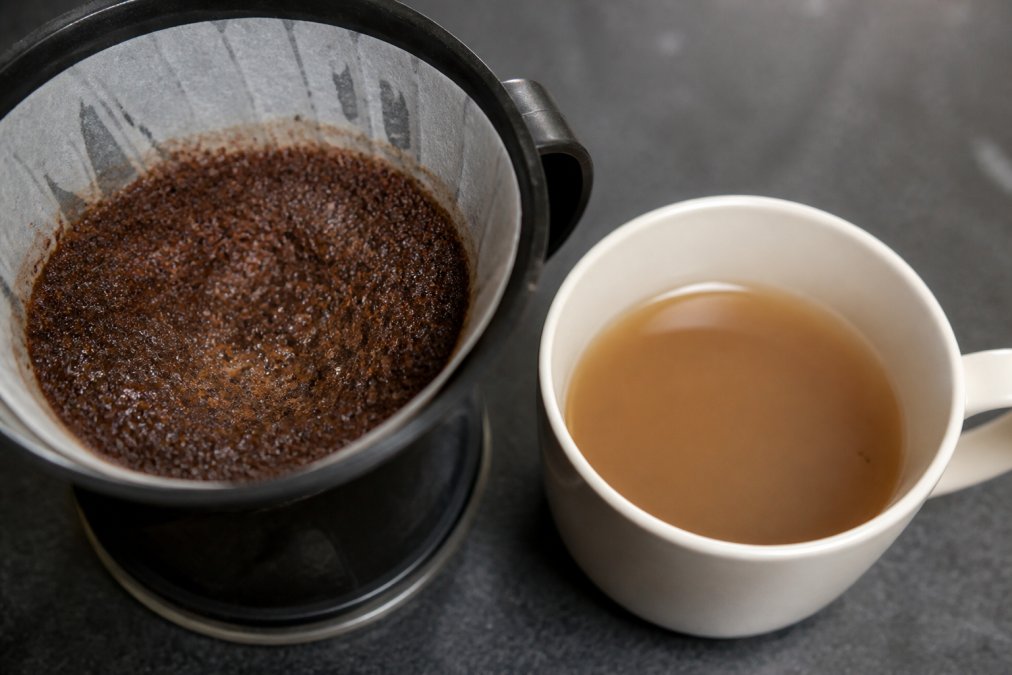
Under-extracted coffee has distinct characteristics you can identify before you even taste it. The brew looks lighter and thinner than normal. The flavor profile tastes sharp, sour, or grassy. You might also notice it lacks the sweetness and body you expect from good coffee.
Here's what to watch for:
- Pale color: The brewed coffee looks noticeably lighter than usual, almost weak
- Thin body: It feels watery on your tongue instead of smooth or rich
- Sour or tangy taste: Sharp, acidic notes dominate instead of balanced flavor
- Grassy or vegetal notes: The cup tastes green or herbaceous
- Lack of sweetness: No caramel, chocolate, or fruity notes come through
The contact time between water and grounds is usually the culprit. When water moves through the grounds too quickly, it doesn't have time to dissolve enough of the coffee's soluble compounds. The result is an incomplete flavor profile that tastes sour and underdeveloped.
Fix 1: Adjust the Best Grind Size for Drip Coffee
Grind size is the easiest variable to change and often the biggest factor in extraction. A grind that's too coarse lets water pass through too fast. A grind that's too fine can cause channeling, where water finds paths of least resistance and bypasses most of the grounds.
For drip coffee makers, aim for a medium grind, roughly the texture of sea salt or fine sand. This size gives water enough surface area to extract flavor while maintaining proper contact time. If your coffee tastes sour, the grind is likely too coarse.
How to identify under-extracted grind visually:
Under-extracted grounds have a distinctive appearance. When you look at wet grounds in the filter after brewing, they should appear evenly saturated and slightly clumped together. If the grounds look loose, separated, and very wet, almost like they're swimming in water, extraction is happening too fast. This visual cue tells you to grind finer before tasting.
In contrast, over-extracted grounds appear dense and compacted, sometimes forming a hard puck at the bottom of the filter. If you see that, you've gone too fine.
Grind size adjustments by brewing method:
Different brewers require different grind sizes because water contact time varies:
- Drip coffee makers: Medium grind (similar to granulated sugar). Water contact is 4-6 minutes, so you need a size that slows flow without blocking it.
- Pour-over (Chemex, V60, Kalita Wave): Medium-fine grind. These brewers give you more control over pour rate, so a slightly finer grind works well and extracts more completely.
- French Press: Coarse grind (like breadcrumbs). Water sits in contact for 4 minutes, so a coarse grind prevents over-extraction and sediment.
- Espresso: Very fine grind (powder-like). Water contact is only 25-30 seconds, so particles must be tiny to extract enough in that short window.
If you're using a drip maker with a medium grind and coffee still tastes sour, move to medium-fine.
Burr grinder vs. blade grinder:
Testing the grind adjustment:
Fix 2: How to Adjust Water Temperature for Coffee
Water temperature directly affects extraction speed. Hotter water extracts faster. Cooler water extracts slower. Most home brewers don't think about this, but it's powerful.
Single Origin Favorites Sample Pack →
Here's how to check your water temperature:
- Use a thermometer to measure water right before brewing
- If you're using a kettle, let it cool for 30 seconds after boiling (boiling is 212°F)
- Most electric kettles have a temperature setting you can dial in
Fix 3: Extend Brewing Time and Contact Duration
Contact time is how long water stays in contact with the grounds. Longer contact means more extraction. For drip coffee, this usually falls between 4-6 minutes.
Here's a simple test:
- Time how long your current brew takes from start to finish
- If it's under 4 minutes, slow down your pour or use a finer grind to increase contact time
- Aim for 4-5 minutes total brew time
- Taste the result
Fix 4: Check Your Coffee Bean Quality and Roast Profile
The beans themselves matter more than most people realize. Stale beans are harder to extract properly. Old beans have lost volatile oils and aromatics, making complete extraction difficult. This contributes to sour, flat flavors.
The roast profile also affects how easily beans extract:
- Light roasts: Denser, harder to extract. Require slightly hotter water and longer contact time
- Medium roasts: Sweet spot for most home brewers. Extract predictably with standard methods
- Dark roasts: More porous, extract faster. Risk over-extraction if you're not careful
Fix 5: Evaluate Your Water Chemistry and Quality
Water chemistry is one of the most overlooked causes of sour coffee, yet it's fundamental to extraction. The mineral content of your water, primarily calcium and magnesium, directly affects how efficiently coffee compounds dissolve. This is why the same beans and grind size can produce different results in different locations.
How water hardness affects extraction:
- Hard water (>150 ppm total dissolved solids): Minerals bind to coffee compounds and can actually speed up extraction. This sounds beneficial, but it often leads to incomplete extraction of desirable flavors while over-extracting harsh compounds. The result is a cup that tastes both sour and bitter, a confusing flavor profile.
- Soft water (<50 ppm): Low mineral content slows extraction. Water doesn't dissolve coffee compounds as efficiently, leaving more sour, underdeveloped flavors behind. This is a common cause of sourness in areas with naturally soft water.
- Moderately hard water (75-150 ppm): This is the sweet spot for most home brewers. Minerals are present but not excessive, allowing balanced extraction without interference.
How to test your water hardness:
Adjusting your brewing for your water:
- If you have soft water: Your sour coffee likely stems from slow extraction. Compensate by grinding finer (move up one setting), increasing water temperature by 5°F, or extending brew time by 30 seconds. These adjustments speed up extraction to compensate for low mineral content.
- If you have hard water: If your coffee tastes sour and thin despite a fine grind and long brew time, hard water may be interfering with extraction. Try using filtered water (which removes some minerals while keeping beneficial ones) or switching to a pour-over method, which gives you more control over water contact and can help you dial in extraction more precisely.
- If you have moderately hard water: You're in the ideal range. Standard brewing methods should work well. If you're still experiencing sourness, the problem is likely grind size or brew time, not water chemistry.
Using filtered water:
Water chemistry and brewing method interaction:
- Drip coffee makers: Water sits in contact with grounds for 4-6 minutes. Hard water can over-extract in this time frame, while soft water may under-extract. Adjusting grind size is your best lever.
- Pour-over methods: You control the pour rate, so you can compensate for water chemistry by pouring faster (for soft water) or slower (for hard water). This method gives you the most flexibility.
- French Press: Water sits in contact for 4 minutes with no filtration. Hard water can cause over-extraction and sediment. If you have hard water and a French Press, use a slightly coarser grind than standard.
- Espresso: Mineral content affects how water flows through the puck. Hard water can cause channeling and uneven extraction. If you pull espresso and taste sourness, water chemistry may be the culprit, try filtered water.
The diagnostic approach:
Sour vs. Acidic: What Your Taste Buds Are Telling You
Not all sour-tasting coffee is under-extracted. Some coffee is simply acidic by nature. Understanding the difference helps you diagnose the real problem.
Here's a quick sensory check:
- Acidic coffee has flavor complexity: fruit notes, sweetness, body
- Sour coffee tastes one-dimensional: sharp, thin, lacking development
Frequently Asked Questions
How do I fix coffee that tastes sour?
Sour coffee is almost always under-extracted. Start by grinding finer to increase contact time between water and grounds. If you're using a drip maker, try raising water temperature to 195-205°F and allowing a longer brew cycle. Check that your beans aren't stale, fresh-roasted coffee from a trusted roaster like USM Coffee, roasted to order, eliminates age as a cause. Finally, verify your water quality; minerals in your water help extraction, so filtered water with moderate mineral content works best.
Why does brewed coffee taste sour?
Sour taste in brewed coffee indicates under-extraction: not enough of the coffee's soluble compounds dissolved into your cup. This happens when grind size is too coarse, water temperature is too low, or brew time is too short. Channeling, when water finds a path through loose grounds instead of saturating them evenly, also causes sourness. Each of these factors reduces contact time between water and coffee grounds, leaving behind the tangy, unpleasant flavors while missing the balanced sweetness of a properly extracted cup.
Does grind size affect coffee acidity?
Grind size directly affects extraction, which determines the balance between acidity and sweetness in your cup. A coarse grind extracts too little, leaving tangy, sour notes and harsh astringency. A medium grind allows balanced extraction of both acidic and sweet compounds. A fine grind over-extracts, bringing out bitter tannins. For drip coffee makers, aim for a medium consistency, similar to sea salt, to achieve the right contact time and flavor balance without sourness or bitterness.
What's the difference between sour and acidic coffee?
Acidic coffee has a bright, pleasant tartness, like citrus or berries, that's part of the bean's natural flavor profile. Sour coffee tastes harsh, tangy, and unpleasant, like vinegar. Sourness comes from under-extraction, while acidity is a natural characteristic of the bean itself. Light roasts tend to be more acidic by nature; medium roasts are more balanced. If you find even properly brewed coffee too acidic for your stomach, choose medium or dark roasts, which have lower acidity and smoother flavor profiles.