

Does Coffee Bean Roast Level Affect Shelf Life?
Table of Contents
- How Roast Level Changes Coffee's Shelf Life
- How to Store Coffee Beans for Maximum Freshness
- Signs of Stale Coffee Beans
- Does Freezing Coffee Beans Extend Shelf Life?
- The Degassing Process and Peak Flavor Window
- How Climate and Humidity Affect Coffee Storage
- Conclusion
- Frequently Asked Questions
Last Updated: September 16, 2026
How Roast Level Changes Coffee's Shelf Life
Roast level is one of the biggest factors in how long coffee beans stay fresh, and the question of does coffee bean roast level affect shelf life is one most drinkers get backwards. Does coffee bean roast level affect shelf life? Yes, and the effect runs opposite to what most drinkers expect: darker roasts generally fade faster than lighter ones because roasting opens the bean's internal structure and pushes oils to the surface, where oxygen reaches them immediately. Below, we'll break down the chemistry, compare roast levels side by side, and show you how to store beans so the peak flavor window lasts as long as possible.
Why Dark Roasts Age Faster Than Light Roasts
Dark roasts age faster because extended roasting drives lipid oxidation and pushes volatile compounds out of the bean. The longer and hotter the roast, the more the cell structure breaks down, releasing surface oils where flavor lives. Once exposed to oxygen exposure, those oils oxidize, and bright, fruity notes degrade into a dull, bitter, ashy profile.
A light roast keeps more chemical stability intact: its acidity and volatile compounds stay locked deeper inside the bean, giving it more buffer against staling. That is why a light roast holds its character longer than a dark one, even under identical storage.
The Role of Bean Density and Porosity
Bean density and bean porosity are the physical reasons roast level changes shelf life. Green coffee is dense and tightly packed; as roasting progresses, the bean expands, moisture escapes, and the cell structure turns porous, exposing far more internal surface area to air.
CO2 release, or degassing, is the visible symptom. Freshly roasted beans vent carbon dioxide for days, which is why roasters use bags with a one-way valve: it lets CO2 escape without letting oxygen in. A darker, more porous bean degasses faster and, once its protective CO2 blanket is gone, takes on oxygen faster too. Density and porosity, not color, decide how quickly a bean gives up its flavor complexity.
How to Store Coffee Beans for Maximum Freshness
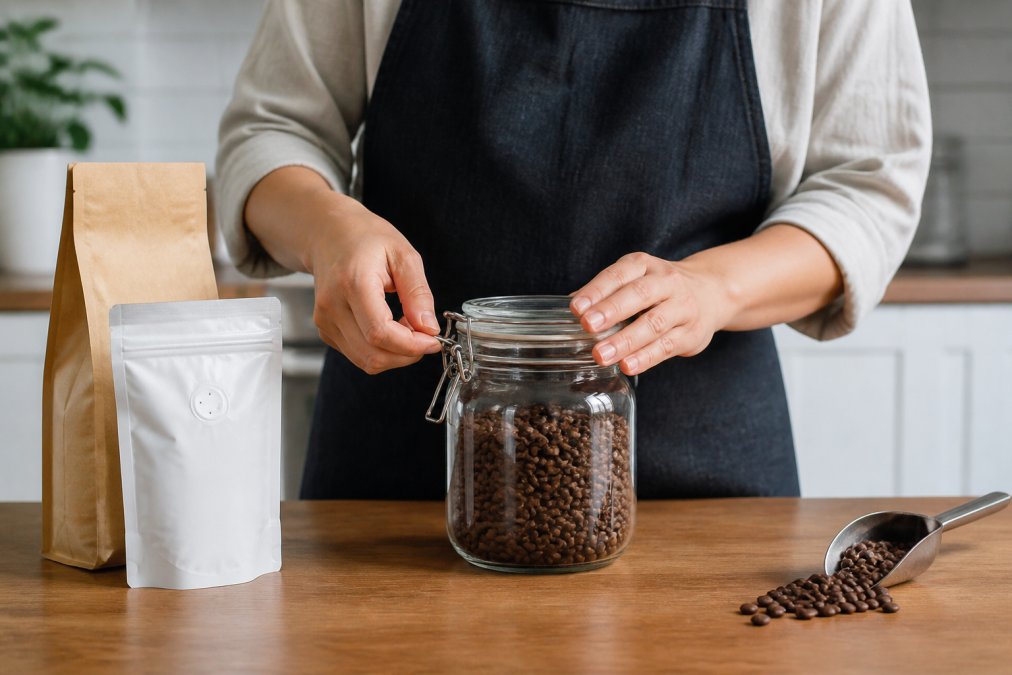
Storing coffee beans for maximum freshness means limiting the three things that accelerate aging: oxygen, heat, and light. The right routine depends on your roast level, because a porous dark roast and a dense light roast fail in different ways.
Match Your Storage to Your Roast Level
A dark roast has surface oils and a porous structure, so it is vulnerable to oxygen from day one. A light roast keeps oils internal and its structure denser, so it is more vulnerable to moisture uptake over time. That changes what you prioritize:
- Dark roasts: prioritize oxygen exclusion and speed of use. Buy in small amounts, transfer to a small airtight container that leaves little headspace, and finish within a few weeks of the roast date.
- Light roasts: prioritize moisture control and light blocking. A light roast can hold its character longer, but it will still flatten if it pulls humidity from the air or sits in sunlight.
- Medium roasts: sit between the two. They tolerate a slightly longer window than dark roasts but do not have the light roast's buffer against oxidation.
Packaging Material Interaction: What Your Bag Is Actually Doing
Most guides tell you to keep the bag or move to a jar without explaining how packaging interacts with roast level. The common formats behave differently:
- One-way valve bags: the valve lets carbon dioxide escape while restricting oxygen ingress, which suits freshly roasted beans still degassing heavily, most dark roasts in their first week. But a valve bag is not a humidity barrier, and once degassing slows it protects less than a rigid airtight container.
- No-valve bags: without a valve, CO2 can pressurize the bag, so some roasters use these for rested beans. For a dark roast that has stopped degassing, a sealed no-valve bag is fine short-term but offers no active protection once opened.
- Rigid airtight containers: these block oxygen and moisture more consistently than any bag, but trap CO2 if you seal beans immediately after roasting. Let very fresh beans rest in the valve bag a few days before transferring.
A common pattern is to use the valve bag for the first week and move to a rigid container after that, especially for light roasts you plan to keep longer.
The Right Container and Location
The right container is opaque and airtight, blocking light exposure and sealing out air. A clear glass jar on a sunny counter ruins coffee, because light and ambient temperature swings speed up thermal degradation.
A Roast-Specific Storage Routine
Signs of Stale Coffee Beans
- No aroma when you open the bag, or a flat, cardboard-like smell.
- Surface oils that look dull and dried rather than glossy.
- No bloom when hot water hits the grounds, meaning little CO2 is left.
- A flat, papery, or bitter cup with none of the original acidity.
- Beans that feel light and hollow rather than dense.
Does Freezing Coffee Beans Extend Shelf Life?
Freezing coffee beans can extend shelf life, but only if done correctly.
The Degassing Process and Peak Flavor Window
The degassing process defines the peak flavor window.
A Roast-by-Roast Timeline
- Dark roasts: degas fastest, often settling within two to four days after roasting. They hit their peak sooner and decline sooner, which is why a dark roast can taste flat by the end of the second week.
- Medium roasts: typically settle in about four to seven days. They offer a wider usable window than dark roasts but still fade faster than light roasts.
- Light roasts: degas slowest, often needing seven to ten days to settle. They take longer to reach peak but hold that peak longer, sometimes several weeks under good storage.
Why CO2 Matters for Extraction
Carbon dioxide is not just a freshness marker; it actively interferes with brewing.
Brewing Method Correlation: Different Methods Need Different Freshness Windows
- Espresso: least forgiving. It needs beans that have finished degassing but have not yet begun to oxidize heavily, often roughly five to fourteen days after roast for medium and dark roasts. Too fresh and the shot runs unevenly; too old and the crema thins and the flavor flattens.
- Pour-over: moderately demanding. It rewards beans in their peak window, often about seven to twenty-one days after roast depending on roast level, because it exposes flaws in extraction.
- French press and immersion brews: most forgiving. Their longer contact time and fuller body mask some staleness, so they can absorb beans that are slightly past peak.
- Cold brew: very forgiving. Its long steep and concentrated ratio can work with beans that are a few weeks old, though the brightest acidity will still fade.
How to Time Your Purchase
If you drink espresso, buy smaller bags more often and finish them within two weeks.
| Roast Level | Relative Shelf Life | Why |
|---|---|---|
| Light | Longest | Dense bean, oils stay internal, slower oxidation |
| Medium | Moderate | Balanced porosity and oil migration |
| Dark | Shortest | High porosity, surface oils, fast oxidation |
How Climate and Humidity Affect Coffee Storage
Climate and humidity are the variables most storage guides ignore, and they matter enormously.
Conclusion
Roast level absolutely affects shelf life, and the darker the roast, the faster it fades, because porosity and surface oils hand oxygen a head start.
Frequently Asked Questions
Is coffee roasted 4 months ago still good?
Coffee roasted 4 months ago is past its peak flavor window but still safe to drink. Most roasted coffee beans taste best within 2 to 4 weeks of the roast date. After 4 months, oxidation and staling have degraded volatile compounds, so the coffee may taste flat, papery, or dull. Darker roasts lose their flavor complexity faster than lighter roasts because their porous cell structure allows quicker oxygen exposure. If you have 4-month-old beans, try brewing a small batch to check the aroma and flavor before using them for your daily cup.
What is the shelf life of a roasted coffee bean?
The shelf life of roasted coffee beans depends on roast level, storage, and packaging. Light roasts can stay fresh for 4 to 6 weeks in an airtight container, while dark roasts peak in 1 to 2 weeks and decline faster due to higher porosity and surface oils. Whole beans last longer than ground coffee because less surface area is exposed to oxygen. A one-way valve bag helps release CO2 without letting oxygen in. For the best freshness profile, buy beans with a recent roast date and store them properly.
Does roast level impact the rate of coffee oxidation?
Yes, roast level directly affects oxidation speed. Dark roasts have a more porous cell structure and more surface oils, which means oxygen can penetrate faster and trigger lipid oxidation. This leads to quicker staling and sensory degradation. Light roasts are denser and less porous, so they resist oxygen exposure longer and maintain their acidity and flavor complexity for more weeks. If you want a longer shelf stability, a lighter roast stored in an airtight container will typically outlast a dark roast.
How do porous structures in dark roasts affect shelf life?
Dark roasting expands the bean's cell structure, creating more pores and cracks. These porous structures increase the surface area exposed to oxygen, moisture, and light, which accelerates chemical breakdown and staling. The CO2 release during degassing is also faster in dark roasts, meaning the peak flavor window closes sooner. To slow this process, store dark roast beans in an airtight, opaque container away from heat and moisture. Even with perfect storage, dark roasts generally have a shorter shelf life than light roasts.