

Does Fresh Roasted Coffee Have More Caffeine?
Table of Contents
- The Short Answer: Freshness Doesn't Equal More Caffeine
- How Roasting Actually Affects Caffeine Content
- Light Roast vs Dark Roast Caffeine: What the Data Shows
- How to Keep Coffee Beans Fresh Longer and Preserve Caffeine
- Brewing Method Matters More Than Roast Date
- Common Myths About Fresh Coffee and Caffeine
- Frequently Asked Questions
Last Updated: September 23, 2026
The Short Answer: Freshness Doesn't Equal More Caffeine
Does fresh roasted coffee have more caffeine than older beans? The answer is no, does fresh roasted coffee have more caffeine is a common question, but caffeine content remains stable regardless of roast date. Caffeine is one of the most chemically stable compounds in coffee. It survives the roasting process virtually intact and doesn't degrade significantly during storage. What changes with age is flavor, aroma, and how the coffee extracts, not the amount of caffeine present.
This misconception persists because freshness matters enormously for taste. A bag of coffee roasted yesterday tastes noticeably better than one roasted six months ago. But better taste and higher caffeine content are two completely different things. At USM Coffee, we roast beans to order specifically to maximize flavor and aroma, the qualities that actually degrade over time. Caffeine, however, remains stable regardless of how fresh your beans are.
Why 'Fresh Roasted' Gets Confused With 'Light Roasted'
Many people searching for "fresh roasted coffee" are actually conflating two separate concepts: roast date (freshness) and roast level (light, medium, dark). This confusion drives much of the misinformation online.
Light roasted beans are denser and heavier than dark roasted beans of the same size. When measured by volume, using a scoop, light roast delivers more caffeine per scoop. Some coffee retailers market light roasts as "fresh" or "bright," which can reinforce the false belief that fresh = more caffeine. In reality, a dark roast roasted yesterday contains the same caffeine as a light roast roasted yesterday when measured by weight.
The distinction matters because:
- Roast date affects flavor, aroma, and how quickly the coffee stales (typically noticeable decline after 2-4 weeks).
- Roast level affects bean density, extraction behavior, and how much coffee mass you get per volume measurement, but not total caffeine per unit weight.
If you want maximum caffeine, choosing a light roast makes sense due to density differences. But that choice is independent of freshness. A light roast from last month contains the same caffeine as a light roast from yesterday.
How Roasting Actually Affects Caffeine Content
The roasting process exposes coffee beans to temperatures between 350°F and 450°F. At these temperatures, caffeine molecules don't break down. They're remarkably heat-resistant, far more stable than the flavor compounds and aromatic oils that make fresh coffee taste better.
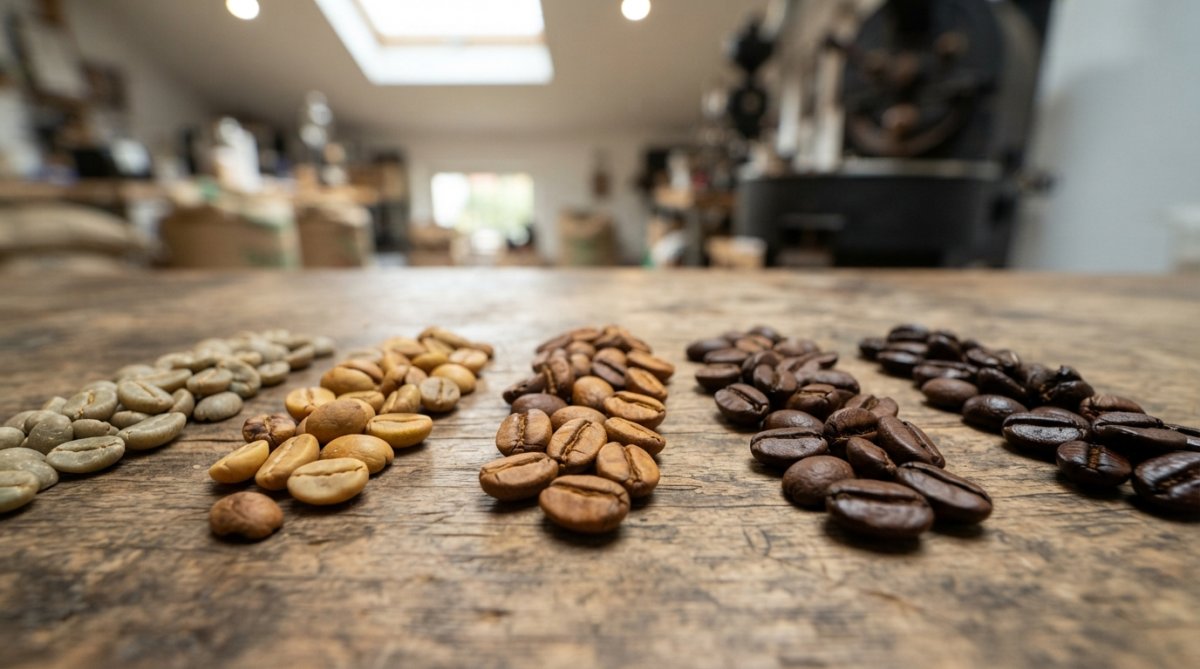
What roasting actually does is remove moisture and expand the bean. A light roast retains more mass because it's roasted for a shorter duration. A dark roast loses more moisture, becoming less dense. This matters for measurement, but not for caffeine stability. The caffeine molecules themselves remain chemically unchanged throughout the roasting process.
Why Caffeine Molecules Survive High Heat
Caffeine's chemical structure makes it exceptionally resistant to thermal degradation. The molecule doesn't sublimate or break apart under the conditions present during coffee roasting. Research on thermal degradation of alkaloids, the class of compounds caffeine belongs to, shows that caffeine requires much higher temperatures than roasting reaches to degrade meaningfully.
This is why decaffeinated coffee still contains trace amounts of caffeine even after the decaffeination process. The caffeine doesn't disappear; it's selectively removed using solvents or water. If heat alone could destroy caffeine, decaffeination would be far simpler.
Bean Density and Mass vs Volume Measurement
Here's where freshness and caffeine perception diverge. A light roast bean is denser and heavier than a dark roast bean of the same size. This means if you measure coffee by volume, using a scoop, you'll get slightly different amounts of actual coffee mass depending on roast level.
A scoop of light roast contains more bean material than a scoop of dark roast. More bean material means more caffeine per scoop. But this has nothing to do with freshness. A light roast from three months ago contains the same mass as a light roast from yesterday when measured by volume.
Measuring by weight eliminates this confusion entirely. One ounce of coffee contains the same caffeine whether it's light, dark, fresh, or aged. Weight-based measurement is why specialty coffee professionals use scales rather than scoops.
Light Roast vs Dark Roast Caffeine: What the Data Shows
The persistent myth suggests dark roasts have less caffeine because they're roasted longer. In reality, light roast and dark roast contain nearly identical caffeine content when measured by weight. The difference is negligible, usually less than 5% variation, which falls within normal measurement error.
What differs dramatically is extraction efficiency during brewing. Light roasts extract differently than dark roasts due to bean density and how water penetrates the bean structure. A dark roast may yield slightly more soluble solids in your cup, but those solids don't include significantly more caffeine. They include more of the bitter compounds and body that dark roasts are known for.
If you're seeking maximum caffeine per cup, the brewing method and brew ratio matter far more than roast level. A longer steep time or higher coffee-to-water ratio will increase caffeine extraction from any roast profile.
How to Keep Coffee Beans Fresh Longer and Preserve Caffeine
While caffeine doesn't degrade with age, the flavor compounds that make coffee enjoyable absolutely do. Preserving freshness means protecting beans from oxygen, light, heat, and moisture. These enemies don't destroy caffeine, they destroy the volatile aromatic compounds that define coffee quality.
Store beans in an airtight container away from direct sunlight and heat sources. A cool, dark cupboard works better than the refrigerator or freezer, which introduces condensation when beans warm up. Whole beans stay fresher longer than ground coffee because grinding dramatically increases surface area exposed to oxygen.
Storage Best Practices for Maximum Potency
The goal of proper storage is to preserve the coffee you want to drink, not to protect caffeine. Caffeine needs no protection. But the flavor that makes fresh coffee worth drinking does.
Use airtight containers designed for coffee storage. Vacuum-sealed bags work well for short-term storage. Ceramic or glass containers with tight-sealing lids work for longer-term storage. Avoid clear containers that expose beans to light.
Most coffee reaches peak flavor 3-10 days after roasting, then gradually declines over weeks.
Brewing Method Matters More Than Roast Date
Your brewing method has a far larger impact on caffeine content than freshness or roast level. Different brewing techniques extract caffeine at different rates, and the interaction between grind size, extraction time, and bean density determines how much caffeine ends up in your cup.
How Grind Size and Extraction Time Interact With Roast Density
Here's how this plays out in practice:
Espresso (9 bars pressure, 25-30 second extraction): The high pressure forces water through finely ground coffee (0.75 mm particle size) very quickly. Pressure compensates for short contact time. A single shot extracts roughly 75 milligrams of caffeine regardless of roast level, because the extraction is so rapid and complete that density differences become secondary. Grind size is critical, too coarse and you under-extract; too fine and you over-extract and get bitter flavors.
The Brew Ratio Dominates Everything
The brewing ratio, how much coffee you use relative to water, matters more than anything else, including freshness and roast level combined. This is the single most reliable lever you control.
For maximum caffeine:
- Adjust brew ratio first. Use more coffee relative to water. This is the highest-impact change.
- Choose your brewing method second. French press and cold brew extract more completely than espresso or drip.
- Grind size third. Finer grinds extract faster; coarser grinds extract more slowly. Match grind to your method.
- Roast level last. Light roasts deliver slightly more caffeine per scoop due to density, but the effect is small compared to brew ratio and method.
- Freshness doesn't affect caffeine. It affects flavor. Brew fresh beans for taste, not for caffeine.
Common Myths About Fresh Coffee and Caffeine
Myth: Dark roasts have less caffeine because roasting burns it off. Reality: Caffeine doesn't burn off during roasting. The myth likely stems from the fact that dark roasts are less dense, so a volume-based scoop contains slightly less coffee mass and therefore slightly less caffeine. But weight for weight, they're nearly identical.
Frequently Asked Questions
Does fresh roasted coffee have more caffeine than older coffee?
No. Caffeine is chemically stable and doesn't degrade significantly during roasting or normal storage. A freshly roasted bean contains roughly the same amount of caffeine as the same bean weeks later. What changes is moisture content and flavor compounds, not caffeine concentration. Freshness affects taste and aroma, not caffeine potency.
Which roast has more caffeine: light roast or dark roast?
Light roast and dark roast contain nearly identical caffeine levels per gram of beans. The difference is bean density, light roasts are denser because they've lost less moisture, so a scoop of light roast weighs slightly more and delivers marginally more caffeine by volume. By weight, they're essentially equal. Brewing method and extraction efficiency matter far more than roast level.
How do I keep coffee beans fresh longer without losing caffeine?
Store beans in an airtight container away from light, heat, and moisture. A sealed bag or opaque jar at room temperature works best. Freezing is not necessary and can introduce moisture. Whole beans stay fresh for 2-4 weeks; ground coffee degrades faster. Proper storage preserves flavor and aroma far more than caffeine, which remains stable regardless of storage conditions.
Does the roasting process burn off caffeine?
No. Caffeine has a boiling point of 356°F, well above typical roasting temperatures. Coffee roasting occurs between 350-450°F, but caffeine molecules are not volatile compounds that escape during roasting. Some moisture and aromatic oils are lost, but caffeine remains intact. This is why both light and dark roasts retain their full caffeine content.