

Fresh Roasted Coffee for Cold Brew: A How-To Guide
Table of Contents
- Why Fresh Roasted Coffee Makes a Difference in Cold Brew
- Cold Brew Grind Size Guide: Getting It Right
- Cold Brew Steep Time: Finding Your Perfect Extraction
- How to Keep Coffee Beans Fresh Longer
- Choosing the Right Roast Profile for Cold Brew
- Step-by-Step: Brewing Cold Brew with Fresh Roasted Beans
- Troubleshooting Bitter or Sour Cold Brew
- Frequently Asked Questions
Last Updated: September 18, 2026
Why Fresh Roasted Coffee Makes a Difference in Cold Brew
Fresh roasted coffee for cold brew delivers noticeably better flavor than stale beans. The difference comes down to how quickly aromatic compounds break down after roasting.

Freshly roasted beans contain volatile oils and gases that create complexity, but these compounds fade within weeks. Store-bought beans have already lost much of this character.
Cold brew amplifies this problem because the long steeping process extracts everything in the beans, including off-flavors that develop as they age. Fresh roasted beans create layers of flavor stale beans cannot.
At USM Coffee, we roast every batch to order. You taste the difference immediately.
Cold Brew Grind Size Guide: Getting It Right
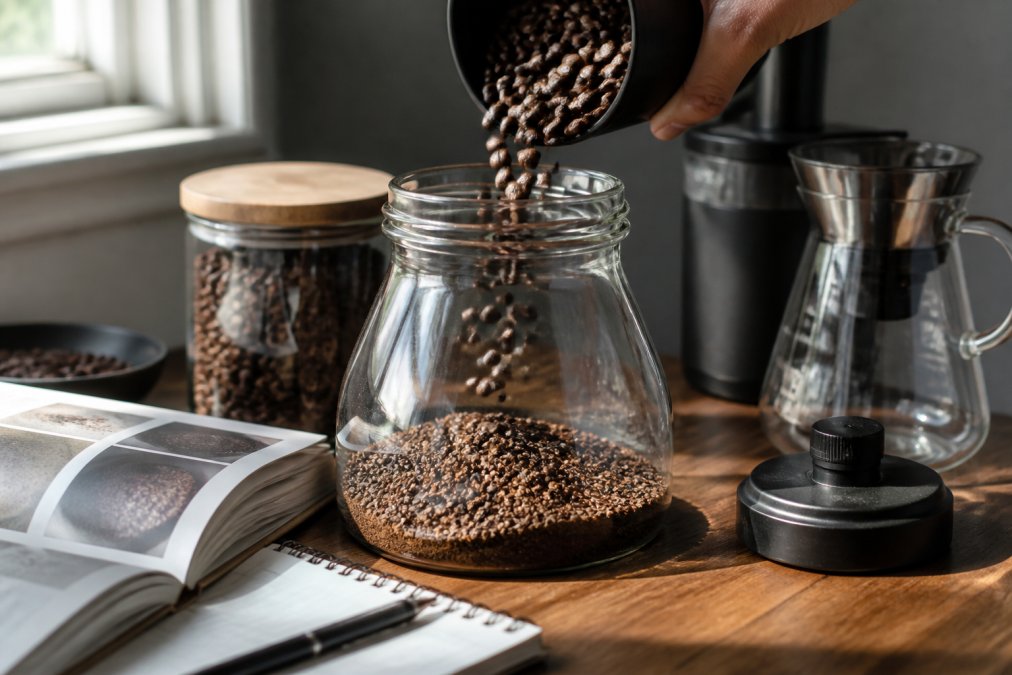
The coarse grind is non-negotiable for cold brew. A coarse grind looks like sea salt or breadcrumbs, roughly the size of a small pea. Cold water extracts slowly, so fine grounds over-extract and pull bitter compounds, while coarse grounds under-extract and taste sour.
Here's the practical difference:
- Too fine: Over-extraction creates bitterness and harsh mouthfeel
- Coarse (correct): Balanced extraction with clean, smooth flavor
- Too coarse: Under-extraction leaves the cup sour and thin
Measure your grind by feel. Rub some between your fingers. You should feel distinct particles, not powder. If it feels like flour, grind coarser.
Start with your grinder's "coarse" setting. If the brew tastes bitter, go one notch coarser; if sour, go one notch finer. You'll dial it in within two batches.
Cold Brew Steep Time: Finding Your Perfect Extraction
The standard steep time is 12-24 hours, but 16 hours hits the sweet spot for balanced extraction. Shorter steeps (12 hours) work with coarse grinds and room-temperature water; longer steeps don't improve flavor past 24 hours.
Cold water extraction is gentler than hot, pulling fewer bitter compounds, which is why cold brew tastes smooth even after long steeping.
Don't steep beyond 24 hours, you risk developing off-flavors without improving flavor. Steep, strain, and store the concentrate in the fridge.
How to Keep Coffee Beans Fresh Longer
Storage determines how long fresh roasted coffee for cold brew stays fresh. Cold brew is more forgiving of slight staleness than espresso or pour-over, but understanding the timeline helps you order on schedule.
Coffee beans are porous and absorb moisture and oxygen, both of which degrade flavor. The goal is to slow this process.
The Cold Brew Freshness Window
For cold brew, beans perform best within 5-21 days of roast.
- Days 5-10 (Peak): Aromatic compounds at maximum; flavor is bright and complex.
- Days 11-21 (Good): Flavor clarity fades but cold brew remains balanced and smooth.
- Days 22-35 (Acceptable): Cup becomes flatter; cold brew works but loses complexity.
- Day 36+: Flavor noticeably hollow; not recommended.
Storage Best Practices
Store beans in an airtight container. Keep it in a cool, dark place at room temperature. Consistent temperature matters more than cold; fluctuations cause condensation and accelerate staling.
Avoid these storage mistakes:
- Original bags without sealing. One-way valves let oxygen in once opened.
- Clear containers on the counter. Light accelerates oxidation.
- Heat sources. Speed up breakdown of aromatic oils.
- Freezing or refrigerating. Condensation from temperature fluctuations causes rapid staling.
Practical Storage Setup
Transfer beans to an airtight container immediately after opening. Order fresh roasted beans on a schedule that matches your consumption.
Choosing the Right Roast Profile for Cold Brew
The roast profile shapes the flavor notes in your cold brew. Light roasts, medium roasts, and dark roasts each bring different characteristics. But the choice also depends on your water chemistry and how you want the extraction to behave.
Light Roasts
Light roasts emphasize origin characteristics and bright acidity. For cold brew, they present a challenge: cold water extracts slowly, and light roasts are already delicate. Extend the steep time to 18-20 hours or use a slightly finer grind. Light roasts work best with moderately hard or hard water; in soft water they often taste hollow.
Medium Roasts
Medium roasts balance origin flavor with roasted character. They develop chocolate undertones and hazelnut notes while keeping some brightness. Most cold brew drinkers prefer medium roasts because they extract well in cold water and taste smooth across a wider range of water types.
Medium roasts are forgiving. They work with standard 16-hour steeps, coarse grinds, and both soft and hard water. The roasting process has developed enough body in the beans that cold extraction pulls a full-bodied cup without requiring perfect technique. This is why medium roasts are the default recommendation for cold brew.
Dark Roasts
Dark roasts emphasize roasted character over origin. They're bold, full-bodied, and less acidic. The extended roasting time breaks down chlorogenic acid, which is responsible for much of coffee's natural acidity. If you have a sensitive stomach or acid reflux, dark roasts are gentler.
Cold brew made with dark roasted beans tastes rich and clean. Dark roasts extract quickly in cold water because the roasting process has already broken down cell walls in the bean. This means you can use a slightly coarser grind or shorter steep time (12-14 hours) and still get a full-bodied cup. Dark roasts are also less sensitive to water chemistry, they perform well in both soft and hard water.
Water Chemistry and Roast Selection
This is where most guides fall short. Your water's mineral content affects how different roasts extract.
- Hard water (150+ mg/L dissolved minerals): Extracts more body and sweetness. Works well with light and medium roasts. Dark roasts can taste slightly over-extracted and bitter in hard water if you use a standard 16-hour steep.
- Soft water (under 50 mg/L dissolved minerals): Extracts less body. Medium and dark roasts work best. Light roasts often taste thin and sour in soft water unless you extend the steep time significantly.
- Moderately hard water (75-150 mg/L): The sweet spot. Works with all roast levels. This is the water chemistry most cold brew guides assume.
If you don't know your water hardness, contact your local water utility, they publish water quality reports publicly.
Practical Roast Selection
For cold brew specifically, medium roasts are the safest choice. They extract balanced flavor without requiring perfect technique or specific water chemistry.
| Roast Level | Flavor Profile | Best For | Water Chemistry | Steep Time | Body |
|---|---|---|---|---|---|
| Light | Bright, origin-focused | Complex flavor seekers | Hard/moderately hard | 18-20 hours | Thin to medium |
| Medium | Balanced, smooth | Most cold brew drinkers | Any | 16 hours | Full |
| Dark | Bold, low-acid | Sensitive stomachs | Any | 12-14 hours | Heavy |
Step-by-Step: Brewing Cold Brew with Fresh Roasted Beans
Cold brew is forgiving once you understand the basics. Here's the process.
What You'll Need:
- Fresh roasted coffee beans (coarse grind)
- Cold water
- Glass jar or cold brew maker
- Fine mesh strainer or cheesecloth
- Scale or measuring cup (optional but helpful)
Step 2: Combine Coffee and Water [Time: 2 minutes]
Step 3: Steep [Time: 16 hours]
Step 4: Strain [Time: 5 minutes]
Step 5: Store and Serve [Time: 2 minutes]
Troubleshooting Bitter or Sour Cold Brew
Cold brew tastes bitter when you over-extract. It tastes sour when you under-extract. Both are fixable.
Bitter Cold Brew
Sour Cold Brew
Flat or Hollow Tasting Cold Brew
Frequently Asked Questions
Does using fresh roasted coffee improve cold brew flavor?
Yes. Fresh roasted coffee delivers brighter flavor notes, more complex tasting notes, and better mouthfeel in cold brew compared to stale beans. The cold water extraction method highlights the subtle origin characteristics and roast profile that fade quickly in older beans. Most coffee loses its peak flavor window within 2-3 weeks of roasting, making freshness critical for cold brew's smooth, refined taste.
What is the ideal grind size for cold brew coffee?
Cold brew requires a coarse grind, similar to French press consistency. Coarse grounds slow the extraction time and prevent over-extraction, which causes bitterness. The larger surface area of coarse grounds works with the extended steeping process to pull out smooth, balanced flavors without releasing harsh compounds. Inconsistent grind size leads to uneven extraction, so invest in a burr grinder for uniform particle size.
How long should you let cold brew steep for the best flavor?
Most cold brew steep for 12-24 hours, depending on your grind size and desired strength. Coarser grinds and room-temperature brewing typically need closer to 24 hours for full extraction, while finer grinds extract faster. Start at 12 hours and taste at intervals to find your preference. Over-steeping beyond 24 hours can introduce unwanted bitterness, so timing matters as much as grind size for balanced flavor clarity.
How do you keep coffee beans fresh for cold brew?
Store roasted beans in an airtight container away from light, heat, and moisture at room temperature. Whole beans stay fresh longer than pre-ground coffee. Order fresh roasted beans on a schedule that matches your consumption to minimize stale inventory.
Cold brew with fresh roasted beans is straightforward once you nail the fundamentals. The grind size, steep time, and bean freshness are the three variables that matter most. USM Coffee's cold brew blends are roasted specifically for this method, with flavor profiles designed to shine through the extraction process. Start with the basics, adjust based on taste, and you'll have cafe-quality cold brew at home within your first week.