

How Long to Wait Before Drinking Freshly Roasted Coffee
Table of Contents
- Why You Shouldn't Brew Freshly Roasted Coffee Immediately
- Understanding the Coffee Degassing Process
- How Roast Level Affects Your Waiting Time
- Brewing Method Considerations for Freshly Roasted Coffee
- Identifying Your Peak Flavor Window for Coffee Beans
- Storage Tips to Extend Freshness and Flavor
- What Happens When You Brew Too Soon
- Conclusion
- Frequently Asked Questions
Last Updated: September 29, 2026
Why You Shouldn't Brew Freshly Roasted Coffee Immediately
Brewing freshly roasted coffee immediately is a common mistake. Freshly roasted coffee releases carbon dioxide for days after roasting, and brewing too soon traps those gases in your cup instead of flavor compounds, producing sour, bitter, under-extracted coffee.
How long should you wait to drink freshly roasted coffee? Most beans need 3 to 10 days after roasting before they reach peak flavor. Light roasts often need less time (3 to 5 days), while dark roasts can take up to 10 days or more. The exact timing depends on roast level, brewing method, and how the beans were processed.
USM Coffee roasts every batch to order, so your beans arrive at the sweet spot where they're fresh but ready to deliver maximum flavor and aroma.
Understanding the Coffee Degassing Process
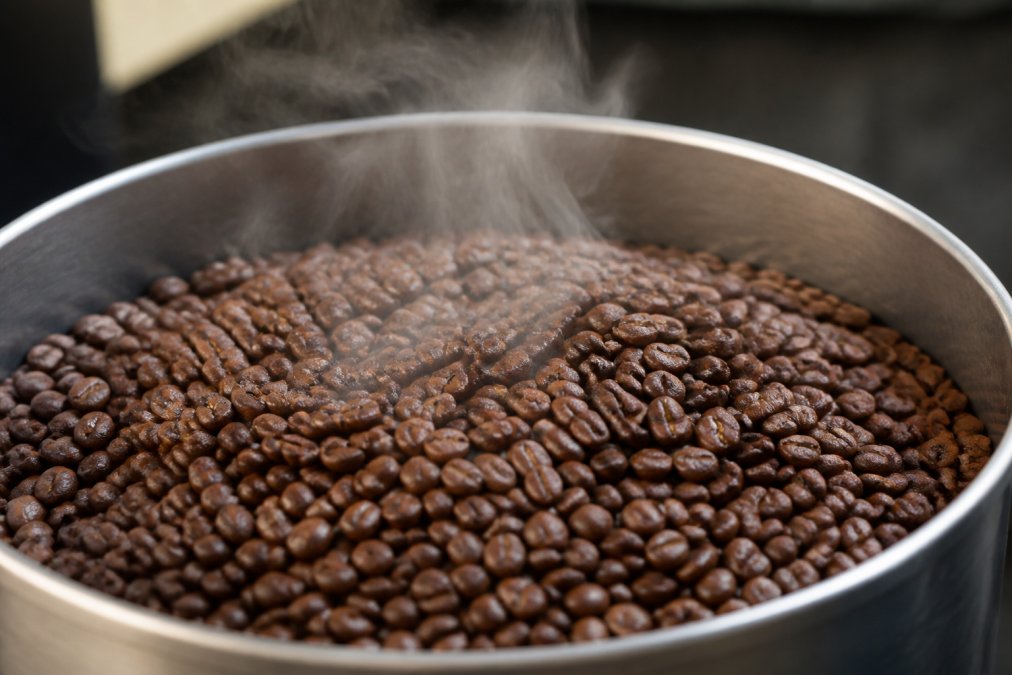
Degassing is the release of carbon dioxide that builds up inside coffee beans during roasting. When beans are heated, they expand and create tiny pockets of gas that escape gradually over several days, determining when your coffee will taste its best.
During the first 24 hours, degassing happens fastest. This rapid release is why your coffee tastes flat or sour if you brew immediately, carbon dioxide interferes with water's ability to extract flavor compounds.
By day 3 or 4, most gas has escaped and solubility improves. Water can now reach the flavor compounds you want, and extraction becomes consistent.
Factors That Change Degassing Speed
Bean density and altitude: High-altitude beans degas more slowly than sea-level coffees, sometimes requiring 1-2 extra days. Ethiopian and Kenyan high-altitude lots may need 4-6 days for light roasts instead of the typical 3-5 days.
Processing method: Natural-process beans have thicker mucilage layers that slow gas escape. Natural-process coffees often benefit from an extra 1-2 days of rest compared to washed-process beans.
Roast profile and cell damage: Lighter roasts have less cell damage, so gases escape more gradually. Darker roasts have more surface area but are less dense, so overall degassing time can be similar or longer.
Real-Time Indicators That Degassing Is Complete
You don't have to guess. There are practical, observable signs that your coffee is ready to brew.
The bloom test (pour-over method): When you pour hot water over grounds, a controlled bloom lasting 30-45 seconds signals the beans are ready. A violent bloom with aggressive bubbling lasting longer than 45 seconds means the beans are still actively degassing.
Bag feel and sound: Fresh bags are puffy from gas release. By day 4-5, properly stored bags feel noticeably softer. A sharp hiss when opening means degassing is still active; a quiet opening suggests it's mostly complete.
Aroma intensity: Freshly roasted beans have an intense aroma that becomes more refined as degassing progresses. By day 5-7, the aroma should smell complex and inviting rather than raw. A muted aroma suggests oxidation has begun.
Espresso crema stability: Under-degassed beans produce thin, quickly-dissipating crema. Properly degassed beans create thick, caramel-colored crema that holds for 15-20 seconds.
How Roast Level Affects Your Waiting Time
Different roast levels degas at different rates. Understanding this helps you plan when to brew your specific beans.
Light Roasts
Light roasts need 3 to 5 days after roasting. They reach peak flavor faster than darker options and preserve origin characteristics like fruit, floral, and acidic notes. Brewing too early produces sour, grassy flavors; wait the full 3 to 5 days for crisp acidity balanced with sweetness.
Medium Roasts
Medium roasts typically need 5 to 7 days and are the sweet spot for most home brewers. They're forgiving, work well with multiple brewing methods, and offer balanced flavor with chocolate, caramel, and nutty notes. The Brazil Santos and Colombia offerings in the Single Origin Favorites Sample Pack are both medium roasts that develop their smooth, elegant profiles after 5 to 7 days.

Dark Roasts
Dark roasts need 7 to 10 days or longer. They have low acidity, heavy body, and pronounced roasted flavors like chocolate, caramel, and spice. Wait the full time for a smooth, rich cup with no harshness. The 6Bean Blend in our Best Sellers Sample Pack is a dark roast espresso blend that reaches its full potential after a full week of degassing.
Single Origin Favorites Sample Pack →

| Roast Level | Recommended Wait Time | Why |
|---|---|---|
| Light Roast | 3-5 days | Less cell damage, slower gas release, denser beans |
| Medium Roast | 5-7 days | Balanced expansion, moderate degassing rate |
| Dark Roast | 7-10 days | More cell damage, slower degassing despite lower density |
Brewing Method Considerations for Freshly Roasted Coffee
Your brewing method changes how sensitive your coffee is to degassing timing. Home-roasted and commercially roasted beans have different degassing timelines.
Home-Roasted vs. Commercial Beans: A Critical Difference
Always check the roast date on the bag.
Method-Specific Sensitivity
Espresso machines are the most sensitive. Residual CO₂ creates channeling, producing sour, thin shots with poor crema. Wait the full recommended time, or add 1-2 extra days for home-roasted beans.
Pour-over methods are moderately sensitive. Fresh beans release so much gas during the bloom phase that water doesn't saturate grounds evenly. Wait at least 5 days for pour-over, even for light roasts; add 2-3 extra days for home-roasted beans.
Drip coffee makers are the most forgiving. The longer brew time (4-6 minutes) and larger grounds allow some compensation for residual gas. You can brew after 3-4 days and still get acceptable results. It won't be optimal, but it's drinkable. This is the best method if you're impatient or working with home-roasted beans that need extra rest.
French press is in the middle. The immersion method (grounds steeping in hot water) works better with degassed beans, but the coarse grind helps. Wait 4-6 days for best results, depending on roast level. The longer steep time (3-4 minutes) gives water more opportunity to extract despite residual CO₂.
Cold brew is surprisingly forgiving. Cold water extracts more slowly, and the long steep time (12-24 hours) means residual CO₂ has minimal impact on extraction. You can use beans that are only 2-3 days old and still get good results. However, the flavor will be noticeably better if you wait the full recommended time; the coffee will taste cleaner and less flat.
Identifying Your Peak Flavor Window for Coffee Beans
The peak flavor window for coffee beans is the period when degassing is complete but oxidation hasn't degraded flavor yet. This window varies by roast level and storage conditions.
For light roasts, peak flavor lasts about 2 weeks from roast date. For medium roasts, expect 2 to 3 weeks. Dark roasts can hold peak flavor for 3 to 4 weeks because the roasting process has already driven off volatile compounds, there's less left to oxidize.
You'll know you've hit peak flavor when the coffee tastes clean and balanced. There's no sourness (that's under-degassing) and no stale, papery notes (that's oxidation). The aroma is bright and complex.
Storage Tips to Extend Freshness and Flavor
How you store coffee after it arrives determines how long it stays good.
What Happens When You Brew Too Soon
Brewing freshly roasted coffee too soon produces specific, recognizable problems.
Conclusion
Waiting 3 to 10 days after roasting isn't a suggestion, it's the difference between a mediocre cup and an exceptional one. Light roasts need 3 to 5 days, medium roasts need 5 to 7 days, and dark roasts need 7 to 10 days. The exact timing depends on your roast level and brewing method. When you order from USM Coffee, your beans arrive already in the early degassing phase, so you're not waiting from day one.
Frequently Asked Questions
How soon after roasting can you drink freshly roasted coffee?
Most freshly roasted coffee should rest for 12-24 hours before brewing to allow carbon dioxide to escape during the degassing process. Light roasts typically need 12-24 hours, medium roasts benefit from 24-48 hours, and dark roasts can be brewed after 12-24 hours. Brewing too soon results in excessive gas that creates sourness and an unbalanced extraction. The exact timing depends on your brewing method and personal preference for flavor intensity.
What is the peak flavor window for coffee beans after roasting?
The peak flavor window for coffee beans typically occurs 3-7 days after roasting, though this varies by roast level. Light roasts peak around 5-7 days, medium roasts around 4-6 days, and dark roasts around 3-5 days. During this window, the volatile compounds responsible for aroma and flavor profile are fully developed but the beans haven't yet begun to stale. After this period, oxidation gradually diminishes the coffee's brightness and complexity, though it remains drinkable for 2-4 weeks in proper storage.
Why does freshly roasted coffee taste metallic or bitter when brewed immediately?
Immediately after roasting, coffee beans contain excess carbon dioxide trapped in their cell structure. When you brew too soon, this gas interferes with water extraction, causing under-extracted and over-extracted flavors simultaneously. The metallic or harsh taste comes from incomplete extraction and volatile compounds that haven't fully matured. Waiting allows degassing to complete and flavor compounds to stabilize, resulting in a smoother, more balanced cup with proper acidity and body.
Does roast level affect how long freshly roasted coffee should rest?
Yes, roast level significantly impacts resting time. Dark roasts release carbon dioxide faster due to their expanded cell structure, requiring only 12-24 hours of rest. Medium roasts need 24-48 hours for optimal degassing and flavor development. Light roasts, with denser bean structure, benefit from 24-48 hours or longer to fully degas and reach their peak flavor window. Darker roasts also have a shorter overall shelf life, so they should be consumed within 2-3 weeks for best results.