

Revive Stale Coffee Beans for Brewing
Table of Contents
- Why Stale Coffee Beans Lose Flavor and How Oxidation Affects Brewing
- How to Tell If Coffee Beans Are Stale: Signs and Sensory Evaluation
- Cold Brew Concentrate: The Most Effective Method for Stale Beans
- Best Brewing Methods for Old Coffee Beans
- Creative Uses for Old Coffee Beans Beyond Brewing
- Storage Techniques to Prevent Staleness and Extend Shelf Life
- When to Discard: Safety and Expiration Thresholds
- Frequently Asked Questions
Last Updated: September 24, 2026
Why Stale Coffee Beans Lose Flavor and How Oxidation Affects Brewing
Stale coffee beans brewing loses character through oxidation and degassing. When roasted beans sit exposed to air, the aromatic compounds that make coffee taste vibrant begin breaking down. The oils on the bean's surface migrate and oxidize, creating rancidity. This process accelerates when beans are stored improperly or kept too long past their roast date.
The real problem isn't safety, it's that stale beans become boring. By two months old, they've lost much of their character. When stale coffee beans brewing, they release soluble compounds less efficiently, requiring adjusted brewing methods to extract decent flavor.
Understanding what happens inside stale beans helps you decide whether to revive them or move on.
How to Tell If Coffee Beans Are Stale: Signs and Sensory Evaluation
Identify stale beans by checking the roast date first. If older than 30 days, expect diminished flavor. Fresh beans appear rich and dark with minimal visible oils; stale beans look dull or dusty with dark patches from oil migration.
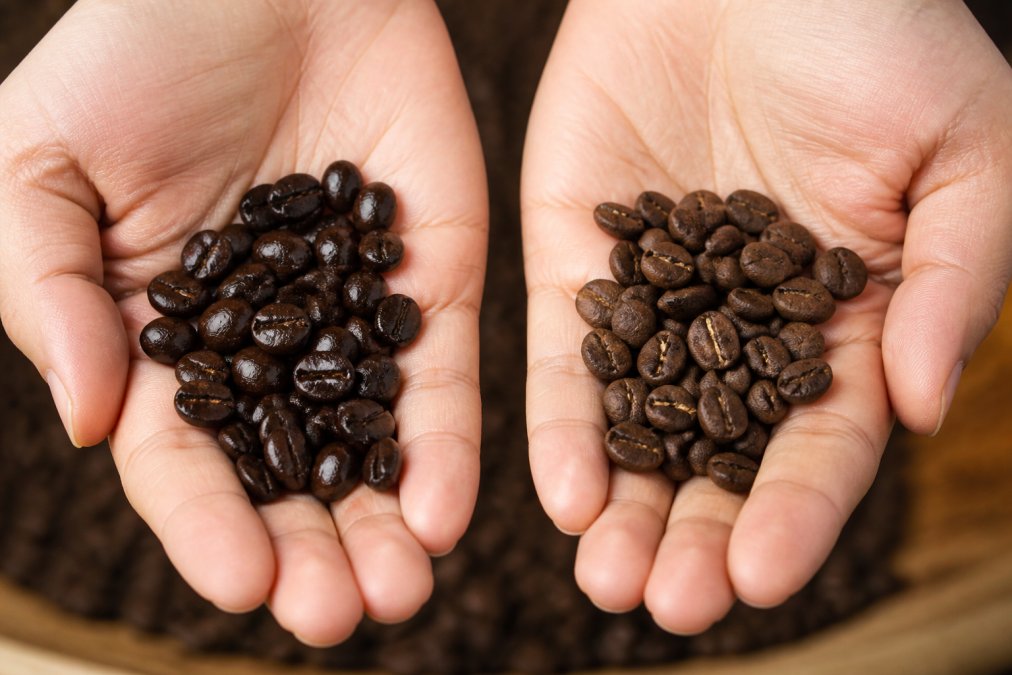
Sensory Evaluation Checklist: Salvageable vs. Discard
Use this structured evaluation to determine whether beans are worth reviving:
Appearance & Texture:
- Fresh beans: Glossy surface with even color; break cleanly when snapped
- Stale beans: Dull finish, possible white bloom (crystallized oils); crumble or feel brittle
- Discard if: Visible mold, moisture damage, or uneven discoloration suggesting storage failure
Aroma (the most reliable indicator):
- Fresh beans: Vibrant, complex, aromatic, smells like the roast profile (fruity, nutty, chocolatey)
- Stale beans: Flat, muted, or one-dimensional aroma; lacks complexity
- Discard if: Rancid smell (sharp, acrid, like old oil or paint thinner); musty or moldy odor
Taste Test (brew a small 2-3 oz cup):
- Fresh beans: Balanced acidity, body, and flavor; clean finish
- Stale beans: Flat or dull taste; may taste bitter or sour; thin body; weak or absent crema (espresso)
- Discard if: Unpleasant chemical taste, vinegary sourness beyond normal profile, or oily/greasy mouthfeel
Understanding Stale vs. Rancid: The Safety Distinction
Stale coffee is old coffee where aromatic compounds have degraded and flavor complexity has diminished. Safe to consume, it tastes flat or dull but can often be revived through brewing adjustments or creative uses.
Rancid coffee occurs when oils oxidize significantly, creating off-flavors and greasy mouthfeel. It develops faster in warm, humid, or light-exposed storage.
How to distinguish them:
- Stale: Smells flat or muted; tastes dull but not unpleasant
- Rancid: Smells sharp, acrid, or like old cooking oil; tastes greasy, chemical, or unpleasantly bitter
Cold Brew Concentrate: The Most Effective Method for Stale Beans
Cold brew is your best method for stale beans. Cold water extracts slowly and selectively, pulling remaining flavors while leaving behind much of the bitterness stale beans develop.
Adjusting Brew Ratio and Extraction Profile
Use a 1:3 coffee-to-water ratio for stale beans (versus standard 1:4) to compensate for flavor degradation.
Water Temperature and Grind Size for Optimal Solubility
For hot brewing, use water between 195-200°F to extract more slowly and avoid over-extraction of bitter compounds.
Best Brewing Methods for Old Coffee Beans
Success with stale beans depends on controlling three variables: water temperature, grind size, and contact time.
Extraction Variables for Stale Beans: Temperature, Grind, and Time
Stale beans' altered cell structure means standard brewing parameters often over-extract bitter compounds while under-extracting desirable flavors.
Water Temperature Adjustments:
- Fresh beans: 200-205°F (optimal for balanced extraction)
- Stale beans: 195-200°F (slightly cooler to slow extraction and reduce bitterness)
- Rationale: Cooler water extracts more slowly, giving you better control. Stale beans release bitter compounds readily, so slower extraction prevents harsh, over-extracted cups.
Grind Size Adjustments:
- Fresh beans: Medium grind for drip; fine for espresso
- Stale beans: One size coarser than normal (medium-coarse for drip; medium for espresso)
- Rationale: Coarser grinds reduce surface area, slowing extraction. This compensates for stale beans' tendency to over-extract quickly.
Contact Time Adjustments:
- Fresh beans: 4-5 minutes (drip); 25-30 seconds (espresso)
- Stale beans: 3-4 minutes (drip); 20-25 seconds (espresso)
- Rationale: Stale beans' reduced solubility means compounds extract faster. Shorter contact time prevents the extraction from becoming harsh or bitter.
French Press and Immersion Brewing
The French press is forgiving for stale beans because full immersion gives complete control over extraction time.
Technique for stale beans:
- Grind: Coarse (similar to sea salt)
- Water temperature: 200°F (just off boil)
- Ratio: 1:16 (1 gram coffee to 16 grams water) or 1 tablespoon per 6 oz water
- Steep time: 3.5-4 minutes (shorter than the standard 4-5 minutes)
- Press slowly and deliberately to avoid agitation
Pour-Over (Drip) Brewing
Pour-over methods work well with stale beans if you adjust variables carefully.
Technique for stale beans:
- Grind: Medium-coarse (slightly coarser than standard)
- Water temperature: 195-198°F
- Ratio: 1:17 (1 gram coffee to 17 grams water)
- Pour slowly and steadily; total brew time should be 3-4 minutes
Turkish Coffee and High-Heat Extraction
Turkish coffee works well with stale beans because high temperature and fine grind force rapid, complete extraction that masks flavor degradation.
Technique:
- Grind: Powder-fine (finer than espresso)
- Water temperature: Start cold, heat to just below boiling
- Ratio: 1:1 by volume (1 tablespoon finely ground coffee per 3 oz cold water)
- Heat slowly until foam rises, remove from heat, let foam subside, then heat again. Repeat 2-3 times.
- Pour into cups, including some grounds
Cold Brew Concentrate (Extended Immersion)
Technique for stale beans:
- Grind: Coarse (similar to French press)
- Ratio: 1:3 by weight (1 gram coffee to 3 grams water), higher concentration than standard 1:4 to compensate for flavor degradation
- Water temperature: Room temperature or refrigerated water
- Steep time: 16-24 hours in the refrigerator
- Strain through fine mesh or paper filter
The extended contact time forces extraction through time rather than temperature. Stale beans' reduced solubility is overcome by the long immersion. The result is a smooth, less bitter concentrate that can be diluted with water or milk. This method produces the most palatable cup from stale beans.
Creative Uses for Old Coffee Beans Beyond Brewing
Sometimes the best choice is not to brew stale beans at all. There are excellent uses that transform them into something valuable.
Coffee Rubs and Cooking Applications
Ground stale coffee makes excellent cooking rubs for meat. The coffee rub adds depth and complexity to grilled or smoked dishes. Combine ground coffee with brown sugar, salt, and spices. Rub onto beef brisket, pork ribs, or chicken before cooking.
Odor Absorption and Composting
Dried coffee grounds absorb odors effectively. Place them in a small bowl in your refrigerator or freezer. They neutralize food smells better than baking soda. Coffee grounds also work in closets, bathrooms, or anywhere musty odors develop.
Storage Techniques to Prevent Staleness and Extend Shelf Life
Proper storage slows oxidation and extends the useful life of your beans. The enemy is oxygen, light, heat, and moisture. Store beans in airtight containers away from direct sunlight. A cool, dark cabinet is ideal. Never store in the refrigerator or freezer unless you're planning long-term storage.
When to Discard: Safety and Expiration Thresholds
Coffee doesn't spoil like food. Stale beans won't make you sick. But there's a point where reviving them stops being worthwhile.
Frequently Asked Questions
How can I tell if my coffee beans have gone bad?
Stale coffee beans show visible signs: a dull, faded color instead of the rich brown of fresh beans, and an oily surface from oil migration. Smell them, fresh beans have vibrant aroma, while stale beans smell flat or musty. Taste a small amount if safe: stale beans taste thin, bitter, or sour rather than balanced. Beans roasted more than 4 weeks ago are losing aromatic compounds and flavor degradation accelerates after that window.
What is the best brewing method for stale coffee beans?
Cold brew concentrate works best for stale beans because extended immersion time extracts remaining soluble compounds that hot water might miss. Use a higher brew ratio (1:3 coffee to water, as recommended in the article) to compensate for flavor loss. French press and Turkish coffee also work well, they maximize extraction profile through longer contact time and higher water temperature. Avoid standard drip machines, which expose stale beans' weakness: lack of aromatic compounds and acidity balance.
Can I still use 2-year-old coffee beans?
Two-year-old beans are well past their peak freshness window, but safety depends on storage. Beans stored in an airtight container away from heat and light may be safe to drink but will taste significantly degraded. Check for signs of rancidity: musty smell, visible mold, or off-putting flavor. If stored poorly (exposed to moisture or temperature swings), discard them. Fresh-roasted beans from USM Coffee arrive at peak flavor.
What are some creative uses for old coffee beans?
Beyond brewing, stale beans work well as a coffee rub for meat, blended into baked goods, or ground for exfoliating scrubs. Used grounds absorb odors in the refrigerator or closets better than whole beans. Coffee grounds compost well and make an excellent fertilizer for garden soil. These uses let you avoid waste while your fresh USM Coffee supply stays dedicated to quality brewing.