

Vacuum Sealed Coffee Storage: Benefits & Best Practices
Table of Contents
- Why Vacuum Sealed Coffee Storage Matters
- How Vacuum Sealing Protects Coffee: The Science
- How to Store Coffee Beans for Maximum Freshness
- How Long Does Coffee Stay Fresh in a Vacuum Canister
- Does Coffee Go Bad in Vacuum Sealed Bags
- Vacuum Canisters vs. Airtight Containers: What Works Best
- Maintaining Your Vacuum Seal Equipment
- Frequently Asked Questions
Last Updated: October 1, 2026
Why Vacuum Sealed Coffee Storage Matters
Fresh coffee is about capturing a moment. From the roast date forward, coffee beans begin losing their character. Oxygen exposure, moisture, light, and temperature fluctuations all work against flavor preservation. Vacuum sealed coffee storage addresses these threats directly, extending the window when your beans taste the way the roaster intended.
At USM Coffee, we roast to order specifically because freshness matters. That commitment extends beyond the roasting process, it includes how you store what arrives at your door. The difference between beans stored in a standard container and those in a vacuum sealed environment becomes apparent within weeks. Aroma fades faster. Flavor flattens. Tasting notes that made the coffee worth buying disappear.
Vacuum sealing isn't complicated, but it works because it targets the root causes of coffee degradation. Understanding why it works changes how you approach storage entirely.
How Vacuum Sealing Protects Coffee: The Science
Vacuum sealed coffee storage works by removing or dramatically reducing the oxygen available to trigger chemical reactions that degrade coffee quality. The mechanism is straightforward, but the chemistry behind it explains why this storage method outperforms alternatives.
Oxygen exposure and oxidation
Oxidation is the primary enemy of coffee freshness. When oxygen contacts the oils and compounds in roasted beans, a chain reaction begins. Lipid oxidation breaks down the fats that carry flavor and aroma. The result: rancidity develops, and the coffee tastes stale long before it actually is.
Vacuum sealing eliminates most of this oxygen. By removing air from the storage container or bag, you stop oxidation at its source. The beans can't degrade through a process that requires oxygen to occur. This is why vacuum sealed coffee storage dramatically extends shelf life compared to open-air storage or even standard airtight containers that retain some residual oxygen.
The practical effect: beans stored in a vacuum environment maintain their flavor profile and aromatic compounds far longer than those exposed to even small amounts of atmospheric oxygen.
Moisture and humidity barriers
Coffee is hygroscopic, it absorbs moisture from the environment. Excess humidity accelerates staling and can introduce mold risk in humid climates. A vacuum seal creates a moisture barrier that standard containers cannot match.
When you vacuum seal beans, you're not just removing oxygen. You're also creating an environment where humidity cannot fluctuate. The sealed chamber maintains consistent moisture levels, protecting the bean integrity and preventing the absorption of ambient humidity that would otherwise degrade quality over time.
This is especially critical for coffee stored in kitchens or pantries where temperature and humidity vary seasonally. Vacuum sealed storage isolates beans from these environmental swings.
Carbon dioxide and degassing
Here's where vacuum sealing introduces a nuance. Fresh roasted beans release carbon dioxide as part of the natural degassing process. This CO2 needs to escape, if it doesn't, pressure builds and can affect flavor extraction during brewing.
Many vacuum sealed bags include a one-way valve that allows CO2 to escape while preventing oxygen from entering. This is the ideal solution: you get the oxygen protection of vacuum sealing without trapping gases that should be released. Without this valve, sealing beans immediately after roasting can create pressure problems and actually degrade flavor through over-carbonation.
The takeaway: if you're vacuum sealing fresh roasted beans, use containers or bags with a degassing valve. Standard vacuum seals without this feature work better for beans that have already completed most of their degassing period (typically 2-3 weeks post-roast).
How to Store Coffee Beans for Maximum Freshness
Proper storage technique makes the difference between vacuum sealed coffee storage that works and storage that fails. The equipment matters less than the approach.
Choosing the right vacuum canister or bag
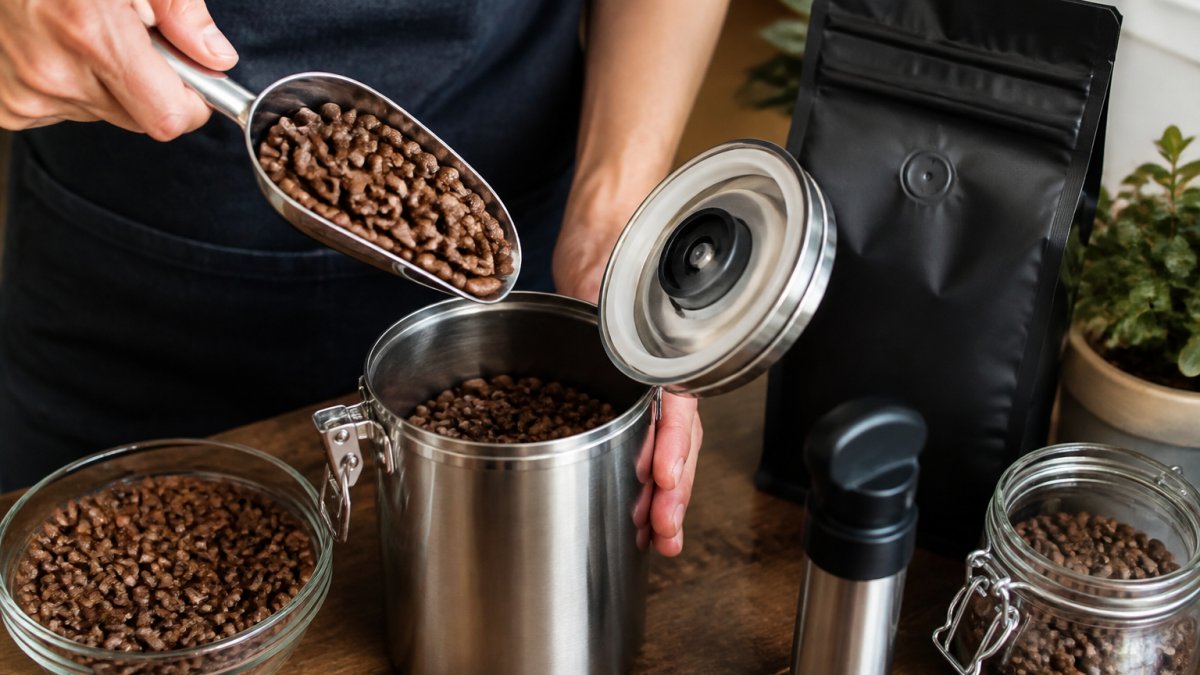
Vacuum canisters and bags serve the same purpose but suit different situations. Canisters work best for beans you'll use regularly, they're reusable, durable, and allow easy access without breaking the seal each time. Vacuum bags work better for long-term storage or if you're storing multiple varieties and want to keep them separate.
For home use, a manual pump vacuum canister offers a good balance. Electric vacuum sealers designed for food storage also work. The key specification to check: look for containers rated to at least 80 kPa (kilopascals) of vacuum pressure. This ensures sufficient oxygen removal.
Material matters too. Opaque containers protect beans from light exposure, which degrades flavor compounds. Glass canisters with vacuum seals work, but they transmit light. Stainless steel or opaque plastic containers are superior for light protection.
Temperature and light considerations
Vacuum sealing protects against oxygen and moisture, but it doesn't control temperature or light. Your storage location matters as much as the container.
Store vacuum sealed coffee in a cool, dark place. Room temperature (around 68-72°F) is ideal. Avoid kitchens near stoves or ovens where heat fluctuates. Avoid windowsills where UV exposure breaks down flavor compounds. A pantry, cabinet, or closet away from direct light provides the optimal environment.
Temperature stability matters more than absolute coldness. Freezing coffee is sometimes recommended, but it introduces condensation risk when beans warm up. Consistent cool temperatures without dramatic swings preserve flavor better than extreme cold with thermal cycling.
Light exposure accelerates flavor degradation. Even ambient kitchen light, over weeks, noticeably impacts stored beans. This is why opaque vacuum containers outperform glass ones, they eliminate light exposure entirely.
How Long Does Coffee Stay Fresh in a Vacuum Canister
Vacuum sealed coffee storage extends freshness significantly compared to standard storage. Most coffee tastes best within 2-4 weeks of the roast date. In a vacuum canister, you can push this window to 6-8 weeks with minimal flavor loss, assuming proper temperature and light conditions.
The exact timeline depends on roast level and bean origin. Light roasts, which retain more volatile aromatic compounds, decline faster than dark roasts. Single-origin coffees often show more dramatic flavor changes than blends as their specific tasting notes fade.
After 8 weeks in a vacuum canister, coffee doesn't go bad in the safety sense, it won't harm you. But flavor flattens noticeably. Aroma diminishes. The coffee tastes stale. For coffee enthusiasts, this is the practical limit of vacuum sealed coffee storage.
This is why subscription-based delivery makes sense for serious coffee drinkers. Ordering fresh beans every 3-4 weeks ensures you're always working with coffee near its peak. USM Coffee's simple ordering process and fast delivery align with this reality, fresh beans arrive before your current supply loses its character.
Does Coffee Go Bad in Vacuum Sealed Bags
Coffee doesn't spoil in the traditional sense. It won't develop mold or become unsafe to drink in a vacuum sealed bag. What happens instead is gradual flavor degradation through oxidation and the natural loss of volatile aromatic compounds.
In a properly sealed vacuum bag with a degassing valve, coffee remains stable far longer than in open storage. The sealed environment prevents the rapid staling that occurs when beans are exposed to air. However, the process doesn't stop, it slows dramatically.
After 3-4 months in a vacuum seal, most coffee shows noticeable flavor loss. After 6 months, the difference is significant.
Vacuum Canisters vs. Airtight Containers: What Works Best
The comparison between vacuum sealed coffee storage and standard airtight containers reveals important tradeoffs. Both beat open-air storage, but they're not equivalent.
| Storage Method | Oxygen Reduction | Moisture Protection | Ease of Use | Cost |
|---|---|---|---|---|
| Vacuum Canister | Excellent | Excellent | Moderate | Higher |
| Airtight Container | Good | Good | Easy | Lower |
| Standard Bag | Poor | Poor | Easy | Lowest |
| Vacuum Bag with Valve | Excellent | Excellent | Easy | Moderate |
Maintaining Your Vacuum Seal Equipment
A vacuum seal only works if it actually seals. Regular maintenance ensures your equipment performs consistently.
Frequently Asked Questions
Is it good to vacuum seal coffee?
Yes. Vacuum sealing removes oxygen that causes oxidation and degradation of coffee's volatile compounds, preserving flavor profile and aroma. It also creates a moisture barrier and hermetic seal that extends shelf life significantly. For roasted beans, vacuum sealed storage can maintain freshness for 2-3 months, compared to 2-3 weeks in standard containers. The airtight seal is especially valuable for premium, freshly roasted beans where flavor preservation directly impacts your coffee experience.
What is the best container to store coffee to keep it fresh?
Vacuum canisters with one-way valve mechanisms are ideal because they allow carbon dioxide (CO2) from degassing to escape while blocking oxygen entry. Look for containers with airtight seals and opaque materials to prevent light exposure. Glass or stainless steel canisters with rubber gaskets rated at high kPa (pressure) ratings provide protection. Store your container in a cool, dark place away from temperature fluctuations. Vacuum sealed bags with oxygen scavengers work well for short-term storage, though reusable canisters offer better long-term value and environmental benefits.
How long does coffee stay fresh in a vacuum canister?
Whole beans in a properly sealed vacuum canister typically stay fresh for 2-3 months. Ground coffee has a shorter window of 1-2 months due to increased surface area exposed to air. Freshness depends on the roast date, storage temperature, and seal quality. Beans roasted within the past week will show the most dramatic flavor retention when vacuum sealed. After opening, reseal immediately to reset the protective environment. For maximum benefit, use beans within 2-4 weeks of roasting and store your canister away from heat and sunlight.
Does vacuum sealing remove the CO2 that coffee beans need to degas?
No. High-quality vacuum canisters feature one-way valve mechanisms that allow carbon dioxide to escape while preventing oxygen from entering. This design balances degassing with protection. Fresh beans release CO2 for 24-48 hours after roasting, and the valve accommodates this natural process. Completely sealing beans immediately after roasting can trap excess CO2 and create pressure, affecting bean integrity. The valve mechanism handles ongoing CO2 release while maintaining oxygen exclusion for freshness retention.