

How to Brew Better Coffee at Home: A Complete Guide
Table of Contents
- Start With Fresh Beans and the Right Grind
- The Coffee to Water Ratio Guide for Consistent Results
- Why Water Quality and Temperature Make or Break Your Brew
- Choosing Your Brewing Method: Pour-Over, French Press, or Drip
- Troubleshooting Bitter or Sour Coffee
- Equipment Maintenance and Budget-Friendly Upgrades
- How to Brew Better Coffee at Home: Putting It All Together
- Frequently Asked Questions
Last Updated: October 2, 2026
Start With Fresh Beans and the Right Grind
If you want to know how to brew better coffee at home, the single highest-impact change you can make is buying freshly roasted beans and grinding them right before brewing.
Coffee is an agricultural product, and it fades fast. Once beans are roasted, they begin losing aromatic compounds to oxidation.
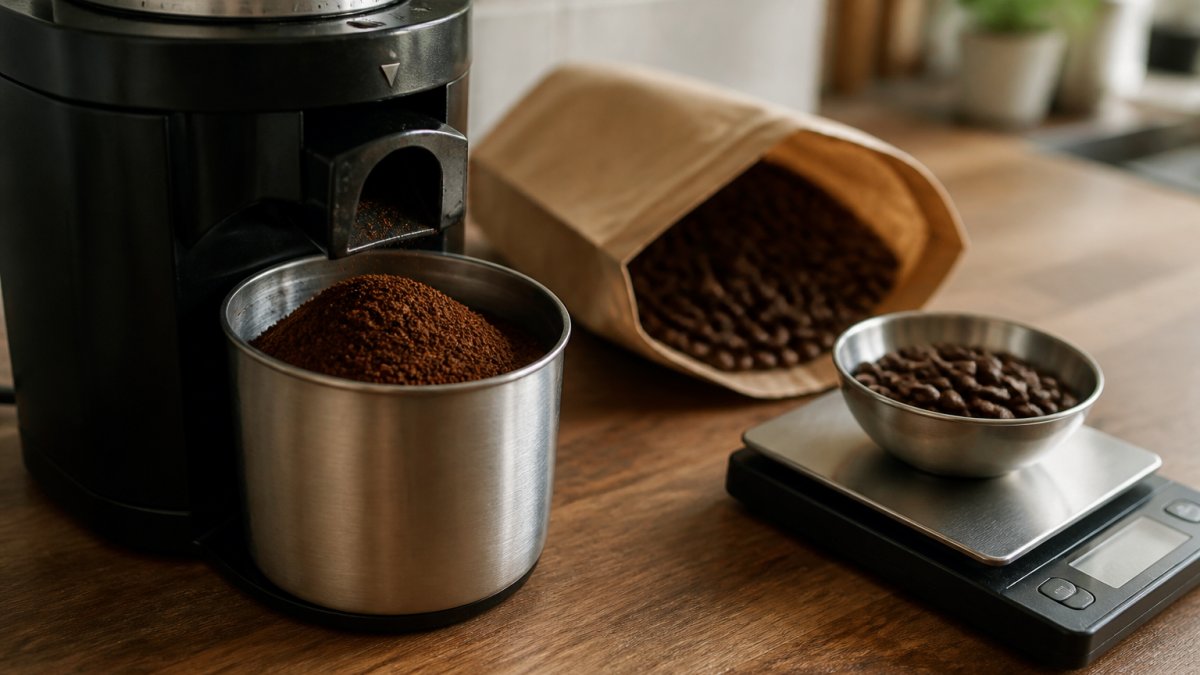
Why Freshly Roasted Beans Matter
Freshly roasted coffee tastes sweeter and more complex because the roasting process creates hundreds of aromatic compounds that begin degrading within days of exposure to air. This is why roast date, not a "best by" date, is the number that matters. Many roasters print a best-by date months out, which tells you almost nothing about when the coffee was actually roasted.
Store beans in an airtight, opaque container away from heat and light. Buy in quantities you will finish within a few weeks rather than stockpiling.
How to Grind Coffee Beans for Different Brewers
Grind size determines how quickly water extracts flavor from the coffee. Too coarse and the water passes through without pulling enough out, leaving a weak, sour cup. Too fine and the water over-extracts, producing bitterness and a harsh bite.
Match your grind to your brewer:
- French press: coarse, like sea salt
- Drip coffee maker: medium, like table salt
- Pour-over: medium-fine
- Espresso: fine, like powdered sugar
A burr grinder produces uniform particles, while a blade grinder chops unevenly and creates both dust and boulders in the same batch. That inconsistency is the root of most bad home coffee.
The Coffee to Water Ratio Guide for Consistent Results
The coffee to water ratio guide most home brewers need is simple: start with 1 to 2 tablespoons of ground coffee per 6 ounces of water, then adjust to taste.
Consistency is the goal. If you change nothing else, measuring both coffee and water will improve your results faster than upgrading equipment. A digital scale costs little and eliminates the variability that makes one morning's cup taste different from the next.
Why Water Quality and Temperature Make or Break Your Brew
Water quality in coffee matters because your cup is roughly 98 percent water. If your tap water tastes like chlorine or carries heavy mineral notes, that flavor ends up in your coffee no matter how good your beans are.
But "filtered" is where most guides stop, and that is a mistake. Water is not just a solvent, it is an active ingredient.
What Minerals Actually Do in the Brew
Two minerals matter most:
- Magnesium binds readily to the aromatic and acidic compounds in roasted coffee and helps extract them into the cup. Too little magnesium and the coffee tastes flat, muted, or papery, even when the beans are excellent.
- Calcium contributes to body and sweetness perception and helps balance acidity. It also drives scale buildup in kettles and machines, which is why more is not better.
- Alkalinity (bicarbonate) is the buffer. It neutralizes coffee's natural acids. A little alkalinity smooths a sharp cup; too much flattens brightness and leaves coffee tasting dull and chalky.
The practical target most specialty roasters and water-focused practitioners aim for is roughly 50-150 ppm total dissolved solids, with magnesium and calcium doing the extracting and alkalinity kept moderate. You do not need a lab. A cheap TDS meter tells you where your tap water sits, and a simple carbon filter removes chlorine and most off-flavors without stripping minerals the way reverse osmosis does.
Temperature: The Range and the Mechanism
Temperature is the other half of the equation. The ideal brewing range sits between 195°F and 205°F, just below boiling. The mechanism is straightforward: hotter water dissolves compounds faster and more completely.
A few specifics that separate a good cup from a great one:
- Light roasts generally reward the hotter end of the range (around 200-205°F) because their denser structure resists extraction.
- Dark roasts are more soluble and often taste better at the cooler end (around 195-200°F), where you avoid dragging out the ashy, bitter notes.
- Immersion methods like French press lose heat during the steep, so starting a few degrees hotter compensates for the drop.
If you do not own a thermometer, let boiled water rest for about 30 seconds before pouring, that lands you near 200°F in a typical kitchen. A gooseneck kettle with a built-in thermometer removes the guesswork entirely and is one of the few upgrades that pays off on every single brew.
A Quick Water Diagnostic
Before you buy new gear, run this check:
- Brew two identical cups, one with tap water, one with filtered or bottled water.
- Taste them side by side, cooled slightly.
- If the filtered cup is noticeably sweeter and cleaner, your tap water is the bottleneck.
- If both taste flat, your water is likely too soft or too low in magnesium, try a mineral-adjusted water or a different bottled brand.
This two-cup test costs nothing and tells you more about your setup than any equipment review.
Choosing Your Brewing Method: Pour-Over, French Press, or Drip
Each brewing method produces a different cup, and the right choice depends on how much control and time you want. Pour-over gives you the most control over extraction and highlights bright, nuanced flavors. French press uses immersion brewing, which yields a fuller body and richer mouthfeel. Drip coffee is the most convenient and, with good beans, still delivers a satisfying cup.
Here is how the three compare:
Single Origin Favorites Sample Pack →
| Method | Brew Time | Body | Best For |
|---|---|---|---|
| Pour-over | 3-4 minutes | Light to medium | Bright, nuanced single origins |
| French press | 4 minutes | Full | Rich, heavy mouthfeel |
| Drip | 5-8 minutes | Medium | Convenience and daily volume |
For pour-over, a gooseneck kettle helps you control the pour and saturate the grounds evenly. French press rewards a coarse grind and a full four-minute steep. Drip machines vary widely, so choose one that reaches the proper temperature and keeps it steady.
Troubleshooting Bitter or Sour Coffee
Troubleshooting bitter or sour coffee almost always comes down to extraction. Bitterness signals over-extraction, meaning water pulled too much out of the grounds. Sourness signals under-extraction, meaning the water did not pull enough. Both are fixable with small adjustments, but only if you can correctly identify which one you are tasting.
Learn to Taste Before You Adjust
Most home brewers change three variables at once and never learn what went wrong. The fix is to slow down and taste deliberately. This is the same approach professional cuppers use, scaled down for a kitchen.
How to taste a cup for diagnosis:
- Let it cool. Coffee tastes completely different at 180°F than at 140°F. Aromatics open up as it cools, and the flaws you missed while it was hot become obvious. Taste at two temperatures.
- Slurp it. Drawing the coffee across your tongue with a bit of air aerates it and spreads it over more taste buds, the way cuppers do. It feels odd; it works.
- Map the sensation. Under-extracted coffee hits you with sourness, a salty edge, and a thin, watery body. Over-extracted coffee hits you with bitterness, dryness, and an astringent, chalky finish that lingers.
- Check the finish. A clean, sweet finish that fades gently usually means you are close. A finish that turns harsh or drying means you went too far.
The Fixes, in Order of Impact
If your coffee is bitter (over-extracted):
- Grind coarser. This is the highest-leverage change and the one to try first.
- Lower your water temperature slightly, a few degrees is enough.
- Shorten the brew time or reduce agitation during the pour.
- Check your ratio. Too little coffee relative to water can also read as bitter because the water keeps extracting past the sweet spot.
If your coffee is sour (under-extracted):
- Grind finer. Again, start here.
- Raise your water temperature toward the hotter end of the 195-205°F range.
- Extend the brew time or add a gentle stir during the bloom.
- Check your beans. Very light roasts are harder to extract and may need a finer grind and hotter water than you are used to.
Change one variable at a time, and taste after each change. Adjusting grind, temperature, and time all at once makes it impossible to know what actually worked.
When It Is Not Extraction
Not every bad cup is an extraction problem. Before you chase grind settings, rule out these causes:
- Stale beans. Flat, papery, or cardboard-like flavors are a freshness issue, not a brewing one.
- Dirty equipment. Rancid oils in a grinder or brew basket produce a stale, bitter edge that no grind change will fix.
- Bad water. Chlorine or heavy mineral content flattens flavor and can read as either sour or bitter depending on your water.
If you have adjusted grind, temperature, and time and the cup still disappoints, the problem is almost always upstream, in the beans, the water, or the gear.
Equipment Maintenance and Budget-Friendly Upgrades
Cleaning your equipment is the cheapest way to brew better coffee, and it is the step most people skip.
Budget-friendly upgrades that deliver real returns:
- A burr grinder: the single biggest improvement for most setups
- A digital scale: removes guesswork from your ratio
- A gooseneck kettle: improves pour control for pour-over
- Filtered water: fixes flavor problems at the source
You do not need professional equipment. You need consistent equipment. A modest burr grinder and a scale will outperform an expensive machine fed with stale, unevenly ground coffee.
How to Brew Better Coffee at Home: Putting It All Together
Start with fresh beans and grind them right before you brew. Measure your coffee and water instead of eyeballing them, use filtered water at the right temperature, and match your grind to your brewing method. When something tastes off, adjust one variable at a time until the cup lands where you want it.
The beans themselves do most of the work. USM Coffee roasts to order so your coffee arrives at peak freshness, and our sample packs let you explore single origins and blends before committing to a full bag. Our ordering process is simple, and delivery is fast and reliable, so you are never stuck waiting on stale coffee.

Frequently Asked Questions
What is the most effective way to brew better coffee at home?
The most effective approach combines four things: freshly roasted beans, a consistent grind size, the right coffee-to-water ratio, and water between 195-205°F. Start with a 1:15 ratio (one gram of coffee to 15 grams of water) and adjust from there. A burr grinder and a digital scale make the biggest difference for most home brewers. Even small improvements in each area compound into a noticeably better cup.
What is the 15-15-15 coffee rule?
The 15-15-15 rule is a simple memory tool: use a 1:15 coffee-to-water ratio, aim for 15 grams of coffee per cup, and target a total brew time around 15 minutes for immersion methods like cold brew. For hot pour-over, the timing shifts to 2-4 minutes. The rule works as a starting point, but you should adjust based on your brewer and taste preferences. It is not a universal standard.
How does water temperature affect coffee extraction?
Water temperature directly controls how quickly compounds dissolve from coffee grounds. Water that is too hot (above 205°F) pulls out bitter, harsh flavors. Water that is too cool (below 195°F) under-extracts, leaving coffee sour and weak. The sweet spot is 195-205°F, which is just below boiling. If you do not have a temperature-controlled kettle, let boiled water sit for 30-60 seconds before pouring.
Why is a burr grinder essential for better coffee?
A burr grinder crushes beans between two abrasive surfaces, producing uniform particles. Blade grinders chop inconsistently, creating a mix of fine dust and coarse chunks. That inconsistency causes uneven extraction: some grounds over-extract and turn bitter while others under-extract and taste sour. A burr grinder gives you control over grind size for different brewers, which is one of the most impactful upgrades you can make for home brewing.
How do I fix coffee that tastes bitter or sour?
Bitter coffee is over-extracted. Try a coarser grind, lower water temperature, or shorter steeping time. Sour coffee is under-extracted. Try a finer grind, hotter water, or longer brew time. Change one variable at a time so you can identify what worked. Also check your water quality. Very hard or heavily chlorinated water can make even well-extracted coffee taste off.
Do I need expensive equipment to brew better coffee at home?
No. A $24.99 sample pack of freshly roasted beans, a basic burr grinder, a digital scale, and a pour-over cone or French press will outperform expensive equipment paired with stale beans. The biggest gains come from fresh coffee, consistent grind size, and accurate measurements. Upgrade your grinder first, then your kettle, then your brewer. Spend on beans before gear.
The gap between an average cup and an excellent one rarely comes down to expensive gear. It comes down to fresh beans, a consistent grind, and paying attention to water. USM Coffee roasts every batch to order for maximum flavor and aroma, offers a straightforward ordering process, and delivers fresh coffee straight to your door. Get started with USM Coffee and taste what freshly roasted beans do for your daily cup.